REVIEW · RIO DE JANEIRO
Walking tour of the bohemian neighborhoods of Santa Teresa and Lapa
Book on Viator →Operated by Good Guide In Rio · Bookable on Viator
Santa Teresa and Lapa can’t be faked. This small-group walk strings together views, street art, and old Rio architecture in one smooth morning. I especially love the yellow Bonde tram ride up to Santa Teresa and how the route includes both iconic photo spots and everyday neighborhood life. The one thing to consider is the pace and footing: you’ll be walking a good chunk, with stairs at Selarón and some hill travel.
What makes this experience work is the guide. When I read about guides like Edmundo, Lorena, and Ivan, the same theme pops up: they know the area, they bring local humor, and they adjust quickly if the neighborhood is busy. You’ll get a calmer, more personal Rio than you would from a checklist alone.
With a maximum of 12 people and a typical 3 hours 30 minutes duration, it’s a smart way to spend your morning without burning an entire day. At $72.09 per person, it’s not a bargain-bucket tour, but you are paying for local guidance plus key transit/ticket components.
In This Review
- Key highlights you’ll feel right away
- Why Santa Teresa and Lapa work as one tour
- Copacabana Palace meeting point and an efficient start
- The yellow Bonde tram ride up to Santa Teresa
- Largo dos Guimarães: neighborhood life in miniature
- Parque das Ruínas at Centro Cultural Municipal: the big viewpoint without the chaos
- Selarón Steps: art you can’t ignore
- Arcos da Lapa: graffiti plus a real XVIII-century aqueduct
- Cinelandia: theaters, museums, and a classic Rio square
- Group size and the guide factor: why the rating is so high
- Price and value: what $72.09 covers
- Timing, pace, and what to wear
- Who this tour suits best
- Should you book this Santa Teresa and Lapa walk?
- FAQ
- What’s the duration of the Santa Teresa and Lapa walking tour?
- How much does the tour cost?
- What time does the tour start?
- Where do we meet and where does the tour end?
- Is this tour limited to a small group?
- Are any entrances included or free?
- Is public transportation involved?
- Can I count on getting confirmation when I book?
- What’s the cancellation policy?
- When should I book if I want a spot?
Key highlights you’ll feel right away
- Yellow Bonde tram to Santa Teresa for classic panoramic Rio vibes
- Selarón Steps as art you can walk through, not just look at
- Arcos da Lapa aqueduct where street noise meets a serious historic structure
- Centro Cultural Parque das Ruínas viewpoint over Centro, the Arches, Christ, and Botafogo
- Cinelandia square with major theaters and museums in a single stop
- Guides like Edmundo, Lorena, and Ivan bring a friendly, street-level connection to the neighborhoods
Why Santa Teresa and Lapa work as one tour
Santa Teresa feels like Rio’s creative cousin: uphill, slower, and full of homes that look like they’ve been in conversation with the city for generations. Lapa is different—louder in a good way—where graffiti, arches, and nightlife energy mix with old infrastructure.
This route makes sense because it moves you through that contrast instead of forcing you to choose one side. You start in Santa Teresa, get the views and the charm, then descend into Lapa for the architecture and street art that Rio is famous for.
If you like cities that have layers—old + new, tourist-famous + everyday—you’ll enjoy how the morning is built.
You can also read our reviews of more walking tours in Rio de Janeiro



Copacabana Palace meeting point and an efficient start
The tour starts at 9:00 am at Copacabona Palace, A Belmond Hotel on Av. Atlântica. That location is convenient if you’re staying in Copacabana or nearby, and it helps you avoid spending time figuring out early-morning pickup logistics.
From there, the plan generally uses public transportation plus the tram element. In past experiences, guides have met at a lodging point and used Metro connections to reach the vintage tram, then continued the walking portion from there. So expect a real-world approach, not a private-car bubble.
One practical note: because you’re starting early in the day, you usually have a better shot at enjoying viewpoints before crowds fully peak.
The yellow Bonde tram ride up to Santa Teresa
Stop one is the Santa Teresa Tram station, where you board the famous yellow Bonde (tram) up toward the Santa Teresa district. The ride is described as a panoramic walk of about thirty minutes, and that’s a big part of why this tour feels like more than just sightseeing.
You’re not just moving from A to B. You’re getting that slow, angled perspective that makes Santa Teresa special—the homes, the steep streets, and the city unfolding behind you as you climb.
What I like here is the pacing. Even before you start walking, the tram segment gives you a mental map of the area. It’s much easier to understand why the neighborhood looks the way it does once you’ve ridden into it.
Largo dos Guimarães: neighborhood life in miniature
After the tram, you move into Largo dos Guimaraes in the heart of Santa Teresa. This part of the tour is built for wandering: the 45-minute stop is basically your time to take in the streets, the views, and the mix of restaurants and bars that make the area known.
This is one of the spots where a good guide pays off. A local can point out what to look for in the facades, how the streets evolved, and what’s worth pausing for versus what’s just background.
If you’re the type who likes to slow down for street scenes—balconies, small courtyards, and everyday rhythms—this stop will feel satisfying rather than rushed.
Parque das Ruínas at Centro Cultural Municipal: the big viewpoint without the chaos

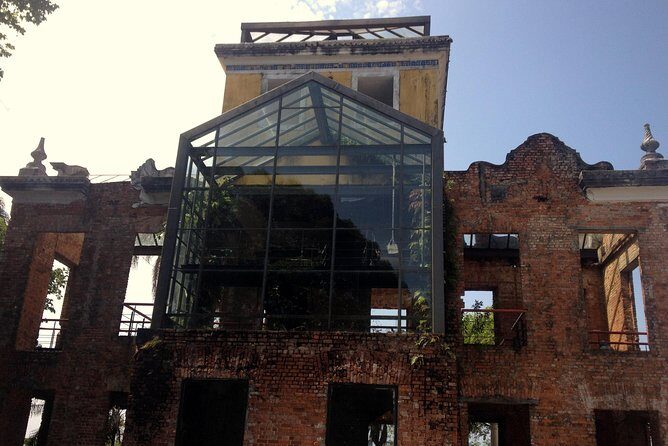
Next is Centro Cultural Municipal Parque das Ruínas, described as an iconic Santa Teresa point: the former home of Laurinda Santos Lobo, transformed into a viewpoint gazebo. Here, you’re set up for what the tour calls an incredible spread of sights: Centro, the Arches of Lapa, Christ, and Botafogo.
This is not just a pretty stop. It’s a strategic one. That viewpoint helps you connect the dots between what you’ll see later in Lapa and what you’re standing above in Santa Teresa.
Admission here is free, which makes it a high-value stop. It also means your time is spent looking and listening, not managing ticket costs or lines.
The drawback? Viewpoints attract people. If you’re visiting when the city is busy, plan to move with your group and don’t expect a totally empty viewpoint.






Selarón Steps: art you can’t ignore
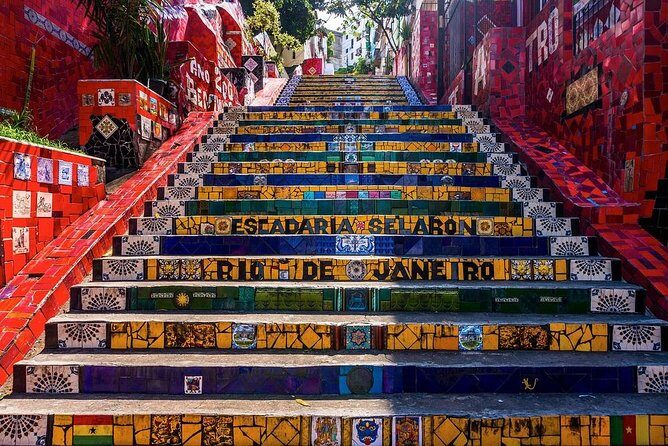
Then comes Escadaria Selaron, the famous multicolored staircase created by Chilean artist George Selaron over roughly twenty years. This is one of those Rio scenes that becomes real when you’re standing on it, not just seeing it in photos.
You’ll spend about 30 minutes here, which is enough time to take photos without treating it like a factory line. The best part is that the staircase functions like street-level art history: the tiles, the color patterns, and the way the steps connect street life up the hill.
Practical consideration: stairs and uneven steps mean you’ll want stable shoes. Also, if you’re sensitive to crowds, go in with flexibility and let your guide manage the best angles as people move through.
Arcos da Lapa: graffiti plus a real XVIII-century aqueduct
Crossing from Santa Teresa down into Lapa, you continue on to Arcos da Lapa. This stop is about more than “the arches.” You’ll see heavy layers of modern street expression—multiple graffiti decorations—paired with the old Rio aqueduct from the XVIII century.
This aqueduct supplied water to the city until the end of the XIX century, so you’re looking at infrastructure that shaped everyday life long before the neighborhood became known for art and nightlife. The tour also notes that the tram passes through the aqueduct to access Santa Teresa, which ties the day together thematically: Rio’s movement systems, then and now.
Time here is shorter (about 20 minutes), but it’s intense. If you only have one quick architecture-and-street-art fix, this is a strong candidate.
Cinelandia: theaters, museums, and a classic Rio square
To wrap up the morning, you reach Cinelandia, presented as a square with big attractions. You’ll pass major buildings including the Teatro Municipal (Rio opera house), Museu das Bellas Artes, Câmara Municipal, Biblioteca Nacional, and Teatro Odeon, noted as the only cinema in the square still in operation.
This stop is useful because it shifts the day from “bohemian streets and views” to “Rio as a grand city of institutions.” You get a sense of how different parts of Rio built their identity—culture and public buildings in the open, monumental style.
The stop is about 20 minutes, so it’s more of an orientation and exterior viewing time than a deep museum session. Still, it’s a nice way to end with context, especially if later you plan your own neighborhood walks.
Group size and the guide factor: why the rating is so high
This tour runs with a maximum of 12 travelers, and that matters more than you’d think. Small groups mean more questions, more personal pacing, and fewer people competing for the guide’s attention at photo stops.
The biggest praised aspect in the experiences tied to this tour is the guide’s personality and local connection. Guides such as Edmundo and Ivan, and also Lorena, come up again and again in notes about the tour: friendly energy, a strong sense of place, and the ability to guide you like you’re being shown around by someone who actually belongs there.
One standout pattern: guides don’t just recite facts. They help you feel welcome—people who seem to know others in Santa Teresa, plus the kind of comfort that keeps you from feeling like a spectator. It’s also been mentioned that guides can handle real-life changes quickly, including busy seasonal conditions like Carnaval.
So if you care about meeting Rio through people, not just monuments, this is exactly what you’re paying for.
Price and value: what $72.09 covers
At $72.09 per person, this isn’t a budget impulse. But it looks like fair value for a morning that blends walking with key transport/ticket elements.
Here’s what you can expect in terms of inclusions based on the stops:
- The tram segment includes the admission ticket for the Santa Teresa tram ride.
- Multiple major sights along the way have free admission (including Parque das Ruínas, Selaron Steps, Arcos da Lapa, and Cinelandia).
So you’re paying mostly for:
1) A local guide who sets the tone and pacing
2) Transit into Santa Teresa via the tram segment
3) A planned route that strings together viewpoints, art, and historic structures without you needing to research every connection
If you were doing this independently, you’d still pay for tram access and time to figure out the order efficiently. Here, that thinking is done for you.
Timing, pace, and what to wear
The tour runs about 3 hours 30 minutes and starts at 9:00 am. That timing is long enough to feel like you got somewhere, but short enough to keep your afternoon open for other Rio plans.
Expect a mix:
- tram time up into Santa Teresa
- walking through Largo dos Guimaraes
- viewpoint time at Parque das Ruínas
- stairs at Selarón
- strolling down toward Lapa arches
- a final cultural orientation in Cinelandia
Because the day includes stairs and walking, I’d plan for comfortable shoes and light layers. Rio mornings can be pleasant, then shift as the day warms up.
Also, keep in mind: most travelers can participate, and the group size is small. Still, if you know you struggle with stairs, you should weigh your comfort with the Selarón section and the general hill travel suggested by the route.
Who this tour suits best
This tour is a great match if you:
- want Santa Teresa + Lapa in one go without overplanning
- care about art you can walk through (Selarón) and street art you can read in layers (around Arcos da Lapa)
- like neighborhoods with personality, not just postcard hits
- prefer small groups and a guide who can adjust when the city gets busy
It may be less ideal if you want a sit-down museum day, or if you need a low-walking, minimal-stairs plan.
Should you book this Santa Teresa and Lapa walk?
I think you should book if your goal is a real Rio morning: tram views, neighborhood streets, art in motion, and historic arches—guided by someone who treats the day like a friendly introduction rather than a script.
It’s especially worth it because the track record is strong: this experience shows a 5/5 rating with 100% recommended, and guide quality keeps coming through in the details. With a max of 12 people and a route that hits both viewpoints and iconic art, you’re buying time saved and context added.
My only hesitation would be if you dislike stairs or you want a totally slow, minimal-footing outing. If you can handle a walk-heavy morning, this tour is one of the cleanest ways to understand why Santa Teresa and Lapa feel like Rio’s creative core.
FAQ
What’s the duration of the Santa Teresa and Lapa walking tour?
The tour is about 3 hours 30 minutes (approx.).
How much does the tour cost?
It costs $72.09 per person.
What time does the tour start?
The start time is 9:00 am.
Where do we meet and where does the tour end?
You meet at Copacabana Palace, A Belmond Hotel and the tour ends back at the meeting point.
Is this tour limited to a small group?
Yes. The tour has a maximum of 12 travelers.
Are any entrances included or free?
The Santa Teresa tram admission ticket is included. Several stops are free such as Largo dos Guimaraes, Parque das Ruínas, Selarón Steps, Arcos da Lapa, and Cinelandia.
Is public transportation involved?
The tour is described as near public transportation, and the route is set up around using the tram and walking through the neighborhoods.
Can I count on getting confirmation when I book?
Yes. Confirmation will be received at time of booking.
What’s the cancellation policy?
The experience is non-refundable and cannot be changed. If it’s canceled because the minimum number of travelers isn’t met, you’ll be offered a different date/experience or a full refund.
When should I book if I want a spot?
On average, it’s booked about 21 days in advance, so earlier is better if your dates are fixed.