REVIEW · RIO DE JANEIRO
Tijuca Forest w/ Chinese View,cascatinha Taunay,horto waterfall and parque laje
Book on Viator →Operated by Trip In Rio · Bookable on Viator
Tijuca Forest can feel like a time machine. This 4-hour small-group outing mixes Atlantic Forest nature, waterfall scenery, and some unexpectedly specific history tied to Chinese tea culture in Rio.
I love the way this tour turns city sightseeing into a real forest experience. You’re walking in areas of Tijuca National Park, and the payoff is the combination of viewpoints plus quiet green space around Parque Lage.
One thing to consider: you’ll be on the move for a few hours, and the main lookout climb can feel steep. If your energy is limited, plan for slower pacing and bring water (snacks and bottled water are not included).
In This Review
- Key highlights worth your time
- Why Tijuca Forest feels like a reset from Rio
- Small-group comfort: how the timing and vehicle shape your day
- Vista Chinesa: the paved trail, the steep climb, and the big payoff
- Emperor’s Table: Chinese tea connections and a royal resting spot
- Cascatinha Taunay: the stone Roman-arch bridge and a waterfall with real scale
- Horto Waterfall stop: plan on another nature moment, not a museum hour
- Parque Lage: the 52-hectare forest walk with city-near convenience
- Price and value: what $88.21 buys in real-world terms
- Who this tour fits best (and who should tweak the plan)
- A quick practical packing list (based on what’s not included)
- Should you book this Tijuca Forest tour?
- FAQ
- How long is the Tijuca Forest tour with Vista Chinesa, Cascatinha Taunay, Horto waterfall, and Parque Lage?
- What’s included in the price?
- Are admission tickets included for the stops?
- Will there be food or bottled water on the tour?
- Is the tour group size limited?
- Does the tour require good weather?
- What should I expect at Vista Chinesa?
- Can I cancel for a full refund?
Key highlights worth your time
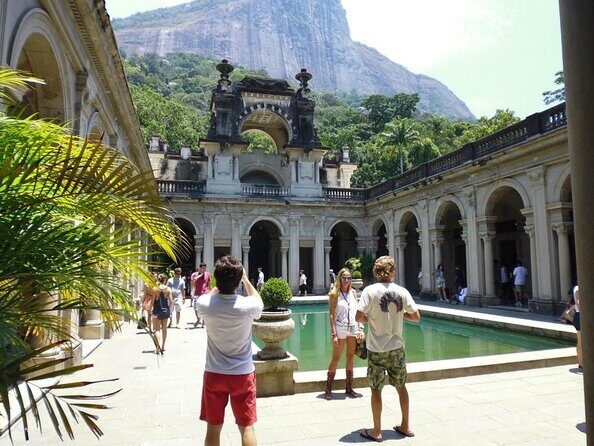
- Vista Chinesa: an easy-to-reach trail that turns into a steep climb for major panoramic views
- Emperor’s Table: Chinese tea–era stories paired with a classic resting spot for Rio’s old royal walks
- Cascatinha Taunay: a stone Roman-arch bridge in front of one of the park’s highest waterfalls
- Parque Lage: a 52-hectare forest area inside Tijuca National Park, near Jardim Botânico and Cristo Redentor
- Wildlife chances: you may spot monkeys and even toucans while you’re moving between stops
Why Tijuca Forest feels like a reset from Rio

Rio can be loud. Tijuca National Park is the fix. You start in viewpoints built for looking out over the city, but you end up in thick, tree-filled spaces where the air feels different and the sound changes fast.
What I like most is that the experience doesn’t treat nature as a postcard. It gives you several chances to see the forest on its own terms: from overlooks where the city drops away, to waterfall areas where the focus is on water, rock, and mist rather than city landmarks.
Also, the pacing works well if you hate rushed tours. This is designed for a small group (maximum 14), and the guide’s style is geared toward letting you spend as long as you want at each stop. You’re not stuck staring at your watch while everyone else bolts.
You can also read our reviews of more tours and experiences in Rio de Janeiro.



Small-group comfort: how the timing and vehicle shape your day
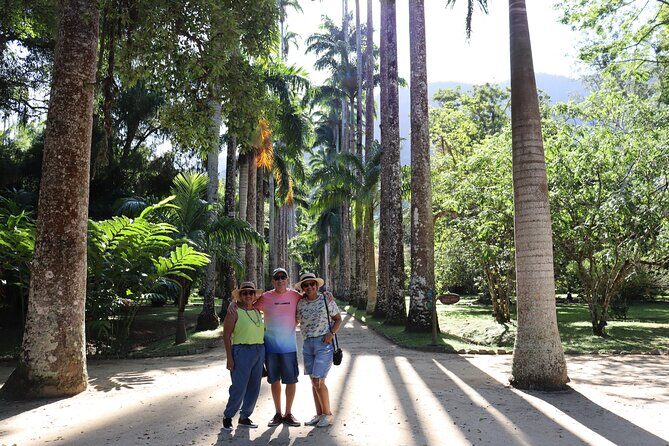
This tour runs about 4 hours. That’s long enough to feel like you did something real, but short enough to keep it from swallowing your whole afternoon.
You’ll ride in a car or jeep depending on the group size. The big practical benefit is simple: you spend less time in transit and more time walking. In a place like Tijuca—where distances and roads matter—getting to the right trailheads without extra stress is a big deal.
Two more practical notes from the experience setup:
- Admission tickets are free at the listed stops, so you’re not budgeting time for entry fees.
- Snacks and bottled water aren’t included, so you should bring a plan. Even if you buy something near a viewpoint later, you’ll feel better if you arrive with a little water in hand.
Vista Chinesa: the paved trail, the steep climb, and the big payoff
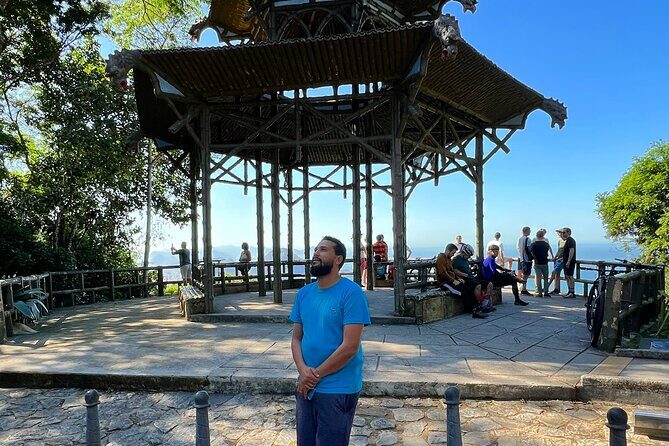
Vista Chinesa is one of those Rio lookouts that makes you understand why people keep coming back. The setting is tied to early twentieth-century plans connected to Chinese influence and imported tea cultivation in Brazil, and the monument is built to mark that story while rewarding you with wide panoramas.
Here’s what to expect on the ground:
- The approach trail has easy access and is fully paved, which helps a lot if you’re juggling comfortable shoes and timing.
- Then comes the reality check: a lookout climb that’s steep. It’s not a long trek, but it can be a leg-burner if you take it fast.
I love the design of Vista Chinesa because it doesn’t require technical hiking to reach a view that feels like it belongs in a different country. You can keep the day flexible—slow pace up, stop often for photos or just air, then settle at the viewpoint.
Emperor’s Table: Chinese tea connections and a royal resting spot
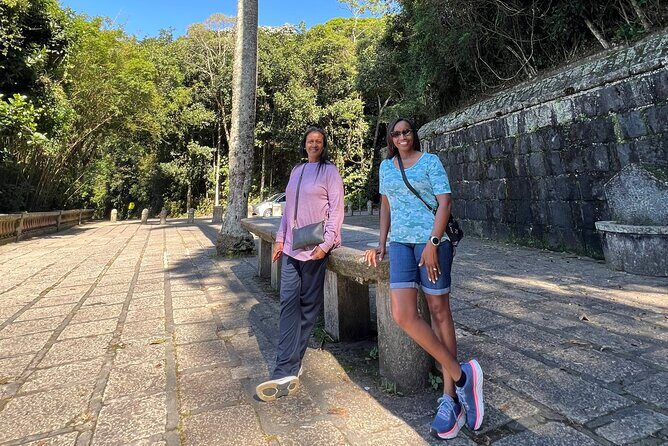
Right after Vista Chinesa, you move into another layer of the same story. The area connected to the Botanical Garden was tied to Rio’s mountain access routes, and the Emperor’s Table connects that infrastructure to Chinese labor and tea-cultivation attempts.
What you’re learning here is specific and kind of wild:
- In the mid-1800s (1856), a cantilevered road connected the Botanical Garden area to Alto de Boa Vista.
- The influence behind the project included the Baron of Bom Retiro, with execution contracted to Thomas Cochrane.
- Chinese workers from Macau were brought in (described as being employed for rice work), but after the crop effort didn’t go as hoped, those workers were used for building the road.
- Later references include a building called Casa dos Chinas on an older map, tied to the earlier tea-planter era.
Even with all that historical texture, the spot itself is still about a simple pleasure: it’s a prepared place meant for resting during the royal family’s regular walks. So you’re not just learning facts while standing still—you’re pausing in a meaningful spot that was built for people to catch their breath.
And yes, this area is another chance to look out and feel the geography of the southern zone of Rio under the canopy.
Cascatinha Taunay: the stone Roman-arch bridge and a waterfall with real scale
Cascatinha Taunay is where the tour earns its love. The waterfall area is framed by a stone bridge with a Roman arch format, built in 1860 under engineer Job de Alcântara. Even if you’re not a bridge person (no judgment), the structure makes the waterfall feel more dramatic, like the scene was staged for you.
Then the water story comes in:
- This is described as the highest waterfall in the Tijuca National Park area.
- The flow is fed by waters from the Tijuca River, Conde River, and other tributaries.
One of the most interesting things here is how art and nature got linked. Artist Nicolas Antoine Taunay built a small house near the cascatinha back in 1817 and painted the waterfall. He also organized meetings for the court, turning this natural spot into a social and cultural landmark, not just scenery.
A detail I’d keep in mind when you visit: the Taunay house was demolished in 1946. Today, the site continues to evolve, and the old restaurant area is being prepared and refurbished to host a café and new restaurant. So the waterfall stop isn’t frozen in time; it’s still part of everyday use, just with a history overlay.
Practical tip: bring your best patience for mist. If it’s even slightly humid, you might feel cooler near the waterfall. Don’t dress for beach heat.





Horto Waterfall stop: plan on another nature moment, not a museum hour
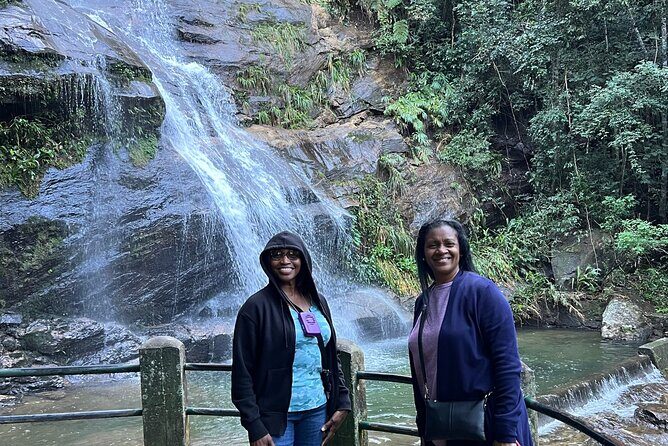
The tour name includes Horto waterfall, so you should expect another nature-focused moment beyond the main Cascatinha Taunay stop. The exact rhythm isn’t spelled out in the details you provided, but the intent is clear: keep the day moving deeper into forest scenery and water.
If you’re trying to decide how much to pack into one Rio afternoon, this is the best type of add-on. It doesn’t turn the experience into a long lecture. It’s another chance to see the park from a different angle, with water as the main character again.
Parque Lage: the 52-hectare forest walk with city-near convenience
Parque Lage is a strong closer because it shifts from viewpoints and waterfall noise into forest walking. It’s in the Jardim Botânico neighborhood, close to big Rio anchors like the Jardim Botânico and Cristo Redentor, but once you step into the park space, you’re surrounded by forest in Atlantic Forest conditions.
Key facts that matter for your expectations:
- The area is 52 hectares.
- It’s part of Tijuca National Park.
- Admission is free.
The vibe here is calmer than the lookout climbs. You get time to walk and slow down, and the setting is ideal if you want shade, birdsong (when you hear it), and a break from the constant up-and-down of city hills.
One review-style detail that lines up with this kind of stop: people love Parque Lage because it feels like you’re walking inside the forest instead of just looking at it. You also may find a good moment to grab a drink in the beautiful setting of the park’s historic mansion area.
Price and value: what $88.21 buys in real-world terms
At $88.21 per person for about 4 hours, you’re paying for three things at once:
- Transportation to multiple sites in Tijuca area (car/jeep depending on group size)
- A tour guide who keeps the day readable and helps connect the dots between nature and history
- Access to multiple major stops with free admissions
The hidden value is the combination of perspectives:
- History tied to Chinese tea cultivation (Vista Chinesa and Emperor’s Table)
- A major natural highlight (Cascatinha Taunay waterfall + bridge)
- A calmer forest finish (Parque Lage’s large protected green area)
What you should budget for separately is simple: water and snacks. If you don’t plan for that, you’ll start making convenience purchases while walking, which can drain time and energy.
Also, good to know: this experience depends on good weather. If the day is foggy or rainy, outdoor visibility and trail comfort can suffer. The good part is you’re offered a different date or a full refund if weather cancels the outing.
Who this tour fits best (and who should tweak the plan)
This is a great choice if you want:
- Nature plus history without spending all day on buses
- Photo-friendly viewpoints (Vista Chinesa) and a landmark waterfall (Cascatinha Taunay)
- A small-group pace where you can linger instead of sprinting
It’s also a good match if you like animal sightings, since wildlife is part of the experience. You might spot monkeys swinging through the trees, and toucans have been seen on this kind of route.
You might want to think twice if:
- You dislike steep climbs. Vista Chinesa includes a demanding climb even though the path is paved.
- You need constant seating breaks. Most of the day involves walking between stops in a forest setting.
If you’re traveling with limited mobility, I’d treat this as a “check first” situation. You can’t assume the climbs or terrain will be easy for everyone.
A quick practical packing list (based on what’s not included)
Since bottled water and snacks aren’t included, I’d pack with comfort in mind:
- Water (small bottle or plan to buy along the way)
- A snack you’ll actually eat (something that won’t melt instantly)
- Comfortable closed-toe shoes for paved plus steeper sections
- Light rain layer for unpredictable Rio weather
If it’s sunny, also plan for shade gaps. Even forest days can include bright lookout areas.
Should you book this Tijuca Forest tour?
My honest take: book it if you want a well-paced afternoon that mixes forest, views, and specific Rio history in one outing. The value is strong because you get multiple free-access stops, local transport between them, and a guide to connect the dots between the Chinese tea-era monuments and the natural power of Cascatinha Taunay.
Skip it or be cautious if your day is fragile around steep climbs. Vista Chinesa includes a steep ascent, and the overall experience requires good weather to run well. If those two points are an issue, you can still enjoy Tijuca, but you may want a plan that’s more flexible on footing.
If you’re aiming for an authentic Rio moment that feels a million miles away for a few hours, this one delivers.
FAQ
How long is the Tijuca Forest tour with Vista Chinesa, Cascatinha Taunay, Horto waterfall, and Parque Lage?
It runs for about 4 hours.
What’s included in the price?
You get a tour guide and transport by car or jeep (depending on group size).
Are admission tickets included for the stops?
Yes. The listed stops show admission tickets as free.
Will there be food or bottled water on the tour?
No. Snacks and bottled water are not included.
Is the tour group size limited?
Yes. The maximum group size is 14 travelers.
Does the tour require good weather?
Yes. It requires good weather, and if it’s canceled due to poor weather, you’ll be offered a different date or a full refund.
What should I expect at Vista Chinesa?
The trail is fully paved with easy access, but it includes a steep climb to reach the lookout.
Can I cancel for a full refund?
Yes. You can cancel up to 24 hours in advance for a full refund. If you cancel less than 24 hours before the start time, the amount paid is not refunded.