REVIEW · RIO DE JANEIRO
Rio Top 4 Attractions – 7 Hours Private Tour
Book on Viator →Operated by Luis Darin Private Tour Guide · Bookable on Viator
Rio can feel like sensory overload. This route turns that chaos into a smooth day of big views and classic neighborhoods. You start high on Corcovado, drop to beach-photo stops across Leblon, Ipanema, and Copacabana, then finish in the artsy streets of Santa Teresa and the famous Selaron Steps. It’s a smart “greatest hits” loop that still leaves room for questions and stops that actually matter.
I especially like how the day is built around the two top viewpoints: Christ the Redeemer and Sugarloaf Mountain, both inside stunning natural scenery. I also like the private format with hotel/port pickup and a small group cap of 4 people, which makes the timing feel calm instead of rushed. One thing to consider: the tour price doesn’t include the main attraction entrance fees, so you’ll want to budget for Corcovado (Christ the Redeemer) and Sugarloaf Mountain tickets on the day.
In This Review
- Key Highlights You’ll Really Notice
- A Private Rio Route That Actually Makes Sense
- Morning Pickup and the Cosme Velho Start to Corcovado
- Beach Photo Stops: Leblon to Copacabana in One Sweep
- Tijuca National Park and Getting Up to Christ the Redeemer
- Sugarloaf Mountain by Cable Car: The Second Big View
- Morro da Urca to Santa Teresa: From Granite Views to Street-Level Rio
- Selaron Steps and Lapa’s Arcos: The Iconic Finale
- Price, Entrance Fees, and Whether This Tour Is Good Value
- What It’s Like Day-of: Timing, Energy, and Small Comfort Wins
- Who Should Book This 7-Hour Private Tour
- Should You Book This Tour?
- FAQ
- What’s included in the $175 per person tour price?
- What entrance fees are not included?
- How does pickup work if I’m on a cruise or arriving by plane?
- Is this tour private, and how many people can be in my group?
- What time does the tour run?
- Are meals included?
- Can I cancel and get a full refund?
- Is the tour offered in English, and are children allowed?
Key Highlights You’ll Really Notice

- Private, small-group feel (max 4 people) so you can ask questions and move at your pace.
- Christ + Sugarloaf sequencing that keeps you from backtracking across the city.
- Priority-style help at the main lines and elevators (when available) based on how the guide supports access.
- Beach drive-by photo stops across Leblon, Ipanema, and Copacabana for quick context without wasting time.
- Santa Teresa and Selaron Steps for the artsy, street-level Rio that viewpoint photos can’t show.
A Private Rio Route That Actually Makes Sense

Rio is huge, hilly, and traffic can be unpredictable. What works here is having a driver and a local guide handling navigation while you focus on the “how do I see this city in one day?” problem. This tour leans into that: you get pickup, an air-conditioned car, and a plan that stitches together the most famous sights with enough context to understand what you’re looking at.
The other reason this itinerary feels efficient is the order. You tackle the hardest, highest viewpoint early (Corcovado/Christ), then transition down toward the beach zones, and finish with neighborhoods that are more walkable and photogenic at street level. That’s a big deal in Rio, where “one more stop” can quietly turn into an hour of lost time.
And because it’s private, your guide can flex around your hotel location. The route even adjusts your exact drive-by viewpoints depending on where you’re staying, which helps you avoid those tours that feel like a generic bus loop.
You can also read our reviews of more private tours in Rio de Janeiro



Morning Pickup and the Cosme Velho Start to Corcovado
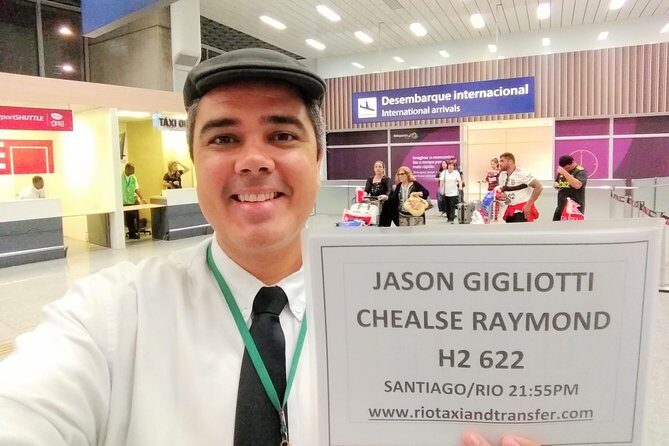
Most days begin with hotel, airport, pier, or rental apartment pickup. You’ll want to provide your exact hotel name and address so your guide can route you efficiently. Once you’re in the car, the drive heads toward the Cosme Velho area, which is the gateway for Corcovado.
Along the way, you pass by landmarks like Palácio Guanabara. It’s the kind of thing you’d miss if you were only relying on maps and passing quickly through neighborhoods. Your guide also helps you connect the dots: why this area matters, how Rio’s geography shapes the city, and how people move around when the hills and coast take over.
From Cosme Velho, you start the climb toward the top of Corcovado Mountain. This is where you’ll get your first major “wow” moment, because the views unfold fast. You’re also in the Tijuca area, which matters later, since Christ the Redeemer sits inside Tijuca National Park.
Beach Photo Stops: Leblon to Copacabana in One Sweep

After the Corcovado segment, the tour includes quick vantage and drive-by stops across Rio’s most famous beachfront neighborhoods. These are shorter stops, often built for photos rather than long beach time. Still, they’re useful because they help you visually understand how the coastline shapes the city and where the “postcard” neighborhoods start and end.
You may stop at Mirante do Leblon for around 10 minutes, depending on where your hotel is. Leblon sits at one end of the wealthier beachfront stretch, and this viewpoint gives you a clean sense of the shoreline before you continue the drive.
Then come the pass-by segments that are basically a moving photo album: the end of Ipanema for a classic sunset spot, the world-famous beach zone where many hotels cluster, Copacabana’s seaside avenue, and the transition toward Leme Beach for a better photo angle of Copacabana’s curve.
You also get context on Guanabara Bay, including its huge scale (it’s described as about 100 miles in diameter with a roughly 1-mile wide entrance near Sugarloaf). Even if you’re not a geography nerd, having those reference points helps your brain stop treating Rio’s waterfront as one blur.
The tradeoff with beach photo stops is you won’t have hours on the sand. If what you want most is a long beach break, you’ll likely feel the time is tight. But if you want the city’s “where exactly is everything” feel without losing the day, these short stops work.
Tijuca National Park and Getting Up to Christ the Redeemer

This tour is very clear about how you’ll access Christ the Redeemer: it’s inside Tijuca National Park, and it can be reached by train or van. On this style of tour, you’ll go by van with a quick stop at Paineiras Visitors Center, then continue via shuttle van to the monument area. (The cogwheel train is also explained as an alternative option.)
Tijuca National Park matters because it’s not just scenery. It’s described as the largest reforested urban forest in the world, and it’s also where Christ is located. You’ll also hear park facts tied to city size—at one point it’s described as around 7% of the city, and the Tijuca Forest is described as taking about 10% of Rio’s area. Either way, it’s enough greenery to feel like the city is tucked inside a bigger natural space.
There’s also a visitor center created in 2013 with an environmental education focus. When you’re going up via the van/shuttle option, you may be able to visit the visitor center by minibus during the Christ approach.
At the monument, the view is the point: you’ll have a sweeping look over Rio. Your guide can help you orient what you’re seeing—how the bay, coast, and neighborhoods fit together. This is where a guide earns their keep, since you’re not just looking at a skyline; you’re learning how the city’s geography drives where people live and where landmarks sit.
A key practical upside from past experiences with Luis Darin and his team: you may receive help with priority access to lines and elevators related to the train experience for Christ. That doesn’t mean you’ll never wait, but it’s the kind of support that can keep the day from turning into a queue marathon.
Sugarloaf Mountain by Cable Car: The Second Big View
After Christ, the tour moves toward Sugarloaf Mountain, Rio’s other headline viewpoint. Sugarloaf is described as a solid granite monolith over 1,200 feet above sea level at the entrance of Guanabara Bay. It’s also listed as the second most visited attraction in Rio, and it earns that attention.
Sugarloaf itself is reached by taking two cable cars: first to Morro da Urca, then up to the summit of Sugarloaf Mountain. You’ll spend time around Morro da Urca (around 20 minutes), and during the cable car ride you’ll get continuous views expanding in all directions.
The access point is in the Urca neighborhood. The cable car station at Urca sits at the foot of Morro da Babilonia, and the Swiss-made cable car takes you first to Morro da Urca, then onward to the summit. That’s a lot of details, but the payoff is simple: the ride itself is part of the attraction, not just transportation.
What I like about Sugarloaf in a guided plan is that you’re not left guessing when to stop for photos, when to pause for orientation, or what to look for across the bay. You’ll also get a sense of how Sugarloaf frames Guanabara Bay’s entrance, tying back to the earlier bay facts.
Keep in mind the biggest downside risk here: weather and clouds. The tour is 7 hours long, so you’re still getting a good chunk of the day in daylight. But if fog rolls in, your views could be muted. If you have flexibility, it’s still wise to choose a morning tour when possible for brighter conditions.






Morro da Urca to Santa Teresa: From Granite Views to Street-Level Rio

Once Sugarloaf is done (about an hour at that main segment), the tour shifts gears and heads to Santa Teresa, a hillside neighborhood known for its artsy, bohemian vibe.
Santa Teresa is described as a picturesque area with colonial-style character that dates back to the mid-1800s. Today it’s full of bars, cafes, and food choices. In at least one case, the guide arranged lunch at an authentic Brazilian restaurant in Santa Teresa, and the food was described as delicious. Even if your lunch is casual or you skip it, this is your chance to eat where locals actually go, not just where tour buses stop.
You’ll also get photo opportunities: painted murals, street art, and cobblestone streets. That cobblestone texture is one of the reasons Santa Teresa feels different from Rio’s flatter beachfront corridors.
This is also where you’ll start to feel Rio’s personality beyond viewpoints. From above, Rio looks like geography. From street level, Rio becomes people: shops, small restaurants, and the everyday rhythm of the neighborhood.
Selaron Steps and Lapa’s Arcos: The Iconic Finale

The tour’s final stops blend art, engineering, and local culture in a way that’s easy to remember long after you’re home.
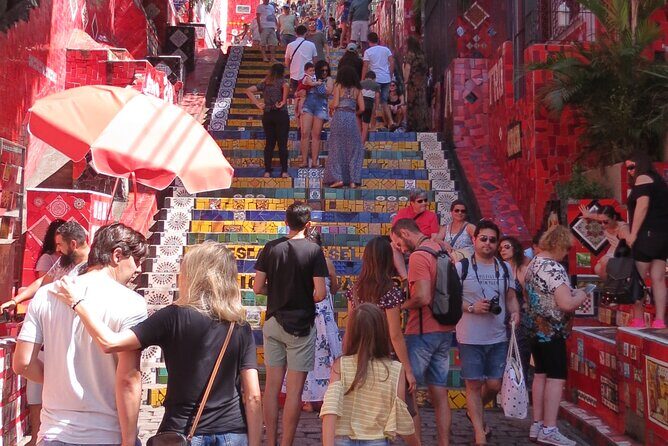
First is Selaron Steps, known as Escadaria Selarón. You’ll walk to the colorful tiled stairway decorated by Chilean artist Jorge Selarón, who moved to Rio in 1983. The steps connect the Lapa and Santa Teresa areas, and the stairway has a real story behind it: it’s described as 215 steps, with tiles donated over time, and since 1990 the artist has laid over 2,000 tiles as a tribute to Brazilian people.
Around the same area, the tour also references Arcos da Lapa, an aqueduct once used to supply the city with water from rivers that originated in Tijuca Forest. Today those arches are used as a passageway for the tram that connects downtown Rio and Santa Teresa. In other words, this isn’t just a photo spot. It’s a living piece of the city’s infrastructure and art culture.
If you like street photography and human-scale details—colors, textures, and faces—this ending section is a strong payoff. It’s also a good low-stress finale after the viewpoint-heavy first part of the day.
Price, Entrance Fees, and Whether This Tour Is Good Value

The tour is listed at $175 per person for about 7 hours of private touring. What makes the price feel reasonable is that key costs are covered upfront: your guide, hotel/port/airport pickup and drop-off, transportation by a private air-conditioned car, and tolls and parking fees.
The part you do need to plan for is that the major attraction entrance fees are not included:
- Corcovado (Christ the Redeemer): R$128 per person
- Sugarloaf Mountain: R$195 per person
Those numbers are given as set prices, but the tour also notes that admission fees can change without notice. So I suggest keeping a little buffer in mind.
Meals and drinks are also not included, so if you want a full lunch experience, plan either to pay on your own in Santa Teresa or use your guide’s suggestions for where to eat.
Value-wise, this tour makes the most sense when you care about two things: (1) avoiding wasted time crossing Rio and (2) having a guide who can keep you moving smoothly through timed, high-demand sights. In a private setup with max 4 people, you’re paying for logistics and local support, not just for a checklist.
What It’s Like Day-of: Timing, Energy, and Small Comfort Wins
A full-day Rio tour means you’ll move. The good news is this one is designed around momentum. You’ll do the major climbs and ticketed areas, then shift into neighborhoods that are more relaxed at street level. The beach segments are short photo stops, so you’re not trapped in slow beach waiting.
Another day-of comfort: private pickup and a private car reduce how often you have to stand in public transport lines or figure out where the meeting point really is in a busy city. You’re also given a mobile ticket, which helps cut down friction at entrances.
Also, you’re operating with a small-group private format. A max of 4 people per booking is mentioned, and in real-world experience with Luis Darin’s team, the guide has helped coordinate priority-style access to lines and elevators for the big train-based experiences. If you or anyone in your group has mobility needs, tell your guide early. You’ll be glad you did.
Who Should Book This 7-Hour Private Tour
This tour is a strong fit if:
- You want the top viewpoints and the artsy Rio neighborhoods in one day.
- You’re short on time and don’t want to stitch together separate tickets and transport.
- You’d rather ask questions than read plaques.
- You’re traveling as a couple, family, or small group that wants a private pace.
It’s also a good option for cruise-day visitors, since you’ll get pickup from the pier and a full itinerary designed to fit into a single morning block.
If you’re the type who wants long beach time, you might feel the beach segments are too quick. And if you love hiking for hours or deep museum time, this tour is more about viewpoints, neighborhoods, and street-level art than long-form exploring.
Should You Book This Tour?
If you want a low-stress day that hits Christ the Redeemer, Sugarloaf Mountain, and Santa Teresa plus Selaron Steps, I think this is worth considering. The private setup, pickup, and guided pacing do real work here, especially when you’re dealing with ticketed attractions and timed crowds.
I’d book it if you value organization and viewpoint time over free wandering. I’d hesitate only if you’re craving a long beach day or you already know you’ll want to spend multiple hours in just one neighborhood.
FAQ
What’s included in the $175 per person tour price?
The tour includes tolls and parking fees, hotel/port/airport/flat pickup and drop-off, a local guide, the private tour format, and transportation in a private air-conditioned car.
What entrance fees are not included?
Sugarloaf Mountain entrance fees are listed as R$195 per person, and Corcovado/Christ the Redeemer entrance fees are listed as R$128 per person. Admission fees may change, and you pay them directly at the attractions.
How does pickup work if I’m on a cruise or arriving by plane?
You can be picked up from the pier, airport, hotel, or rental apartment in Rio. The operator asks you to enter your hotel name, or if it’s a rental apartment or unlisted hotel, enter the full street address.
Is this tour private, and how many people can be in my group?
Yes, it’s private. The maximum is 4 people per booking, so you won’t be mixed with strangers.
What time does the tour run?
The listed operating window is Monday through Sunday from 7:30 AM to 12:00 PM, and the duration is approximately 7 hours.
Are meals included?
No. Meals and drinks are not included.
Can I cancel and get a full refund?
Yes. You can cancel up to 2 days in advance for a full refund. If you cancel less than 2 full days before the start time, the amount paid is not refunded.
Is the tour offered in English, and are children allowed?
The tour is offered in English. Children must be accompanied by an adult, and the tour notes that most travelers can participate.