REVIEW · RIO DE JANEIRO
Rio de Janeiro: the biggest favela tour in Rio, lest go!
Book on GetYourGuide →Operated by Rio tours & activities · Bookable on GetYourGuide
Walking into a Rio favela from the ground up changes your whole map of the city fast. I like that this tour centers on street art with meaning and on real community life instead of scary stories. A heads-up though: you’ll climb a lot of steps and it is not suitable for pregnant women.
What makes it special is the way your guide sets expectations early, then walks you through the favela with clear respect rules. Many guests are particularly impressed by the guide Jefferson, a resident who knows how to connect you to locals without turning it into a show. The only drawback to keep in mind is that some parts run on a tighter schedule and you’ll want comfortable shoes and a flexible mindset.
In This Review
- Quick hits before you go
- Rio favela tour starts with respect, not rumors
- Getting there: meeting point, scooter time, and what optional rides mean
- Stop one: the hill and the first big sense of place
- The market and street art: where photos turn into understanding
- Coffee in a local house: what “community life” looks like
- Optional soccer and motorcycles: fun, but always with the guide in charge
- The art gallery for kids: what you’re actually supporting
- The hilltop hike and sunset views over Rio
- Drinks, appetizers, and Brazilian music at the top
- The pace: how long it feels and who it suits best
- Price and value: what $80 is buying you
- Money and essentials: cash, shoes, and getting comfortable
- Safety and comfort: what “safe” means on a real street tour
- Should you book this favela tour?
- FAQ
- Where is the meeting point?
- How much does the tour cost?
- What’s included in the price?
- Do you provide hotel pickup and drop-off?
- Are meals and drinks included?
- What languages are the tour guide?
- Is the motorcycle or scooter ride included?
Quick hits before you go
- Street art stops with context: wall paintings tied to local history and pride
- Local market and coffee in a home: you see daily rhythm, not just photo angles
- A short scooter ride option: about 15 minutes of scooter time, plus a 5-minute motorcycle option
- Football and soccer play time: an optional match with locals during the walk
- Hilltop views that frame Rio: you’ll look toward Ipanema, Leblon, Flamengo, and more
- Art lessons for kids: you visit a gallery where a local teaches children to paint
Rio favela tour starts with respect, not rumors

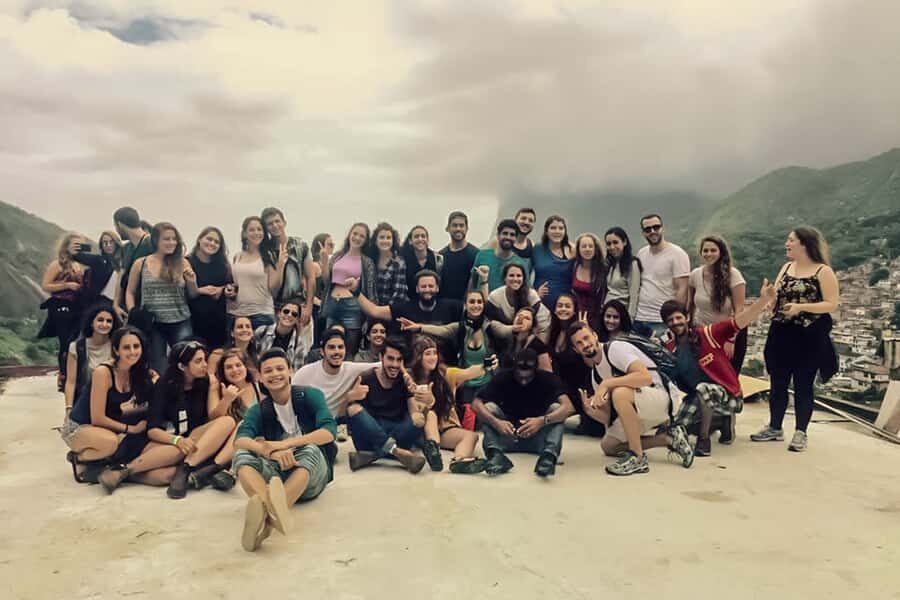
Rio has a way of making outsiders nervous. This is exactly why I’m glad this tour begins at the bottom of the favela and doesn’t treat you like you’re just hunting for dramatic photos. Before you walk, you get guidance on how to behave and how to respect the community in everyday ways. That simple start matters because it changes how you move, how you speak, and how people read you.
The group dynamic also helps. You’re with a live, English/Portuguese/Spanish-speaking guide (Jefferson is one name you’ll hear), and the guide keeps the pace humane while still getting you to the view. That balance is part of the value here: you’re not left to figure out cultural rules on your own.
And yes, you’ll pass interesting characters and real-life street scenes. The point isn’t to stare or judge. The tour is built to help you look with the right attitude, so you don’t feel like an intruder.
You can also read our reviews of more tours and experiences in Rio De Janeiro.



Getting there: meeting point, scooter time, and what optional rides mean
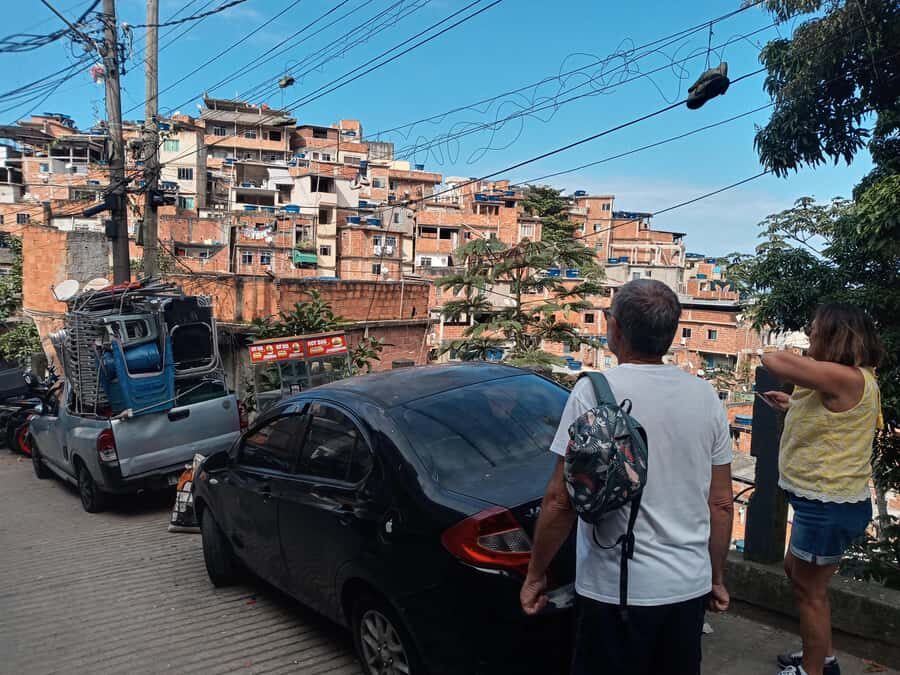
You meet at R. Sá Ferreira, 38, right at the corner between Avenida Nossa Senhora de Copacabana and Rua Sá Ferreira. It’s a practical start because you’re already in the Rio rhythm of Copacabana, not out in the far suburbs.
The plan includes scooter time (about 15 minutes). For many people, this is a nice breather before the walking begins, and it also helps you understand the geography of how the favela rises above the city grid.
You may also have two motorized options during the tour:
- A 5-minute motorcycle option to get straight into the middle portion of the favela
- A general possibility to take a motorcycle, but the important detail is that a moto taxi is not included
So here’s the reality check: these options can reduce some walking distance, but they don’t remove the fact that you’re climbing. Bring your “I can walk uphill” shoes.
Stop one: the hill and the first big sense of place
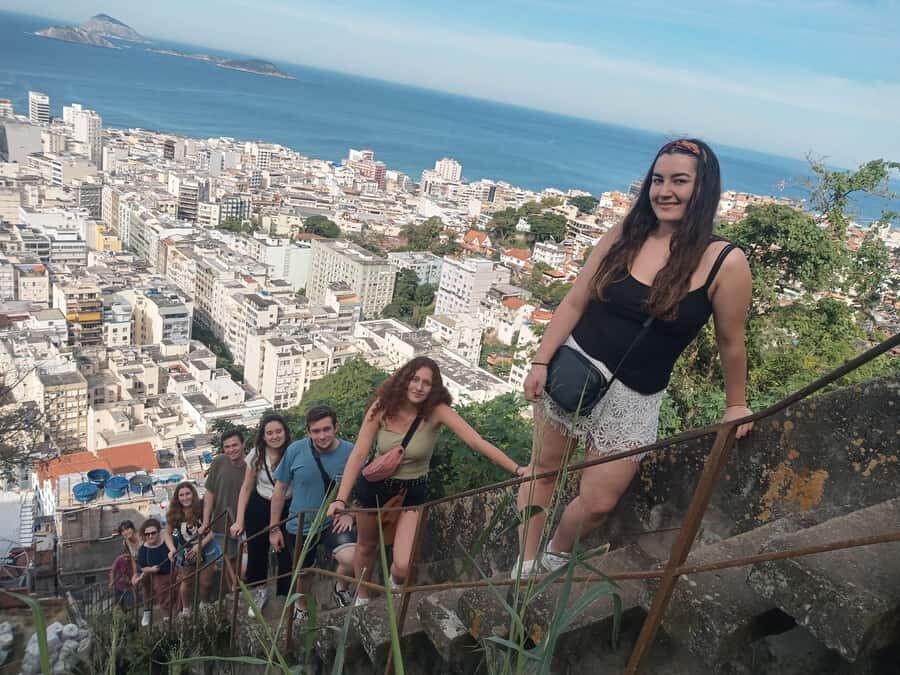
Once you start moving, you’re not bouncing between random viewpoints. You’re learning the favela as a place with structure: where daily life happens, where community spaces show up, and how art sits on walls as public storytelling.
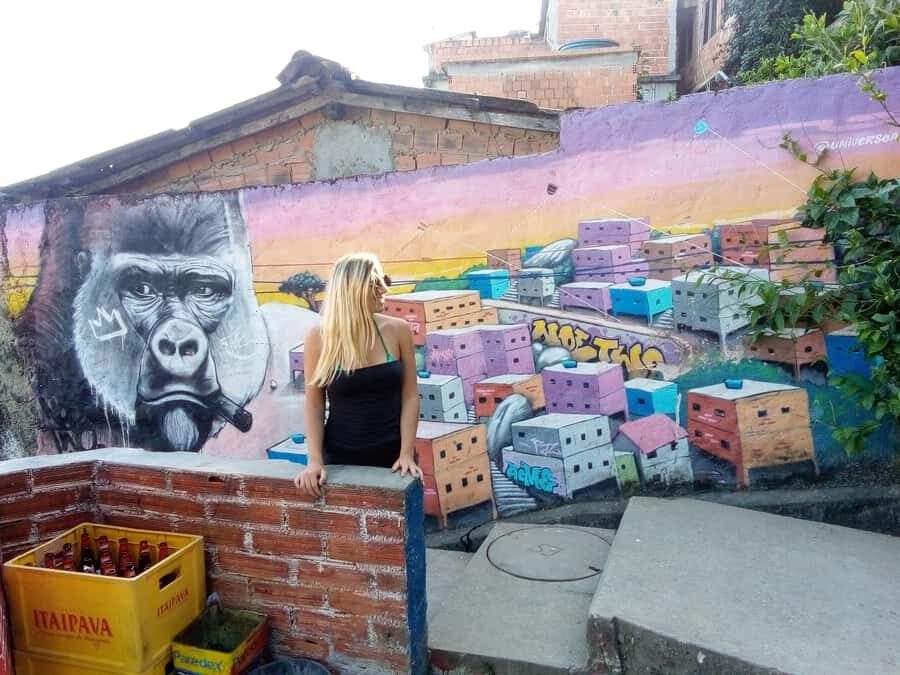
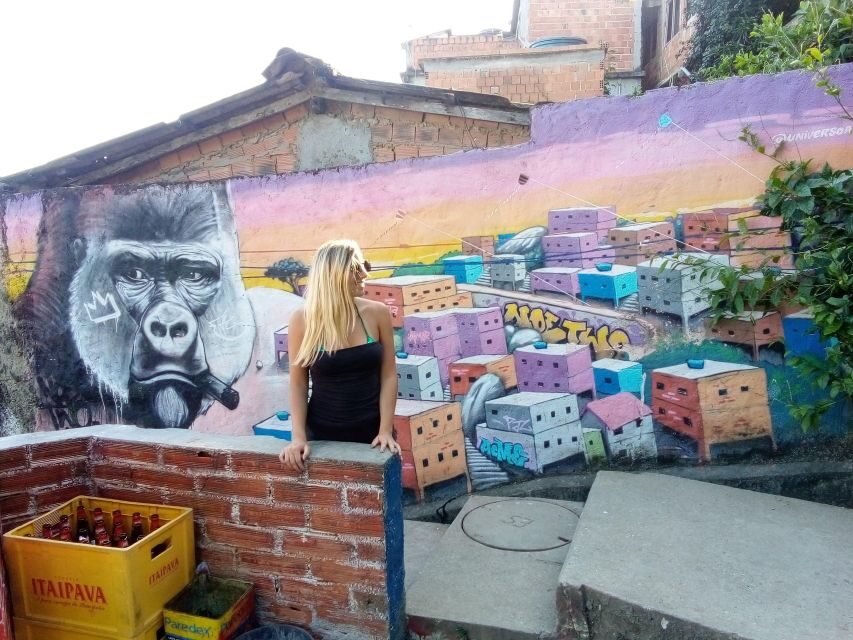
One of the best parts for me is that the tour treats the walls like documents. Instead of “look at the graffiti,” you’re shown murals with history and passion. You’ll make photo stops, but you’ll also get taught what to notice so your pictures aren’t just pretty. They’re grounded.
There’s also a smart “learn first” rhythm. Early on, you understand the behavior rules, then you walk. That flow helps you avoid the uncomfortable feeling of being lost or standing out in the wrong way.
The market and street art: where photos turn into understanding
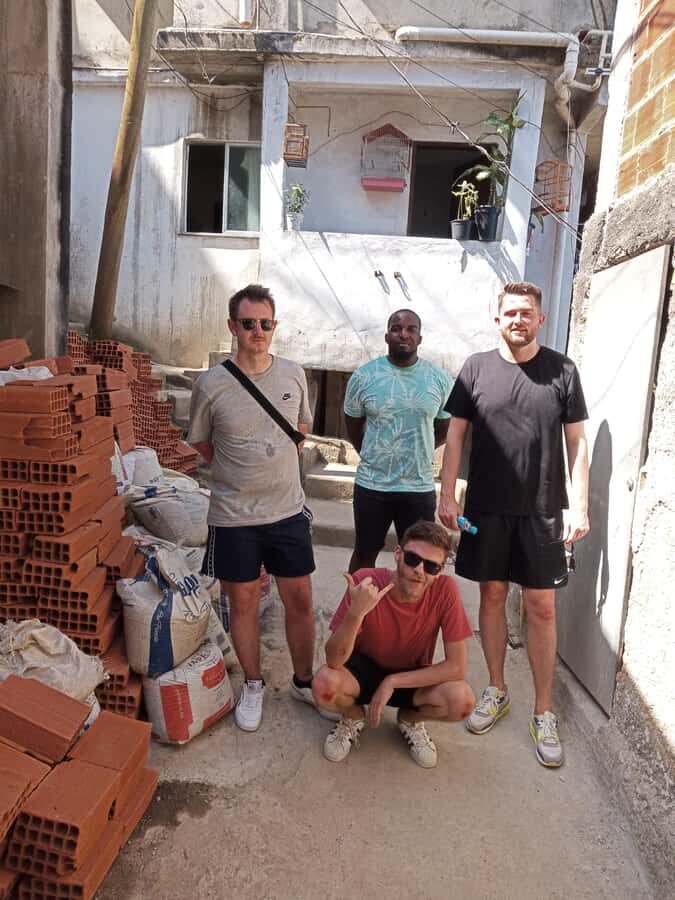
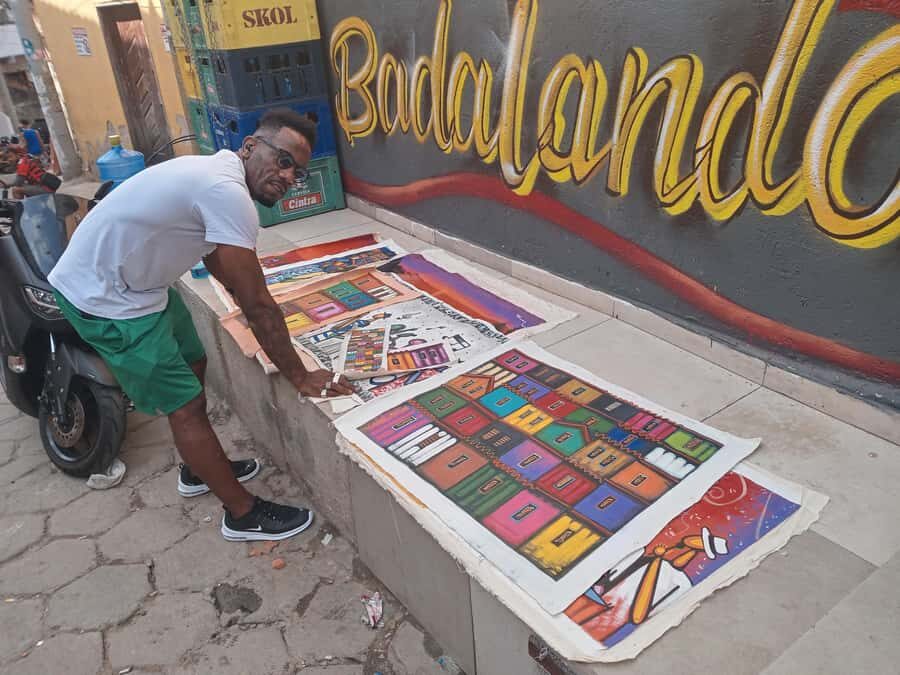
A major highlight is the chance to stop at the local market. This is not a staged craft fair. You’re seeing food and art around real daily needs, and the guide helps you connect what you see on the stalls with the people behind it.
I especially like this section because it turns your camera into a tool for learning. You’re taking photos of the market of food and arts with the best artists, but you’re also watching how the community organizes itself around everyday commerce.
Then come the wall paintings. The tour gives you the chance to discover the favela’s graffiti and murals across areas full of history and emotion. This is where people often realize how wrong media stories can be. Even when you’re just walking, you start to understand that the walls aren’t decoration. They’re identity.
Practical tip: if you care about photos, keep your hands free. Some stops are close enough that you’ll want quick angles and stable footing. Your guide will time breaks so you don’t feel rushed.
Coffee in a local house: what “community life” looks like
The tour includes an experience inside a local house, where you have coffee. This is one of those moments that feels simple but changes the whole tone of the day.
The value isn’t luxury. It’s connection. You get a human snapshot of how people live, how hospitality works, and how conversation flows when you’re not behind a restaurant counter.
You’ll also get a stronger sense of how the favela is not a single story. It’s many stories. One house, one coffee, and suddenly the place feels like a neighborhood instead of an “experience.”





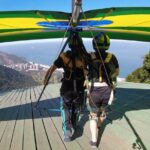
Optional soccer and motorcycles: fun, but always with the guide in charge
If you like movement, you might get the option to play some football (soccer) with locals. This can be a highlight because it turns the day from sightseeing into shared time. You’re not just watching; you’re participating in a local routine.
The key is that the guide is still running the show. That’s part of why tours like this work: you’re invited into the moment without disrupting it.
Motorcycles are another option. The tour can include getting on the motorcycle for about five minutes straight to the middle of the favela. It’s short, so it feels like a taste rather than a full ride. Still, it can be a big help if you’re worried about the number of steps.
The art gallery for kids: what you’re actually supporting
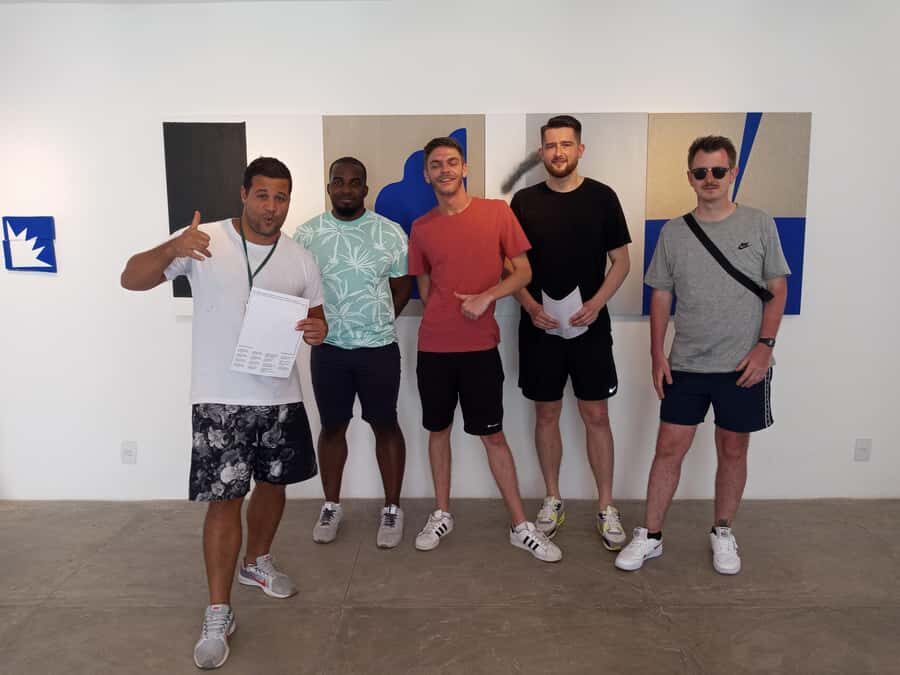
A standout stop is the gallery of a very famous local who teaches kids how to paint. This section matters because it connects what you’re seeing on the walls to what happens beyond them.
Instead of treating street art like a one-time spectacle, you learn how art can become training, opportunity, and a route to a better future for kids in the community. Even if you don’t know Portuguese (your guide is there in English/Spanish too), you’ll feel the difference in tone when you’re in a space focused on teaching rather than display.
If you’ve ever wondered how communities keep creativity alive under pressure, this is the kind of stop that makes the question feel real.
The hilltop hike and sunset views over Rio
Now for the part that keeps people coming back: the hike up the hill and the payoff views.
The tour takes you to the top with views toward Ipanema, Leblon, Flamengo club, and the Rodrigo de Freitas Lagoon. From up there, you can also see parts of the city that help connect Rio’s “icon” landmarks to the reality of where people live.
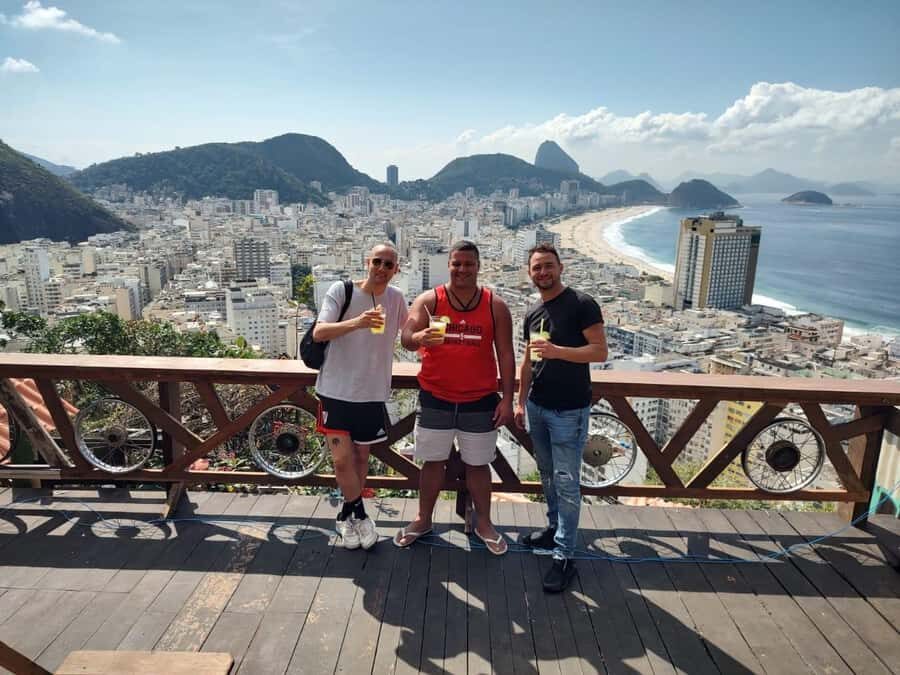
You’ll look toward Christ the Redeemer, the jungle edges, and then you’ll get the wide view toward Copacabana Beach and Sugarloaf from the hilltop.
This is where your earlier street art stops start to click. You’re not just getting a postcard. You’re seeing how a city’s big symbols sit in the same frame as everyday neighborhoods.
One more practical point: sunset is the big moment here. Start with the mindset that you’re going to be outside, moving, and taking photos in shifting light. If you bring a camera, keep settings simple. If you’re using your phone, expect it to struggle slightly with brightness at golden hour.
Drinks, appetizers, and Brazilian music at the top
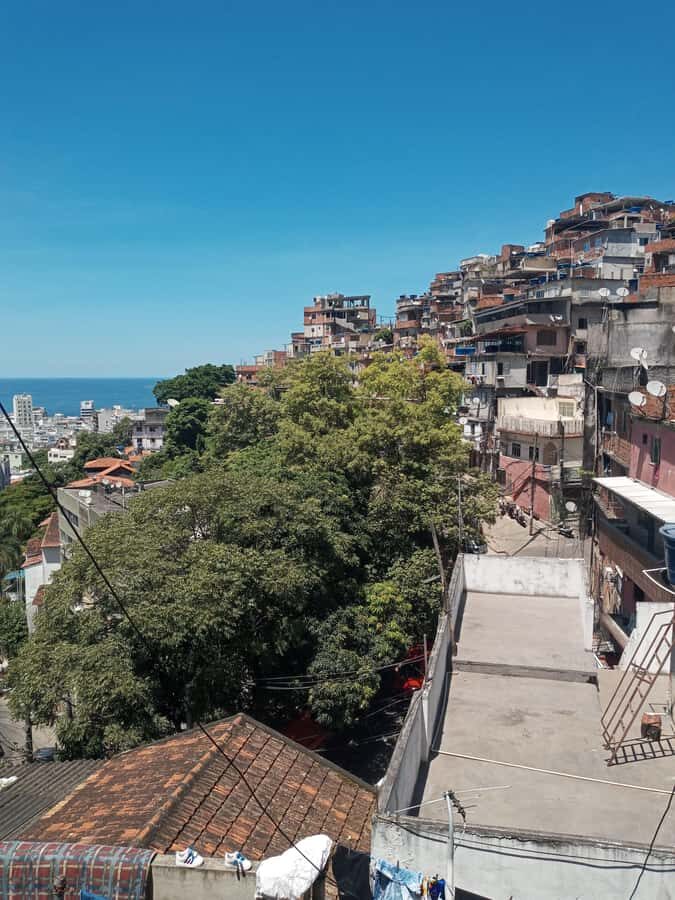
At the top, the tour includes a finish with time for drinks, appetizers, and Brazilian music. Since food and drinks are listed as not included, treat this as a moment where you can buy or participate depending on what’s available in that portion of the experience.
Either way, this is a good way to end. After the walking and climbing, you get a social pause where the day makes sense. You can compare notes with your guide, ask questions about what you saw, and soak in the view one last time.
The pace: how long it feels and who it suits best
The activity is priced at $80 per person and is offered over a schedule that’s valid for up to 3 days for booking availability. Practically, expect a multi-hour outing with structured stops for walking, sightseeing, and a longer photo-and-view moment.
This tour suits you if:
- You want a Rio experience that’s not only beaches and landmarks
- You care about street art, murals, and why they exist
- You like guides who explain behavior and community context
- You don’t mind stairs and uphill walking
It may not suit you if:
- You need step-free routes (and again, it is not suitable for pregnant women)
- You want a passive, sit-and-watch tour with minimal walking
- You get stressed by close-up street scenes and prefer a purely tourist bubble
Price and value: what $80 is buying you
At $80 per person, the value is less about access to a “secret place” and more about structured time with a local guide who can interpret what you’re seeing.
Here’s what you get in return:
- Coffee break included
- A guided experience with live commentary in multiple languages
- A hilltop viewpoint sequence that connects to multiple Rio landmarks
- Stops that focus on community life and art, not just scenic photos
What’s not included is important too. Food and drinks aren’t included, and you should bring extra cash for local guidance (more on that next). If you expect the tour to feel like a full meal plan, you might be disappointed. If you’re happy treating the drinks or snacks at the end as optional, the price feels fair for the amount of walking, explanation, and access to local spaces.
Money and essentials: cash, shoes, and getting comfortable
Bring cash for a local guide payment listed as $10. That’s one of those details that can save you stress on the day. If you arrive without cash, you may end up scrambling at the wrong moment.
For your comfort, bring:
- Breathable clothing
- Sports shoes
And plan for a lot of steps. Even with optional motorcycle help, you’ll still be walking and climbing. Comfortable shoes are non-negotiable if you want to enjoy the views instead of counting blisters.
Safety and comfort: what “safe” means on a real street tour
Safety here is about how the tour is run. You start with respect instructions and you follow your guide through the neighborhood. That approach matters because you’re not wandering freely. Your guide’s job is to manage the pace, the stops, and how you interact with people around you.
From the experience feedback, people especially liked how they were treated with polite respect, even when the street included tense-looking street scenes. The lesson is not to fear every corner. The lesson is to behave the right way and let your guide lead.
Should you book this favela tour?
Yes, I’d book it if your goal is to understand Rio as more than skyline and beach. This is one of the more meaningful ways to connect street art, daily life, and big views into a single day, with the guide Jefferson (or another local) helping you stay respectful and oriented.
Skip it if you want an easy, flat walk or if the thought of steep stairs stresses you out. Also, if you’re uncomfortable being in close proximity to real neighborhoods and real street life, you might prefer a more controlled sightseeing route.
If you do book, come ready with sports shoes, a calm attitude, and a willingness to look at murals and community spaces as part of Rio’s identity—not just background.
FAQ
Where is the meeting point?
The meeting point is at the corner of Avenida Nossa Senhora de Copacabana and Rua Sá Ferreira, exact address: Rua Sá Ferreira, 38.
How much does the tour cost?
The price is listed as $80 per person.
What’s included in the price?
Included: a coffee break, the meeting point, and a live tour guide.
Do you provide hotel pickup and drop-off?
No. Hotel pickup and drop-off are not included.
Are meals and drinks included?
Food and drinks are not included. There may be a moment at the top with drinks, appetizers, and Brazilian music, but you should plan for that as not guaranteed in the base price.
What languages are the tour guide?
The live tour guide speaks English, Portuguese, and Spanish.
Is the motorcycle or scooter ride included?
The itinerary includes scooter time (about 15 minutes). A motorcycle option for about 5 minutes straight into the middle of the favela is listed as an option. A moto taxi is not included.