REVIEW · RIO DE JANEIRO
Rio de Janeiro Nature Secrets ‘The Eco Citytour’
Book on GetYourGuide →Operated by Jungle Me · Bookable on GetYourGuide
Rio has a green side few people plan for. This 9-hour eco citytour strings together multiple ecosystems with easy walking and serious scenery. You’ll move from viewpoints over Leblon and Ipanema into the Tijuca Forest and end at the protected surf-and-mountain setting of Prainha.
What I really like is the way the route covers a lot without turning it into a hike-fest. You’ll get a bilingual guide (English and Portuguese) who can keep explanations clear and conversational, with guides like Gustavo and Tito showing up in feedback as polite, accommodating, and great at answering questions. The second big plus is the wildlife vibe: this is the kind of day where you might spot capybaras, caimans, and monkeys, but you’re still guaranteed nature even if you don’t see animals.
One consideration: animal sightings are not promised. So go for the views, waterfalls, lagoons, and beach time, and treat wildlife as a bonus rather than the main goal.
In This Review
- Key things that make this eco citytour worth your time
- Rio’s nature in one day, without the workout tour
- Pickup in the South Zone: save energy before you spend it outside
- Dois Irmãos Park: the first big view over Leblon and Ipanema
- Vista Chinesa and Tijuca Forest: rainforest viewpoints and the waterfall zone
- Canoas Summit and Mirante das Canoas: short stop, strong payoff
- Barra da Tijuca lunch reset: plan for food on your own
- Marapendi mangroves and lagoon at Parque Natural Municipal Marapendi
- Prainha Beach Park: the protected beach side of Rio
- Roncador Outlook and the sleeping giant legend
- Price and value: why $69 can make sense here
- What to bring and how to set expectations for an easy day
- Should you book the Rio Nature Secrets Eco Citytour?
- FAQ
- How long is the Rio Nature Secrets The Eco Citytour?
- Where does pickup happen?
- What languages are available on the tour?
- Is hiking involved?
- Can I expect to see wildlife like caimans and capybaras?
- What should I bring?
- Is it suitable for young children or wheelchair users?
Key things that make this eco citytour worth your time
- Seven stops across four nature parks, so you see real variety in one day
- Low-impact walking only, with short path time at each attraction
- Tijuca Forest highlights like Vista Chinesa and the Taunay Waterfall area
- Mangrove-and-lagoon setting at Marapendi, where wildlife odds are higher
- Prainha Beach Park: a protected, secluded beach surrounded by green mountains
- Roncador Outlook and the sleeping giant legend for a strong wrap-up view
Rio’s nature in one day, without the workout tour

This tour is built for people who want the Rio outdoors experience but don’t want to burn their legs on long trail hikes. The pacing is meant to be relaxed: you’ll do short, easy walking segments on paths at each stop, not hours of climbing. Think of it as a “greatest hits” route for Rio’s natural features, with plenty of photo moments and viewpoint time.
You also get a smart mix of habitats. The day moves through rainforest viewpoints, waterfall country, wetlands, and then a protected beach. That variety matters because Rio’s ecosystems aren’t just scenery; they affect plants, animals, and even the way the air feels when you step off the bus.
One more practical point: the tour is designed around a guided route with transportation from designated hotels in Rio’s South Zone. That means you’re not spending your day fighting buses or rideshares to reach scattered nature spots. For $69, you’re paying mainly for the access, the guide time, and the logistics that connect everything smoothly.
You can also read our reviews of more tours and experiences in Rio De Janeiro.



Pickup in the South Zone: save energy before you spend it outside

Most people lose time before the tour even starts. Here, pickup is included for hotels and hostels in Rio’s South Zone, with lots of options across Copacabana, Ipanema, and Leblon (and nearby areas on the list). If your exact hotel isn’t covered, the partner will provide a nearby meeting point, so you’re not stuck waiting outside a far-off landmark.
This is a good match if you’re staying somewhere central on the coast. The South Zone location also helps you ease into nature because the day starts with viewpoints you can reach quickly from the city. I also like that the drop-off is handled at the end at the same set of designated locations.
The schedule is 9 hours total, and timing on these day trips matters. You’ll want to plan your day around it: treat this as your main activity, not something you tack on after a late brunch. Bring a small day bag, because large luggage is not allowed.
Dois Irmãos Park: the first big view over Leblon and Ipanema
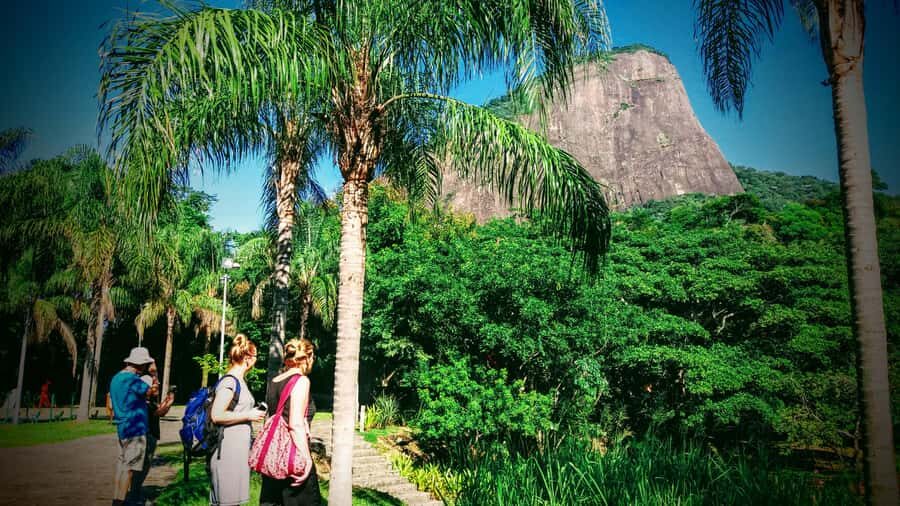
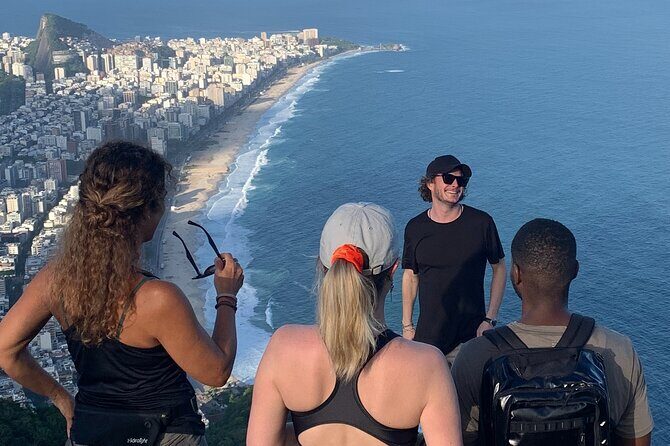
The day starts at Parque Natural Municipal Dois Irmãos–Dois Cariocas–Sérgio Bernardes e Alfredo Sirkis, with a photo stop and a guided visit. If you’ve only seen Rio from the beaches, this first stop helps you understand the city’s shape: steep slopes, dense forest, and coast in the same frame.
From the Penhasco Dois Irmãos Park area, you’ll get a standout view over the Leblon and Ipanema coastline. This is the kind of viewpoint that makes you instantly grasp why people call Rio dramatic. Even if clouds roll in, you’ll still get the sense of “city meets wilderness,” because the green slopes do most of the work.
This first segment is also a good mental warm-up. Short walking + viewpoint time sets the tone without exhausting you before you head into the deeper rainforest areas later.
Vista Chinesa and Tijuca Forest: rainforest viewpoints and the waterfall zone

Next up is Vista Chinesa, one of those scenic summits that turns Rio’s rainforest into a panoramic show. You’ll have a photo stop, a guided visit, and time to look out. When you’re up there, it’s easier to see how Tijuca’s forest isn’t a separate world; it’s right next to the city.
After that, the route moves deeper into Tijuca Forest National Park. This is where you start to get the ecological story explained in a practical way: how rainforest plants and waterways work together, why certain areas hold moisture, and how altitude changes the experience. You’re not going to be doing long hikes, but you’ll still feel like you’re in a living system.
Cascatinha Taunay (Taunay Waterfall area) is one of the highlights. Plan on short path time and guided sightseeing around the waterfall zone. Waterfalls in the Tijuca area can feel more “close up” than you expect because the forest helps create a cool pocket of air. If you’ve been sweating on the beach that morning, this can feel like a reset.
Canoas Summit and Mirante das Canoas: short stop, strong payoff

You then reach the Mirante das Canoas area for another photo stop and a guided sightseeing segment. This part of the day is about vantage points: less about trekking, more about taking in how the terrain folds and where the city’s coast disappears into hills.
From these viewpoints, you’ll often understand Rio better than from any beach photo. The curve of the coastline, the way neighborhoods tuck between slopes, and the patchwork of green vs. built areas all become clearer once you’ve seen them from above.
This segment also helps you pace the day. You get multiple “look and learn” moments without committing to strenuous movement, which is ideal if you’re traveling with limited time or you want to keep energy for the later beach stop at Prainha.





Barra da Tijuca lunch reset: plan for food on your own

Midday includes a lunch break around Barra da Tijuca, with about an hour of time. Food and drinks are not included, so you’ll want to treat this as your chance to buy a meal or snacks rather than expecting it to be covered.
I like lunch breaks like this on city-nature tours. You get a mental reset before the schedule shifts into mangroves and then a beach that’s a little more remote-feeling. If you’re prone to hunger swings, bring extra snacks earlier in the day so the quiet gaps don’t get uncomfortable.
Also, this is the moment to check your gear. If you’re going to Prainha, make sure you’re set for sun and water: sunscreen, hat, and a towel can matter more than you think once you’re in warm coastal light again.
Marapendi mangroves and lagoon at Parque Natural Municipal Marapendi

The tour then heads to Parque Natural Municipal Marapendi, a mangrove-and-lagoon type environment that’s great for wildlife-spotting opportunities. You’ll have a guided visit plus some walk time, but it’s still low impact. The goal here is less hiking and more learning how wetlands work and why they attract animals.
This is where your chance of seeing caimans and capybaras becomes part of the fun. Even when you don’t spot them, mangroves change the whole vibe of the landscape: you’ll feel the sheltered water, the vegetation density, and the sense that this is a nursery habitat for wildlife.
Bring insect repellent for this section. Wetlands can mean biting bugs, especially when the air is warm. And wear closed-toe shoes since the terrain around natural areas can be uneven.
The best part of the Marapendi stop is the explanation component. A good guide helps you connect the dots: water flow, animal behavior, and what you’re actually looking at when you see plants and shallow lagoons.
Prainha Beach Park: the protected beach side of Rio

Finally, you reach Prainha Beach Park, described as a small, secluded, protected beach surrounded by mountains and rainforest. This is one of the strongest payoff moments on the route because it feels like Rio’s nature takes over again. You’re not just looking at water; you’re inside a protected landscape that limits the chaos you might associate with bigger beaches.
You’ll get photo time, a guided sightseeing segment, and some walking time on-site. If you brought swimwear and a towel, this is your chance to enjoy the beach without rushing. The mountains around Prainha matter too: they shape the feel of the place and help create that calmer, wilder-at-the-same-time mood.
Prainha is also popular with surfers, so you may see boards and people timing waves. Even if you’re not surfing, it’s a great beach to watch the ocean do its thing. Just keep in mind that weather and surf conditions can change what feels best in the water.
This is the section where your earlier sunscreen and hat choice really pays off. Plan to spend real time here and not treat it as a quick photo stop.
Roncador Outlook and the sleeping giant legend

To cap it off, you end with Roncador Outlook, where you can see the coastline of Rio and learn about the sleeping giant legend. This is a classic “myth plus view” moment: the story gives meaning to the shape you’re seeing, and the viewpoint gives you the visual proof.
It’s also a satisfying wrap-up because you’ve already been through multiple habitats during the day. Ending at a coast view brings it full circle: from forest to wetlands to beach, you see how the geography drives Rio’s identity.
If you care about learning while you travel, this is the kind of stop that lands well. You get a narrative thread that helps the geography feel more memorable than a list of locations.
Price and value: why $69 can make sense here

At $69 per person for a 9-hour tour, value depends on what you’d otherwise do. If you tried to piece this together on your own, you’d likely pay for several separate transport rides and spend time coordinating timing between far-flung natural spots. Here, transportation from designated South Zone hotels is included, plus you get a bilingual guide and insurance.
You’re also getting a high density of nature stops: seven attractions across four nature parks in one day. That’s the real bargain driver. Even if each stop is short, the total experience is bigger than a single “lookout and photo” outing.
There’s also a clear expectation setting: there’s no long hiking, and walking is low impact. That’s part of the value too, because it makes this tour work for more travel styles, including people who want nature without suffering for it.
Food and drinks are not included, so budget for lunch/snacks. But if you bring snacks and plan your meal at the lunch break, the rest of the day feels well-supported.
What to bring and how to set expectations for an easy day
This tour is simple, but you’ll enjoy it more if you pack like you’re going to spend time outdoors in sun, water, and natural terrain.
Bring:
- Hat, sunscreen, and water
- Swimwear and a towel (Prainha makes that worthwhile)
- Snacks (especially since food and drinks aren’t included)
- Insect repellent for the mangrove stop
- Closed-toe shoes for paths and natural ground
- Comfortable clothes for warm weather
Know what not to bring:
- No luggage or large bags.
Know the walking reality:
- There’s no trail hiking. It’s low-impact walking, about 15 minutes on paths at each attraction.
Who this fits best:
- Great for couples, solo travelers, and small groups who want nature-focused sightseeing without long hikes
- Ideal if your time is limited but you still want multiple ecosystems in one day
Not for everyone:
- Children under 4 can’t participate
- Wheelchair users aren’t suited for this route based on the tour info
Should you book the Rio Nature Secrets Eco Citytour?
Book it if you want a strong Rio nature day with viewpoints, rainforest stops, waterfall scenery, wetlands, and a protected beach, all in one organized schedule. It’s also a good choice if you prefer short walks over long hiking and you’d rather spend your energy enjoying Prainha than climbing for hours.
Skip it if you’re hunting a guaranteed wildlife encounter, because sightings aren’t promised. And if you need access accommodations beyond low-impact walking or you rely on wheelchair access, you’ll be better off looking for a different format.
If you’re staying in Rio’s South Zone and want an easy day with real nature variety, this one is a solid pick.
FAQ
How long is the Rio Nature Secrets The Eco Citytour?
The tour lasts 9 hours.
Where does pickup happen?
Pickup is included from designated hotels and hostels in Rio’s South Zone area. If your hotel isn’t available, a nearby pickup point will be provided.
What languages are available on the tour?
The live tour guide is available in English and Portuguese.
Is hiking involved?
No trail hiking is included. You’ll do low-impact walking on paths, roughly about 15 minutes at each attraction.
Can I expect to see wildlife like caimans and capybaras?
You might see wildlife such as caimans, capybaras, and monkeys, but animal sightings are not guaranteed.
What should I bring?
Bring a hat, swimwear, a towel, snacks, sunscreen, water, comfortable clothes, insect repellent, and closed-toe shoes.
Is it suitable for young children or wheelchair users?
Children under 4 can’t participate, and the tour is not suitable for wheelchair users.