REVIEW · RIO DE JANEIRO
Jeep’n’Culture: Rocinha Favela and Tijuca Rainforest Tour
Book on Viator →Operated by Gray Line Brazil · Bookable on Viator
Two Rio icons in one half-day ride. You’ll get the contrast fast: Rocinha up close, then the Tijuca rainforest inside the city limits. I like that hotel pickup and drop-off are included, and that you travel in an open jeep with a guide who explains what you’re seeing instead of just moving you from stop to stop. One watch-out: the rainforest hiking time is relatively short, so you’ll want to mentally switch from adventure expectations to photo-and-views expectations.
This tour is priced at $90.25 for about 4 hours, with a maximum of 10 people, which keeps things manageable for questions and getting oriented. You’ll walk, you’ll stand for viewpoints, and you’ll likely feel hot and humid in the lower-elevation parts of Rio—plan for that. Food isn’t included, so if you get snacky, you’ll need to manage it yourself.
In This Review
- Key Highlights Worth Your Time
- Rocinha First: A Hard Conversation You Can Walk Through
- A note on “Is it safe?”
- The Rocinha Walk and Talk: What You’ll Actually See
- Your guide can make or break this part
- How to behave on the walk
- The Panoramic Jeep Moment: Getting a Different Angle
- Transition to Tijuca: From City Heat to Urban Green
- What you should expect on this part
- The Tijuca Stops: Waterfalls and a Visitor Center That Adds Context
- Cascatinha Taunay: A quick photo win
- Tijuca National Park Visitor Center: Learn before you hike more
- Cachoeira dos Macacos and the Taunay Waterfall: Expect Spray and Green Up Close
- Vista Chinesa: The photo payoff
- Timing, Pace, and Small-Group Logistics That Actually Matter
- What to wear and bring
- Price and Value: Where Your $90.25 Goes
- Value check for different travel styles
- Who This Tour Fits Best (and Who Might Want Another Option)
- Families and kids
- If you’re not a fan of tough topics
- Should You Book Jeep’n’Culture: Rocinha and Tijuca?
- FAQ
- How long is the Rocinha Favela and Tijuca Rainforest tour?
- Is hotel pickup and drop-off included?
- Is the tour offered in English, and how many people are in the group?
- Are entrance fees included for Tijuca stops?
- Is food or drinks included?
- What should I wear or bring for the walk and rainforest time?
- Can children join the tour?
Key Highlights Worth Your Time
- Rocinha on foot with a guide: a guided look at daily life, history, and the real challenges residents face
- Open-air jeep contrast: city streets give way to rainforest greens fast
- Tijuca National Park viewpoints: Vista Chinesa is built for photos over Rio
- Two waterfall moments: Cachoeira dos Macacos and Taunay-type cascades show up during the trek and stops
- Small group energy: capped at 10 travelers, which makes it feel less like a conveyor belt
Rocinha First: A Hard Conversation You Can Walk Through
Rocinha is Rio’s largest favela, and the biggest value of this tour is that it treats the visit like learning, not just sightseeing. You start with the energy of the community, then you get a guided walk through streets where everyday routines are the main story. That matters, because it’s easy to reduce favelas to stereotypes when you only see them from far away.
I also like the pacing. You don’t just hop out for a quick look; you get enough time to notice details—how people move, where conversations happen, and what locals describe as the pressures and needs in the neighborhood. The guide also gives historical and social context, so you’ll understand what you’re seeing instead of only reacting to what looks unfamiliar.
You can also read our reviews of more tours and experiences in Rio de Janeiro.



A note on “Is it safe?”
Safety isn’t something I can promise from a distance, but I can tell you what you should do to keep the experience smooth: stay with your group, follow the guide’s instructions, and treat the visit with respect. This kind of tour works best when you behave like a guest—quiet, aware, and not trying to turn real people into entertainment.
The Rocinha Walk and Talk: What You’ll Actually See

After traveling through Rio toward Rocinha (you’ll feel the neighborhood energy change as you approach), the tour focuses on two things: a short walk and a guided talk. The walk is where you’ll pick up the texture of daily life—street layout, movement patterns, and how community spaces function. The talk adds structure, explaining the history and the socioeconomic challenges that come up in Rocinha.
There’s also a break built into the middle of the day at Novo Visual Restaurante – Rocinha, with a short stop (about 15 minutes) to rest and reset. This matters more than you might think: favela walking tours and rainforest hikes both benefit from a quick breather before you keep going.
Your guide can make or break this part
A common theme in people’s positive experiences is how clearly the guide connects the dots between Brazil’s history and the realities favelas face. One guide name you may hear in groups is Linda, praised for explaining Brazil’s history and the socioeconomic issues tied to favelas in a way that’s easy to follow. Even if your guide isn’t Linda, the key is this: look for a guide who answers questions directly and connects what you see to why it matters.
How to behave on the walk
This is practical advice, not moralizing. Wear comfortable shoes, don’t rush ahead of your group, and keep your attention on your guide’s cues. If you want to take photos, do it when it feels appropriate and follow whatever guidance you’re given—rules can vary and locals notice when people are careful versus careless.





The Panoramic Jeep Moment: Getting a Different Angle
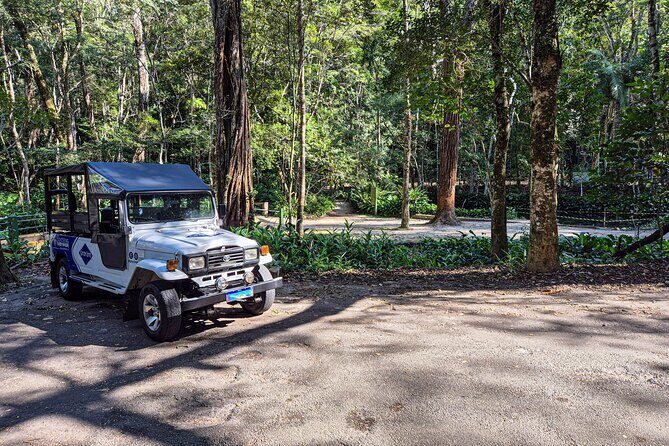
One of the most memorable pieces of Rocinha in this format is the jeep time on the way down. After the walk and talk, you ride in the jeep for a panoramic view, which changes the feel of the area. From ground level, you experience the community as “street life.” From higher angles in the jeep, you see scale—how homes, roads, and views connect.
That ride also helps you make sense of the terrain. Rio’s hills can be confusing when you’re moving through them on foot, and the jeep gives you a map view without you needing to be the navigator.
Transition to Tijuca: From City Heat to Urban Green

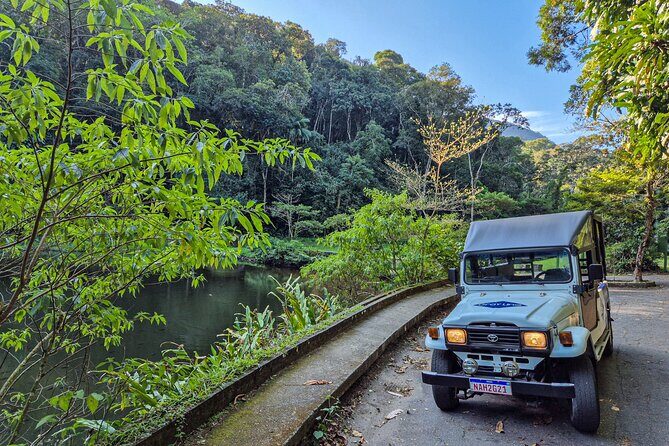
Then the tour shifts gears. You head to Floresta da Tijuca, described as the world’s largest urban rainforest, tucked into Rio’s city limits. It’s a mind-switch moment: stone-and-asphalt Rio feels close by, but the rainforest tone hits quickly when the jeep turns off the city rhythm and into green.
You’ll spend about 1 hour 30 minutes at this stage, with an open jeep entrance that emphasizes the contrast. That open-air vehicle is more than just fun—it keeps you noticing the change in air, light, and vegetation as you move.
What you should expect on this part
At Floresta da Tijuca, you’re not going to be exploring a remote wilderness for days. You’re getting rainforest immersion inside a day plan: plants, wildlife spotting opportunities, and a structured sense of place. The vibe here is “short hike with context,” not a long trekking expedition.
If you’re sensitive to heat or humidity, plan to move at a slower pace during this window. You’ll likely be outside, and you’ll be doing enough walking that comfort matters.
The Tijuca Stops: Waterfalls and a Visitor Center That Adds Context

After the rainforest introduction, the itinerary includes waterfall and park context stops.
Cascatinha Taunay: A quick photo win
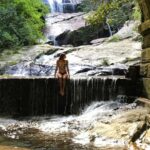
There’s a stop at Cascatinha Taunay, noted as an iconic waterfall and a good photo opportunity. The time allocation is short (about 15 minutes), so this is less about lingering and more about getting the shot and soaking up the sound of water in the forest.
Tijuca National Park Visitor Center: Learn before you hike more
Next comes Tijuca National Park Visitor Center for about 15 minutes. This part is valuable because it gives you a framework for what you’re seeing. When you have at least a basic idea about local biodiversity, the rainforest walking feels less random and more meaningful.
It also gives you a chance to pause in the shade or regroup mentally before the higher viewpoint section. On humid days, those small breaks can be the difference between enjoying the trek and feeling worn out.
Cachoeira dos Macacos and the Taunay Waterfall: Expect Spray and Green Up Close
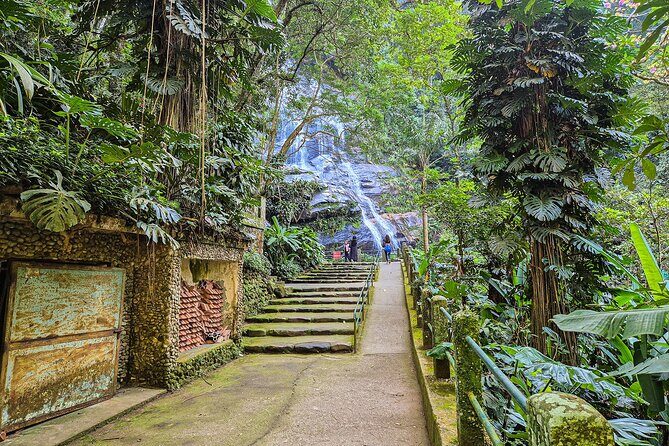
The trek includes time on foot (about 30 minutes mentioned in the tour description) for watching the forest canopy and spotting native wildlife. You’ll also feel the spray from Cachoeira dos Macacos (Waterfall of the Monkeys) and Taunay Waterfall during this rainforest portion.
Even when you don’t see wildlife clearly, the sense of being inside a living system is the point. Birds and small animals can be quick, and the guide’s job is to help you notice what you’d miss on your own—movement, sound, and the places animals are likely to be.
Vista Chinesa: The photo payoff
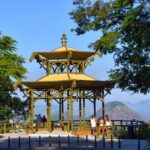
At the pavilion at Tijuca National Park’s highest point, you’ll get Vista Chinesa (Chinese View). This is the “look back over Rio” moment—the one where the entire city suddenly makes sense in a single wide frame. Give yourself time to stand, adjust your angle, and take photos from a couple spots, not just one.
If you’re the type who enjoys skyline views, this stop alone can justify the rainforest portion, because it turns the greenery into a backdrop for the city’s scale.
Timing, Pace, and Small-Group Logistics That Actually Matter

This is roughly 4 hours, so every hour counts. The tour has a tight structure: pickup, jeep travel, walks, waterfall/photo breaks, viewpoint time, then back to your hotel.
Two practical points:
- Small group (max 10) means you’ll have room for questions and you won’t feel lost in a crowd.
- Hotel pickup is included from select hotels. You’ll need to be ready at the lobby about 10 minutes before the scheduled time.
Also, this tour is offered in English, and it comes with a professional multilingual guide and professional driver. You’ll also get a mobile ticket, which helps on a day when you’ll be moving around and you don’t want to manage paper.
What to wear and bring
The essentials are stated clearly: use comfortable shoes and light clothes. That’s not just generic advice—your day includes walking in the favela and hiking in humid forest air, plus time near waterfalls where you might get mist.
If you bring a camera, consider that you’ll be under shade at times and in brighter open viewpoints at others. That contrast affects how your photos turn out, so take a test shot early and adjust.
Price and Value: Where Your $90.25 Goes

At $90.25 per person, this tour sits in the “worth it if you value contrast” category.
Here’s what you’re getting for the money:
- Hotel pickup and drop-off (not all tours include this)
- Professional driver and open jeep travel
- Professional multilingual guide in English
- Multiple major stops tied together efficiently, including Rocinha and Tijuca National Park areas
- The itinerary indicates admission tickets are free for the listed stops
Food and drinks aren’t included, which is the main way costs might creep up after the tour. The good news is the schedule includes a short break, so you can plan around it.
Value check for different travel styles
- If you like structured learning with real local context, this price feels justified.
- If you want a long, deep rainforest hike, you may feel the rainforest portion is short—one common sentiment people express is wanting more time at Tijuca.
- If you want a single day that covers both “Rio’s human side” and “Rio’s green side,” the format is efficient.
Who This Tour Fits Best (and Who Might Want Another Option)
This tour fits best if you’re:
- A first-time Rio visitor who wants a solid introduction beyond beaches and viewpoints
- Comfortable walking on uneven terrain (especially in Rocinha streets)
- Interested in understanding how communities work, not just taking photos
- Traveling with a guide who will explain history and social challenges (not just logistics)
Families and kids
Children must be accompanied by an adult, and the tour is described as suitable for most travelers. That said, it’s still a day of walking and humid conditions, so plan realistically for your child’s energy level.
If you’re not a fan of tough topics
Rocinha’s story includes challenges. If you prefer sightseeing that avoids social issues entirely, you might find this tour emotionally heavier than a pure nature day. The tour’s strength is its honesty and explanation, so if you want that, you’ll probably like it.
Should You Book Jeep’n’Culture: Rocinha and Tijuca?
If you want one day in Rio that mixes people, place, and perspective, I’d say book it—especially because the route combines Rocinha’s human reality with Tijuca’s urban jungle contrast. The small-group size and guided approach help you feel oriented instead of overwhelmed.
I’d hold off only if you strongly prefer long rainforest hikes over short forest stops, or if you’re expecting a more action-packed nature adventure. In this format, Tijuca is the reset and viewpoint chapter, not the whole plot.
One last practical tip before you say yes: bring snacks or plan your own meal strategy, since food and drinks aren’t included. And when you arrive in Rocinha, slow down. The best part here isn’t speed—it’s paying attention.
If you’re deciding on your Rio “must-do,” this is one of the few tours that gives you both the city’s jungle edge and its lived-in neighborhood reality in a single afternoon.
FAQ
How long is the Rocinha Favela and Tijuca Rainforest tour?
The tour runs about 4 hours.
Is hotel pickup and drop-off included?
Yes. Pickup and drop-off are included from select hotels, and you should be in the hotel lobby about 10 minutes before the scheduled time.
Is the tour offered in English, and how many people are in the group?
The tour is offered in English, and it has a maximum of 10 travelers.
Are entrance fees included for Tijuca stops?
The itinerary lists admission tickets as free for the Tijuca and park-related stops.
Is food or drinks included?
No. Food and drinks are not included.
What should I wear or bring for the walk and rainforest time?
Wear comfortable shoes and light clothes. The day includes walking and time near waterfalls where you may get mist.
Can children join the tour?
Children can participate, but they must be accompanied by an adult.