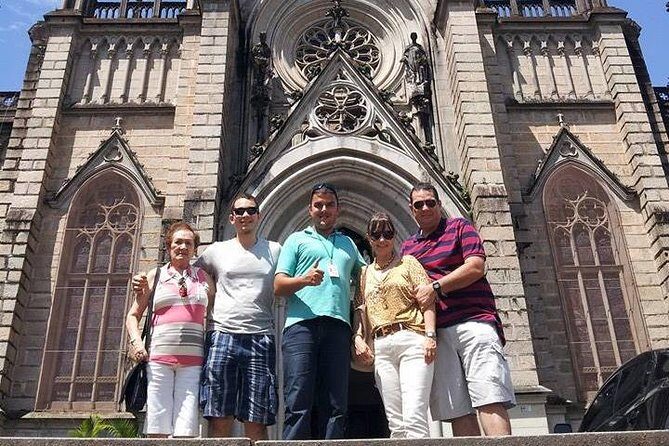
REVIEW · RIO DE JANEIRO
Christ the Redeemer and City Tour
Book on Viator →Operated by Discovery Rio Tour · Bookable on Viator
Rio is best when you get the views fast. On this 6-hour loop, you hit Christ the Redeemer, the Selarón Steps, and a handful of major Rio sights with a live, credentialed guide in an air-conditioned vehicle. It’s a smart way to compress the big names without losing half your day to transit and guessing.
Two things I particularly like: you get admission tickets included for the main stops, and the pacing gives you real time to look up at what matters (especially at Corcovado). Also, the guide experience can be excellent; one guide named Cecilia brought a lot of energy and helped the day feel smooth.
One drawback to keep in mind: a couple of the stops are quick (and Maracã is just the external area). If you want long, slow museum-style wandering, this tour may feel a bit short on the ground at each location.
In This Review
- Key highlights at a glance
- Corcovado and Christ the Redeemer: the view that justifies the morning
- Escadaria Selarón: art you walk through, not just look at
- Metropolitan Cathedral of Saint Sebastian: modern faith in the city center
- Maracã from the outside: quick football culture check
- Sambadromo da Marquês de Sapucaí: where the parade machinery lives
- Price and value: why $69 works if you want the big hits
- Timing and pacing: what 6 hours actually feels like
- Where you meet (and why Copacabana is a smart starting point)
- Who this tour suits best
- Book it or skip it? My honest call
- FAQ
- How long is the tour?
- What time does the tour start?
- Where does the tour start and end?
- How much does it cost?
- What’s included in the price?
- Is lunch or breakfast included?
- Are soft drinks included?
- Is Maracã included with tickets and full access?
- What’s the cancellation policy?
Key highlights at a glance

- Christ the Redeemer at Corcovado (709 meters) with broad city views
- Selarón Steps in between Santa Teresa and Lapa, made by artist Jorge Selarón
- Metropolitan Cathedral of Saint Sebastian in the city center (inaugurated in 1979)
- Maracã viewed from the outside only, for a quick football fix
- Sambadrome da Marquês de Sapucaí to understand the Samba Parade setup
Corcovado and Christ the Redeemer: the view that justifies the morning
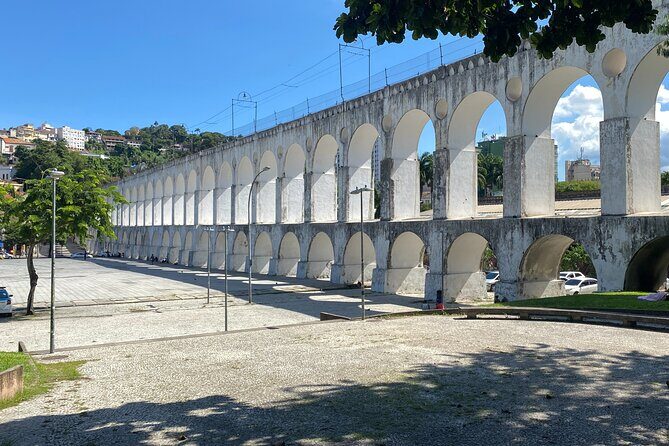
Your day starts by pointing the group toward Corcovado for Christ the Redeemer, one of Rio’s easiest “wow” stops. This statue sits off the hill of Corcovado at 709 meters above sea level, and the payoff is a wide sweep of the city below. Even if you’ve seen photos a thousand times, being up there changes the scale. You get the city as a whole, not just one beach or one neighborhood.
This is also one of those landmark-and-meaning combos. The statue was voted as one of the Seven Wonders of the Modern World in 2007. Since 2012 it’s been part of the Rio scenery on a World Heritage Sites list, which matters because it’s not treated like a random monument. It’s woven into the story of the city and protected as a cultural site.
Time-wise, you’re set for about 55 minutes at Corcovado. That’s enough to get oriented, take photos without panic, and still enjoy the view rather than rushing straight back to the bus. The tour includes admission ticket access here, so you don’t need to hunt for the right line or figure out ticket logistics while you’re already on a schedule.
My practical tip: bring sun protection and plan for wind. Corcovado can feel exposed compared to street level. And if you’re sensitive to stairs or uneven ground, wear shoes you can move in confidently; viewpoints usually involve some walking.
You can also read our reviews of more city tours in Rio de Janeiro



Escadaria Selarón: art you walk through, not just look at
After the big panorama, you shift into something more intimate: the Escadaria Selarón. These steps sit between the neighborhoods of Santa Teresa and Lapa. They’re a standout because the whole structure feels like a personal art project turned public obsession.
The artist behind it is Chilean-born Jorge Selarón, and he decorated the staircase as a tribute to the Brazilian povo. You’ll likely notice the mixture of colors and tile styles, which is part of the charm. It doesn’t read like a museum installation where everything is polished to the same standard. It reads like someone kept adding, adjusting, and responding to the place.
You get about 20 minutes here. That’s enough for the main experience: slow down for a few angles, look at the details along the sides, and take in the way the steps funnel you through the space. Since there’s no ticket cost on this stop, the value is all about the time you spend absorbing it.
One thing to consider: steps mean you’ll be on your feet. It’s not a long stop, but it’s an active one. If you have limited mobility, you might want to plan for careful footing and avoid rushing.
Metropolitan Cathedral of Saint Sebastian: modern faith in the city center
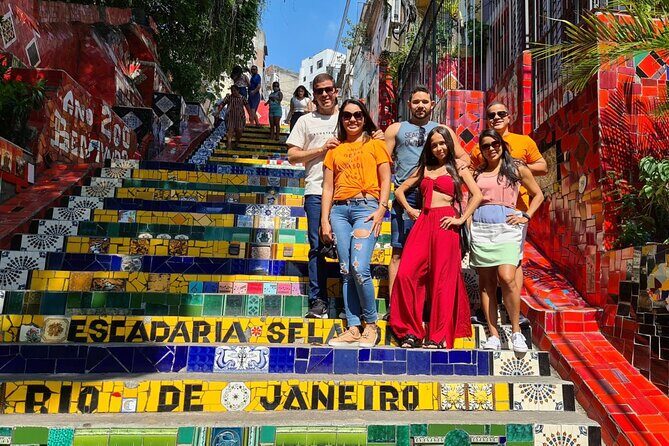
Next up is the Metropolitan Cathedral of Saint Sebastian, also known as the Metropolitan Cathedral of Rio de Janeiro. This is a Catholic cathedral located in the city center, and it helps balance the day. You’ve had outdoor vistas and street art; now you’re in a large, indoor, architecturally distinct setting.
This cathedral was inaugurated in 1979, replacing the earlier Igreja de Nossa Senhora do Carmo. Even if you’re not religious, it’s worth seeing because it shows how Rio layers different eras and beliefs into one urban fabric. The building’s role in the daily life of the center is the point: it’s not isolated on a hill. People pass through a functioning downtown.
Your stop is about 15 minutes. That’s brief, but it works for this type of stop—enough time to see the main structure, take a few photos, and get a quick sense of scale and design.
Practical note: if you’re visiting during midday heat, an indoor stop can be a welcome break. Just be aware that cathedrals can have rules about movement and photos depending on what’s happening.
Maracã from the outside: quick football culture check

Then you head to Maracanã, Rio’s famous soccer stadium. It’s located in the North Zone and has hosted many important events in Brazilian soccer. This stop is not about going deep into stadium facilities. It’s a peel (external area) visit, roughly 15 minutes.
That’s a key consideration for your expectations. If you’re a die-hard soccer fan hoping for a full stadium experience, this won’t be that. You’ll see it from outside and get the symbolic hit: the name, the scale, and the sense of where so many big moments took place.
Still, for most visitors, a short stop is a good trade. It keeps the day moving while adding variety. And it helps you connect Rio’s sports obsession to the physical place where it shows up.
My advice: treat Maracanã here as a visual culture stop, not a behind-the-scenes tour. If you want more, you can plan a separate stadium-focused day later.
Sambadromo da Marquês de Sapucaí: where the parade machinery lives
Your final major landmark is the Sambadromo da Marquês de Sapucaí. This long stretch along Avenida Marquês de Sapucaí is where the samba schools stage their big parade—often described as the heart of Rio’s Carnival season.
Even when there’s no parade running, the structure tells the story. It’s designed like a system: the schools need space to perform, the crowd needs lines of sight, and the event needs a clear rhythm. A quick visit helps you understand why Carnival in Rio feels like more than parties—it feels like a production with choreography and built-in tension.
You get about 15 minutes here, and the admission ticket is listed as free for this stop. That makes it a high-value addition because it costs you time and a little walking, not money.
Consideration: because your visit is short, you won’t get the full “this is what it looks like in motion” feeling that you’d get during a parade. But for first-timers, it’s a great way to place the samba culture in the real geography of the city.






Price and value: why $69 works if you want the big hits
At $69 per person for about 6 hours, this tour is priced like a practical city day rather than a luxury slow-browse. The big reason it feels like value is what’s included: an air-conditioned vehicle, a credentialed tourist guide, and admission ticket coverage for the major stops.
Lunch and breakfast aren’t included, and there’s no soda/pop included either. That’s normal for city tour pricing, but it does affect how you plan your day. If you jump straight into the itinerary at 8:00 am, you’ll likely want to eat before you start or plan an early meal after the tour ends.
In real terms, you’re paying for:
- Guide time (and that guide helps more than you’d expect—especially when places are spread out)
- Transport so you don’t waste energy figuring out routes
- Ticketed access for the high-demand attractions
One of the reviews highlighted that it felt like a good package for around 60 bucks including Christ tickets and transportation. Whether your exact value feeling lands at $60 or $69, the point is the same: you’re not paying extra for the most expensive-ticket parts.
If you’re traveling solo or as a couple and you’d otherwise spend time negotiating taxis and lines, this kind of packaged pricing often ends up cheaper than you think. If you’re the type who likes to explore slowly and build your own routes, you may not need a tour at all.
Timing and pacing: what 6 hours actually feels like
A schedule like this can feel tight, but it’s designed to hit the best-known Rio anchors without turning the day into a long slog. You start at 8:00 am and return to the meeting point at the end, which keeps the logistics simple.
Each stop has a clear “look and learn” window:
- Corcovado / Christ: about 55 minutes
- Selarón Steps: about 20 minutes
- Metropolitan Cathedral: about 15 minutes
- Maracanã (outside only): about 15 minutes
- Sambadrome: about 15 minutes
So the “time pressure” is real, especially for travelers who like lots of photos at every angle. But the tradeoff is you finish with a strong mental map of Rio’s must-sees: mountain icon, street art stairs, downtown architecture, football identity, and parade culture.
Small group matters here. The tour caps at 14 travelers. That usually keeps the experience from turning into a stop-and-stutter parade of people. You still need to be ready to move, but you’re not swallowed by a busload of strangers.
Where you meet (and why Copacabana is a smart starting point)
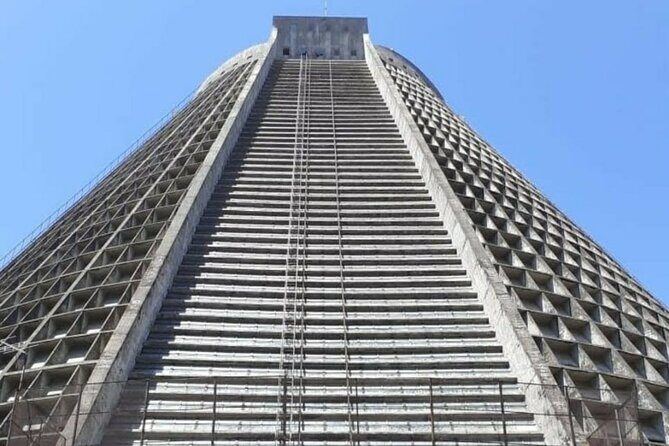
You start at Copacabana Palace, a Belmond Hotel, at Av. Atlântica, 1702, Copacabana. Starting from Copacabana is helpful because it’s a familiar area for many visitors, and it’s a logical hub for heading toward central Rio and then up into the Corcovado area.
It also means you’re less likely to spend the first hour of your day stressing over how to get to some remote pickup point. The tour ends back at the same meeting point, so you don’t need to arrange separate transport for the return.
The vehicle is air-conditioned, and the tour is described as near public transportation. That’s useful if you ever need a quick workaround.
Who this tour suits best
This tour is best for you if:
- You want major Rio highlights in one day without building your own route
- You’d rather pay for tickets and guided context than spend your morning figuring it out
- You’re okay with shorter stops and prefer “see it, learn it, move on” pacing
It’s less ideal if:
- You want long time at each site, especially Maracanã
- You’re hoping for deep, slow guided commentary at every stop
- You’re sensitive to early starts and brisk movement between points
Book it or skip it? My honest call
I’d book this tour if you’re on a first Rio trip and you want the biggest icons with minimum fuss. The combination of Christ the Redeemer access, a live credentialed guide, and small-group transport is the core value. The itinerary also makes sense: views first, then street art, then architecture, then Rio’s sports and parade culture.
I would think twice if you’re a stadium-focused soccer fan or someone who hates being rushed. Maracanã is only the external area, and several other stops are 15–20 minutes, so you’re buying variety and efficiency, not a slow immersion at one location.
If you decide to go, do two things: plan a snack or breakfast before the 8:00 am start, and wear shoes that handle quick walking and stairs at Escadaria Selarón.
FAQ
How long is the tour?
It’s about 6 hours.
What time does the tour start?
The start time is 8:00 am.
Where does the tour start and end?
It starts at Copacabana Palace, a Belmond Hotel and ends back at the same meeting point.
How much does it cost?
The price is $69.00 per person.
What’s included in the price?
Included are an air-conditioned vehicle, admission tickets, and a credentialed tourist guide.
Is lunch or breakfast included?
No. Lunch and breakfast are not included.
Are soft drinks included?
No. Soda/pop is not included.
Is Maracã included with tickets and full access?
No. The tour covers the external area only, and Maracã admission is not included.
What’s the cancellation policy?
You can cancel for a full refund if you cancel at least 24 hours before the experience starts.