REVIEW · RIO DE JANEIRO
Carnival Backstage Tour – Visit a traditional Samba School
Book on Viator →Operated by Tangol · Bookable on Viator
Want Carnaval behind-the-scenes? I love how this visit takes you into Cidade do Samba to see how a samba school actually works, and I also like that a traditional caipirinha is part of the experience. The main downside: it is only about two hours, so you are getting a taste, not a full Carnaval season project.
If you value personal attention, this tour is built for that. With a maximum of 20 travelers and a bilingual guide (English is offered), you tend to get more time for questions instead of just watching from the back row. One more practical consideration: the listing says food and drinks are not included, so after your caipirinha you may want to plan for a snack on your own.
In This Review
- Key Things to Know Before You Go
- Entering Cidade do Samba: Why This Workshop Tour Feels Different
- The Two-Hour Flow: What You’ll Do and Why It Works
- Costumes, Costume Fitting, and Learning a Little Samba
- The Caipirinha Moment: Small, Traditional, and Actually Useful
- Guide Quality and Attention: The Benefit of Staying Small
- Price and Value: Is $31 a Good Deal in Rio?
- Transfers, Meeting Point, and Day-Planning Without Headaches
- Who This Tour Is Best For
- Should You Book This Carnival Backstage Tour?
- FAQ
- How long is the Carnival Backstage Tour?
- Where does the tour start and end?
- Is hotel pickup included?
- What’s included in the ticket price?
- Is the tour available in English?
- Is food or extra drinks included?
- What is the maximum group size?
Key Things to Know Before You Go
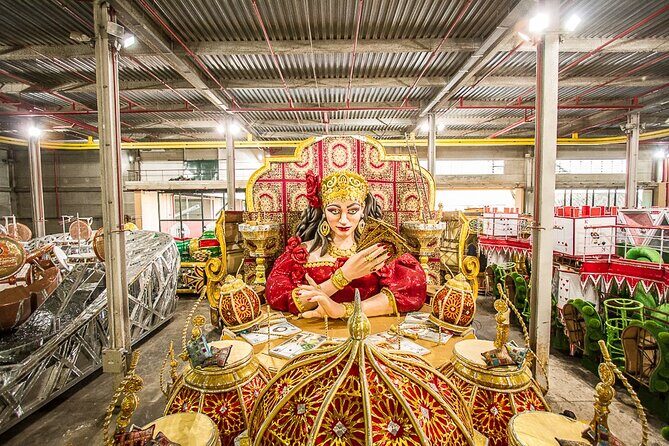
- Cidade do Samba focus: most of the time is spent at the samba school hub, so you are not bouncing around all day.
- Small group size: capped at 20 people, which helps you actually talk with your guide.
- Caipirinha included: you get a traditional Brazilian cocktail as part of the tour experience.
- Hands-on Carnaval moments: you may try on costumes and learn a bit of samba, not just watch.
- Bilingual guidance in English: helpful if your Portuguese is limited.
- Optional transfers for convenience: you can upgrade to round-trip hotel transfers.
Entering Cidade do Samba: Why This Workshop Tour Feels Different
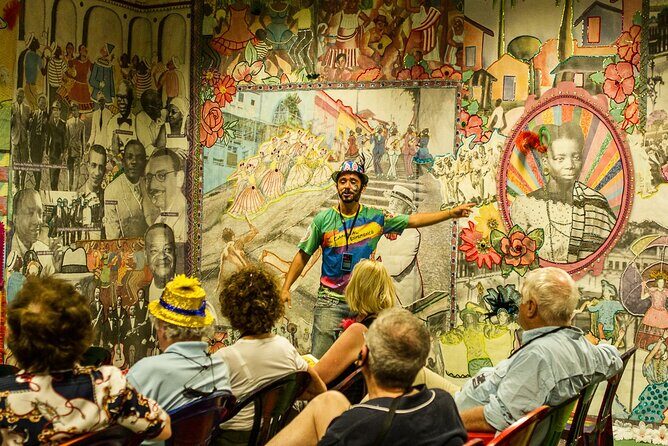
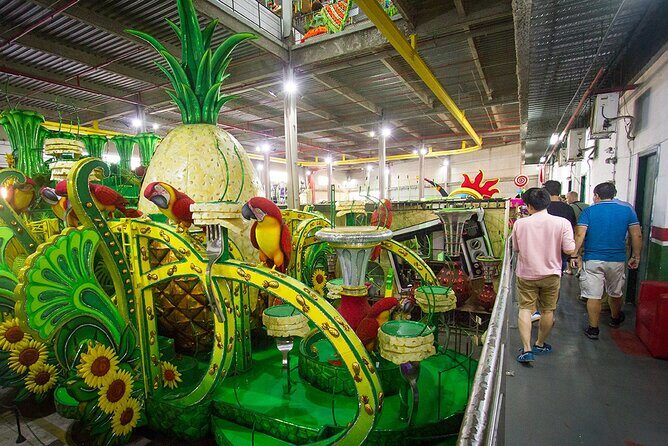
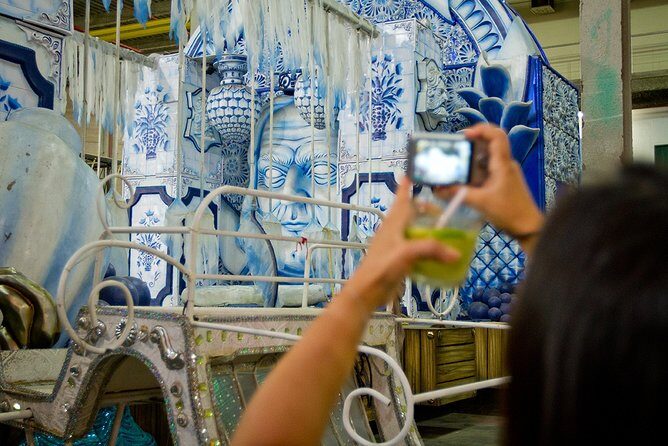
Rio’s Carnaval can look like pure spectacle from the street. This tour works because it shows the other side: the making. At Cidade do Samba, you are stepping into the world where costumes, props, and pageantry are handled with real-world logic—organization, rehearsal, and a lot of practical effort.
What I like most is that the tour isn’t only about the final performance. You get context for why samba schools care so much about details. In the stories and explanations, you learn that Carnaval is not just music and dancing; it is a competition with pride, planning, and deadlines. One of the tour’s most praised elements is that it frames Carnaval as a Rio institution—something with history, internal culture, and pressure to deliver.
Another big plus: you get a more human view of the process. If you have ever wondered how such big shows get built and managed, this is the kind of place where the answers start to make sense. You also hear about a samba school’s winning year—exactly the kind of detail that turns Carnaval from a TV event into something you can picture with your own eyes.
You can also read our reviews of more tours and experiences in Rio de Janeiro.



The Two-Hour Flow: What You’ll Do and Why It Works
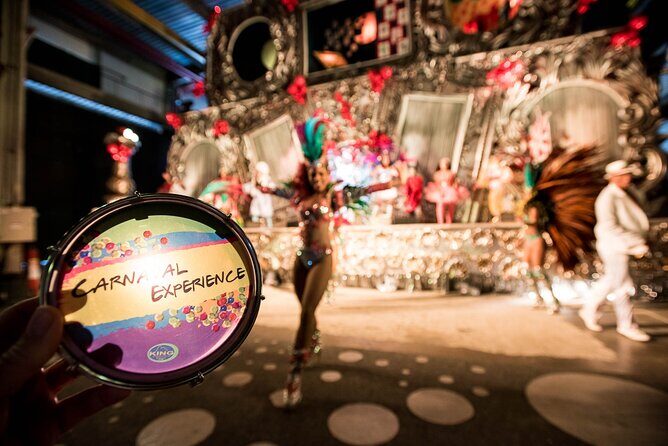
This is a tight experience—about two hours—so it is worth paying attention to how your time is likely structured. The core stop is at Cidade do Samba for roughly two hours, with an admission ticket included. In practice, that means you are spending your time where the action is, rather than burning it on long transfers.
Here’s what the visit is designed to deliver:
- A walkthrough-style look at the facilities (including the big workshop setting, not a tiny museum room).
- Explanations from your guide about how Carnaval happens, including the way floats and stage elements come together.
- Interactive moments that make the time feel lively instead of lecture-heavy.
One review-worthy detail that I think matters for your expectations: the behind-the-scenes explanation includes timing for each float’s contribution to the show—around 70 minutes per float. That single number helps you understand why everything has to be rehearsed, staged, and executed with precision. It is the kind of fact that makes the spectacle feel logical rather than random.
Because the timing is short, I suggest treating this tour as your “Carnaval primer.” After it, you will be better at spotting what matters when you see performances later—what looks polished, what took real work, and where the competition pressure shows up.
Costumes, Costume Fitting, and Learning a Little Samba
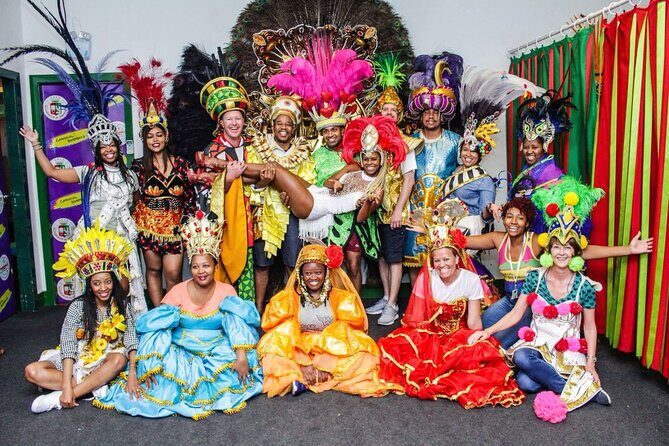
This is not a sit-and-stare tour. A highlight here is the interactive side—especially the chance to try on costumes and learn a little samba. That matters because it changes how you remember the experience. When you physically put on a costume, you understand quickly that Carnaval clothing is designed for movement, presence, and performance—so it feels less like fashion and more like stage technology.
Learning a bit of samba also changes the story. Even short instruction gives you an awareness of rhythm and coordination you would otherwise miss. You start to grasp why the choreography is such a big part of judging. You do not need to be a dancer; the goal is to get you into the culture for a while.
And yes, there is joy in it. The people who love this tour do so because it feels fun while still being informative. You get a chance to laugh, ask questions, and participate, instead of just collecting facts.
The Caipirinha Moment: Small, Traditional, and Actually Useful
A lot of tours mention food or drink, but they either use it as a throwaway add-on or pretend it matters when it doesn’t. Here, the caipirinha is a real part of the vibe. It is a traditional Brazilian cocktail, and it fits the theme: this is Carnaval culture, and caipirinhas are part of the way the country celebrates.
I see the caipirinha as two things:
- A cultural handshake that makes the experience feel Brazilian, not staged.
- A short breather in the middle of a busy tour pace.
Keep one expectation clear: the tour notes that food and drinks are not included. So the caipirinha is likely the drink you get; additional drinks and meals are on you.
If you plan your day smart, you can treat this as an afternoon cultural stop and then eat afterward. That keeps you from paying for overpriced convenience food later when you could just plan a simple meal near where you are staying.
Guide Quality and Attention: The Benefit of Staying Small
With a maximum of 20 travelers, you get a different kind of attention. In a smaller group, it is easier to ask questions and get direct answers. A bilingual guide also helps you follow the story without constantly translating in your head.
English is offered, and the tour includes a bilingual guide, which is exactly what you want if you:
- understand some Portuguese but do not want to gamble on missing key details
- want enough narration to make the behind-the-scenes look meaningful
- care about the history and the “how” behind the competition
From a practical standpoint, small groups also tend to move more smoothly through working spaces. You are not likely to feel swallowed by a crowd, and you can actually track what your guide is pointing out.





Price and Value: Is $31 a Good Deal in Rio?
At $31 per person, this tour is positioned as an accessible way to get real context for Carnaval. The value comes from what’s bundled:
- Admission ticket included to the main stop
- Bilingual guide support
- A structured visit centered on the samba school environment
- A caipirinha as part of the experience
- Mobile ticket convenience
Then there are the things you should not assume are included. The tour does not include food & drinks beyond what is specifically part of the experience. Also, transfers depend on the selected option. There is pickup offered, and there is an upgrade that includes round-trip transfers from your hotel, but not all versions may include the same convenience.
So, here is the value question I’d ask myself:
- If you want a short, guided Carnaval story plus hands-on moments, $31 seems reasonable.
- If you were planning to pay separately for entry and for guided explanations anyway, this bundle keeps you from stacking costs.
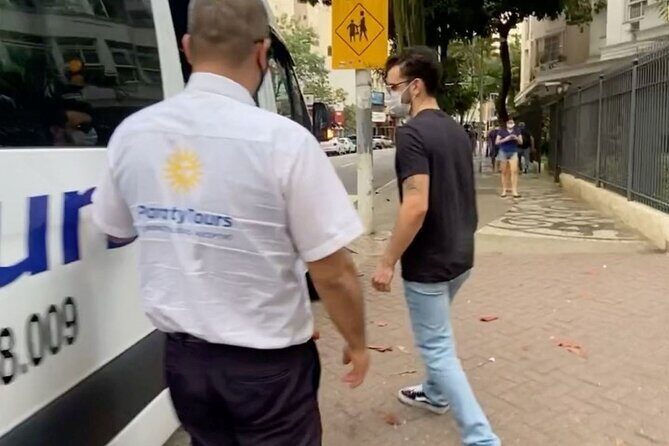
If you are staying a bit away from the meeting point area, I would seriously consider the transfer option. The tour starts at R. Rivadávia Corrêa, 60 – Santo Cristo, Rio de Janeiro – RJ, 20220-290, and it ends back at the meeting point. Transfers can save energy and keep your day from feeling like logistics first.
Transfers, Meeting Point, and Day-Planning Without Headaches
This tour meets at R. Rivadávia Corrêa, 60 – Santo Cristo, Rio de Janeiro – RJ, 20220-290, and ends back at the meeting point. That’s simple, but it does mean you should plan your afternoon around where you want to be after the tour.
Here’s how I’d plan the day:
- If you have the time, pair this with an easy meal nearby afterward.
- If you chose the round-trip transfer upgrade, you can keep your plan more flexible afterward.
- If you did not choose transfers, make sure you know how you will get back from the meeting point area to your lodging.
Pickup is offered, and transfers are listed as in/out depending on the selected option. So the biggest thing is to confirm what your chosen option includes before you show up. That one check can prevent the classic travel annoyance of realizing too late that you have to manage transport on your own.
Also, the tour uses a mobile ticket, and you receive confirmation at booking. That makes it easier to show up without printing paperwork.
Who This Tour Is Best For
This is a great fit if you want:
- Carnaval culture without needing to know everything before you arrive
- a small-group experience where a guide can actually talk to you
- hands-on moments like costume try-ons and simple samba learning
- an English-friendly guide experience
It is also a solid choice for first-timers in Rio because it gives you a clear “this is how it’s made” viewpoint. You will get more from later Carnaval sights if you understand the process and competition side.
If you are the type of traveler who only likes long tours or deep, all-day programming, you might find two hours a bit short. But if your goal is a meaningful snapshot that you can build on, the timing is actually a strength.
Should You Book This Carnival Backstage Tour?
I’d book it if you want the best kind of souvenir: understanding. For around two hours, you get admission included, a bilingual English-friendly guide, a caipirinha, and interactive Carnaval moments like costume try-ons and learning a little samba. It is priced to be accessible, and the small group size helps you feel connected to the story instead of shoved through a checklist.
I would not prioritize it if you specifically want a full-day Carnaval production experience or you expect food beyond the drink provided as part of the tour theme. Also, because it ends back at the meeting point, make sure your transportation plan matches your chosen transfer option.
FAQ
How long is the Carnival Backstage Tour?
It lasts about 2 hours.
Where does the tour start and end?
It starts at Samba City, R. Rivadávia Corrêa, 60 – Santo Cristo, Rio de Janeiro – RJ, 20220-290, Brazil, and it ends back at the meeting point.
Is hotel pickup included?
Pickup is offered, and there is an upgrade option that includes round-trip transfers from your hotel. What’s included depends on the selected option.
What’s included in the ticket price?
The tour includes the entrance ticket and a bilingual guide. IN / OUT transfers are included according to the option you select.
Is the tour available in English?
Yes. The tour is offered in English, with a bilingual guide.
Is food or extra drinks included?
Food and drinks are not listed as included. A caipirinha is highlighted as part of the experience, but additional food or drinks are not included.
What is the maximum group size?
The tour has a maximum of 20 travelers.