REVIEW · RIO DE JANEIRO
Carnaval Experience: Backstage Tour at Samba City with Cocktail
Book on Viator →Operated by Carnaval Experience · Bookable on Viator
Samba factories are where Rio starts. This 90-minute-ish backstage tour in Cidade do Samba takes you into Rio’s Carnival machine: a Grande Rio workshop visit, a samba history panel, a real samba class with a passista, and time to dress up and photograph costumes. You also get a welcome caipirinha, which is a smart move when you’re about to learn dance moves.
Two parts I really like: first, you get hands-on costume time—trying pieces on for photos makes the whole thing feel personal, not museum-like. Second, the samba class led by a professional dancer turns the story into something you can physically feel, even if you’ve never danced samba before.
One thing to keep in mind: the experience runs in a working complex with a group (up to 30), and when you mix languages or you’re in a bigger group, you can spend a bit more time waiting than you’d want. Also, this tour does not include transportation, so plan to get yourself to the right spot with a little extra patience.
In This Review
- Key highlights you’ll actually notice
- Cidade do Samba meeting point: get your bearings fast
- Grande Rio workshop visit: what the backstage vibe is like
- Samba history panel: the story you need before the dancing
- Caipirinhas + passista-led samba class: where it gets fun fast
- Costume layout time: dress up, photograph, and avoid the common photo traps
- Timing and group size: how to make the 90 minutes feel longer
- Value check: why $26.49 can feel like a bargain
- Who should book this, and who should skip it
- Should you book this backstage Carnaval tour?
- FAQ
- How long is the backstage tour?
- What’s included in the ticket?
- Does the tour include transportation to Cidade do Samba?
- Where is the meeting point?
- What’s the minimum drinking age for caipirinhas?
- How big are the groups?
Key highlights you’ll actually notice
- Backstage at Cidade do Samba inside the working Carnaval workshops
- Grande Rio focus, one of Rio’s major Samba Schools
- Caipirinhas on arrival (18+ drink age)
- Samba class with a passista so you learn real steps, not just watch
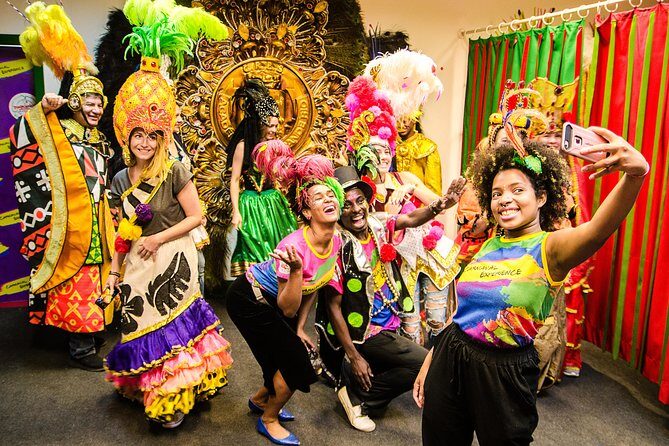
- Try-on costume access for photos and quick outfit changes
- Bilingual guiding, with explanations that may repeat across languages
Cidade do Samba meeting point: get your bearings fast
This tour meets at Cidade do Samba in Gamboa (Santo Cristo area). The key detail is that you’re going inside the complex, not just standing outside at a street address. You’ll meet inside the Samba City complex under a smaller tent in the middle of it, and your ticket redemption point points to the main entrance area.
For getting there, you’ve got an easy option: there’s a VLT (tram) station right in front of the main entrance. If you’re using Uber or a taxi, ask for Cidade do Samba—that’s the easiest anchor point.
Practical tip: if you arrive 10–15 minutes early, you buy yourself time to locate the correct tent without stress. One lesson from real-world experiences is that signage in large venues can be confusing, especially if multiple groups are arriving at once.
Also, the tour is smart casual. Think breathable layers and comfy shoes. You’ll be standing and moving around in a working space, and you’ll want to look put-together without feeling trapped in restrictive clothing.
You can also read our reviews of more city tours in Rio de Janeiro



Grande Rio workshop visit: what the backstage vibe is like
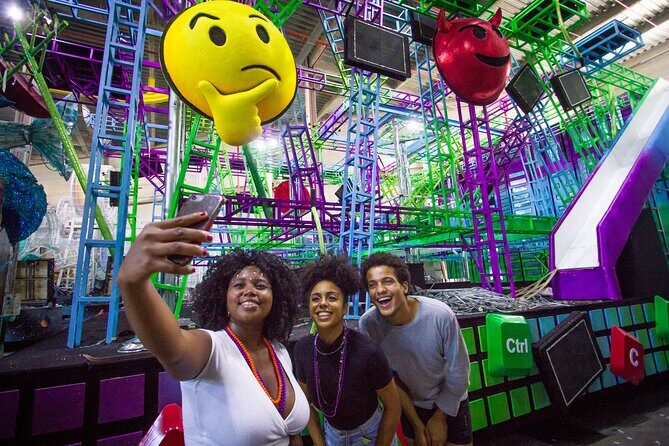
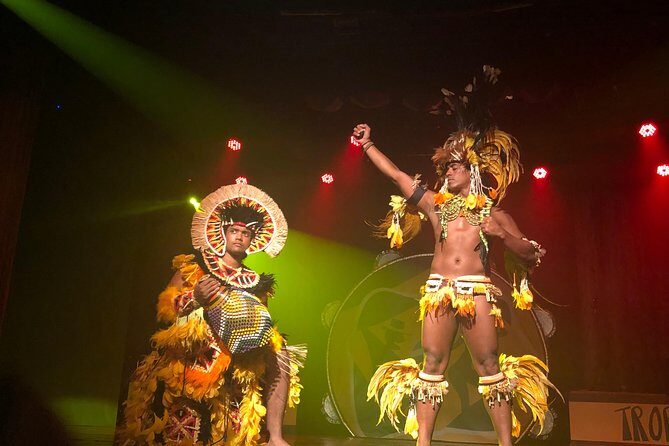
The heart of the experience is your visit to the Grande Rio samba factory, a core part of Rio’s Samba School world. Even if you only think of Carnaval as a parade night, this workshop tour makes it clear: the parade is the final act of months of planning, making, and logistics.
You’ll walk through spaces where the work happens and get an explanation of what you’re seeing—how Samba Schools prepare for the spotlight, and why certain production steps take so long. It’s one thing to watch a school glide past in a stadium; it’s another to see the scale of preparation behind the scenes.
What makes this stop valuable for you: it connects the show you love with the real-world effort required to produce it. You’re not just learning facts. You’re seeing the system—how costume work, timing, and craftsmanship come together so a performance can look effortless.
What might be tricky: because this is a working complex, you can feel the heat and the noise of an active space. One review mentioned no air conditioning in parts of the warehouse area and even stairs as part of the flow. If you’re sensitive to heat or have mobility limits, wear light clothing and consider asking your guide about the easiest route.
Samba history panel: the story you need before the dancing
Before the dancing starts, you’ll get a panel with the basics: samba’s history and how it connects to Carnival parades and the Samba School tradition. This is where the tour does its best job turning background culture into something you can follow during the rest of your visit.
You’ll also get a sense of the competition aspect—how Samba Schools prepare to win, and how much labor and coordination is involved in putting one parade together. This matters because once you understand the stakes, the costumes and choreography stop feeling like decoration and start feeling like performance strategy.
A small heads-up: the guide is bilingual, and in some cases the group language mix can lead to repeated explanations. That can mean more waiting while the guide covers the same idea in different languages. If you’re English-only, I’d still go in with patience and focus on the visuals: the workshop setup and costume layout do a lot of the teaching.
Caipirinhas + passista-led samba class: where it gets fun fast
Then comes the part that turns all that context into action: caipirinhas and a samba class with a passista (a professional Carnival dancer).
The caipirinha welcome is simple but smart. You’re stepping into a big cultural production, and this little pause sets the mood without turning the tour into a party bus. Just remember the minimum drinking age is 18, so if you’re bringing younger travelers, plan around that.
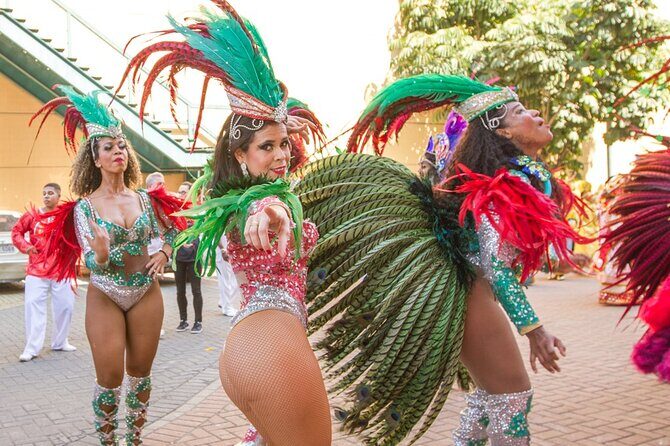
The samba class is the real payoff. You’ll learn steps from a performer, not from a lecture. Even if your rhythm is questionable, this is built for normal visitors—think practical instruction, group participation, and a chance to move the way you see on Carnaval stages.
Why you’ll likely enjoy this: a samba class changes how you see the parade afterward. You start noticing timing, hip movement, and posture—things you can’t fully understand from watching clips.
One thing to watch: the class and photo opportunities can be scheduled tightly. Some people felt their overall time was shorter than expected. So when you get to the dancing portion, treat it like your main event: be ready, be present, and don’t spend the time hunting for the perfect group photo.
Costume layout time: dress up, photograph, and avoid the common photo traps
One of the most memorable parts is the costume layout where you can dress and photograph. Depending on what’s happening inside the workshop, you may be able to access different sections of costume work, but the core idea stays the same: you get hands-on costume time.
This is more than a gimmick. You learn how these outfits are designed to look right at speed and from far away. And you also understand the practical side: what’s comfortable, how pieces fit, and why certain accessories matter for the overall look.
A tip that can save you frustration: at the start, photo rules may be stricter while work is underway. Some groups found photography wasn’t allowed for the first portion, while later sections were more flexible. Don’t assume you can shoot everywhere—listen for the guide’s instructions and follow their timing.
Another practical angle: warehouse spaces can have stairs and tight movement paths. One review mentioned using a lift instead of stairs, so if you need a less stair-heavy route, ask early rather than waiting.






Timing and group size: how to make the 90 minutes feel longer
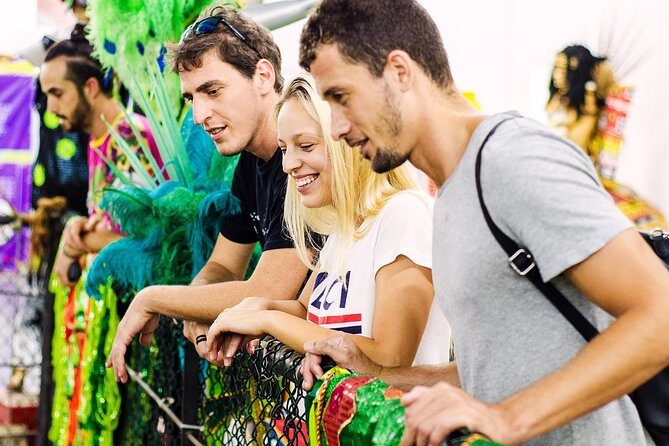
This tour runs about 1 hour 30 minutes (and you may see scheduling that stretches closer to 2 hours depending on the day). The practical truth is that the itinerary moves through multiple parts quickly: workshop entry, panel talk, costume activity, caipirinha, and samba class.
The group size is capped at 30 travelers, which sounds fine on paper but can affect your experience in real time:
- In a larger group, photo access can get slow.
- If language coverage is split across languages, half the group can wait for their turn to understand.
- If you arrive late or if the meeting point timing gets messy, the schedule can tighten for everyone.
How you beat this: arrive early, stay close to your guide, and set your expectations. This is not a slow craft museum tour. It’s a fun, educational workshop visit with active components.
Also, transportation isn’t included. That’s normal for this type of experience, but it raises your responsibility. Give yourself enough buffer to arrive on time, especially if you’re coming from a hotel far from the Cidade do Samba area.
Value check: why $26.49 can feel like a bargain
At $26.49 per person, this tour is priced low for what you get: workshop access, a history panel, a welcome caipirinha, a samba class with a professional dancer, and costume try-on/photo time. That combo is the key. Many tours sell you either “history” or “experience.” Here, you get both—plus a drink.
Here’s how I’d think about value for your trip:
- If you only want parade-night entertainment, you might feel this is too educational.
- If you want context and hands-on fun, this price is strong.
- If you want a quick way to reduce jet lag stress on day one in Rio, it’s also a solid choice because it’s shorter than a full evening out and you come away with skills and photos, not just photos alone.
The only cost beyond the ticket is your transport to the meeting point and any personal spending you might do afterward.
Who should book this, and who should skip it
I’d book this if you want a first taste of Rio Carnaval in a way that makes sense. It’s a great fit for:
- First-timers who want backstage context fast
- People who learn by doing (costume try-on + samba class)
- Groups who want fun but also want to understand the work behind the spectacle
You might skip or adjust expectations if:
- You hate heat or long standing in a warehouse-like setting
- You need a very quiet, slow-paced tour with lots of individual attention
- You’re relying on perfect timing and exact meeting-point signage—this is a busy complex, and you should plan to arrive early
Should you book this backstage Carnaval tour?
Yes, you should book it if you’re excited about the idea of seeing Carnival production up close and then playing your part. The Grande Rio workshop access plus the samba class and costume try-on make it feel like more than a lecture.
If you’re on the fence, here’s the decision rule I’d use: go for it when you want a guided snapshot of Carnaval craftsmanship and culture in about 90 minutes. Pass if you want a stress-free, low-movement, detailed workshop visit with lots of one-on-one time.
FAQ
How long is the backstage tour?
It’s listed at about 1 hour 30 minutes (approximately). Some schedules may run closer to 2 hours depending on the day.
What’s included in the ticket?
Admission is included, plus a guided workshop experience, a history panel, caipirinhas, a samba class with a passista, and access to costumes to dress and photograph/try on.
Does the tour include transportation to Cidade do Samba?
No. The tour does not include transportation. You’ll need to get yourself to the meeting point.
Where is the meeting point?
You meet at Cidade do Samba (Gamboa, Rio de Janeiro), inside the Samba City complex under a smaller tent in the middle. It ends back at the meeting point.
What’s the minimum drinking age for caipirinhas?
The minimum drinking age is 18.
How big are the groups?
The tour/activity has a maximum of 30 travelers.