REVIEW · RIO DE JANEIRO
Capoeira Classes for Beginners in Rio de Janeiro
Book on Viator →Operated by Capoeira Rio de Janeiro · Bookable on Viator
Capoeira looks like dance until it turns into a real back-and-forth rhythm lesson. This beginner class in Botafogo blends movement, music, and the story behind the art in a way that feels friendly and hands-on.
What I like most is how the session starts with a proper full warm-up before you touch the basic kicks, sweeps, and playful sparring game. You’re not thrown into the deep end, even if you’re nervous at first.
One thing to plan for: it’s physical. You’ll be expected to move (moderate fitness helps), and you may feel it for a few days after.
In This Review
- Key highlights worth your attention
- Praça Nelson Mandela at 6pm: how to show up and feel oriented
- Timing tip
- 1.5 hours of basics: warm-up, movements, and learning by doing
- Moderate fitness, but not athlete-only
- Music and instruments in Rio: how the class stays cultural (and fun)
- Why this matters for your trip
- If you’re worried about singing
- Capoeira history explained in a way you can remember
- The teacher factor: patient instruction, real encouragement, small-group energy
- What that means for you
- What to wear and bring so class feels good, not painful
- Quick decision guide
- Price and value: $16.76 for 1.5 hours of more than just a demo
- When the price is especially worth it
- Where this fits best in your Rio itinerary
- Who will enjoy this the most?
- Should you book capoeira in Botafogo?
- FAQ
- Is this capoeira class for beginners?
- How long is the class?
- Where does the class start?
- What time does it start?
- Is the class suitable if I’m not very fit?
- What should I bring?
Key highlights worth your attention
- 6pm start at Praça Nelson Mandela (Botafogo): a central meet point with easy access to public transport.
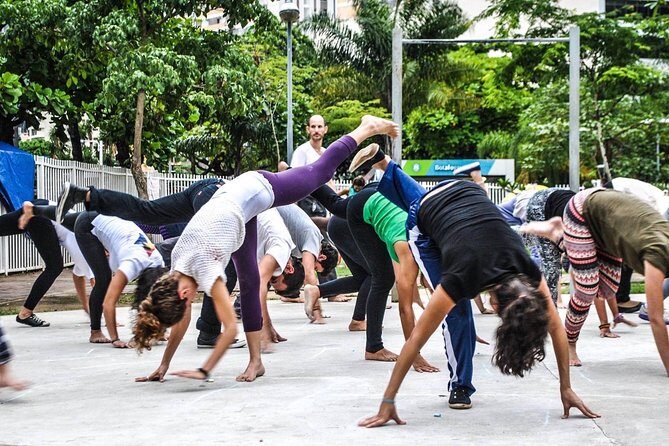
- 1 hour 30 minutes of guided basics: warm-up, movements, and the flow of how capoeira is taught.
- Music is part of the class, not a side quest: you’ll learn how the instruments work and how the music drives the game.
- You get to play instruments: not just watching, you’ll try it yourself.
- A small group size (max 30): more attention from the teacher as you practice.
- A welcoming atmosphere: people describe it as accommodating, patient, and very inclusive.
Praça Nelson Mandela at 6pm: how to show up and feel oriented
This class meets at Praça Nelson Mandela in Botafogo, near the address listed on your booking details. The start time is 6:00 pm, which matters because you’ll likely be meeting in Rio’s evening energy rather than the midday heat.
Why I think this is a smart way to begin: Botafogo is a practical base area for visitors, and the meeting point is noted as near public transportation. So you’re not relying on taxis just to get to one activity.
Also, since the class is capped at 30 people, you won’t be fighting for space or visibility. That matters in capoeira, where the instructor needs to see your posture, timing, and balance as you learn the basics.
You can also read our reviews of more tours and experiences in Rio de Janeiro

Timing tip
If you arrive a few minutes early, you’ll have time to settle in before warm-up begins. In capoeira, momentum is everything—showing up late usually means you miss the safety check built into the start of class.
1.5 hours of basics: warm-up, movements, and learning by doing
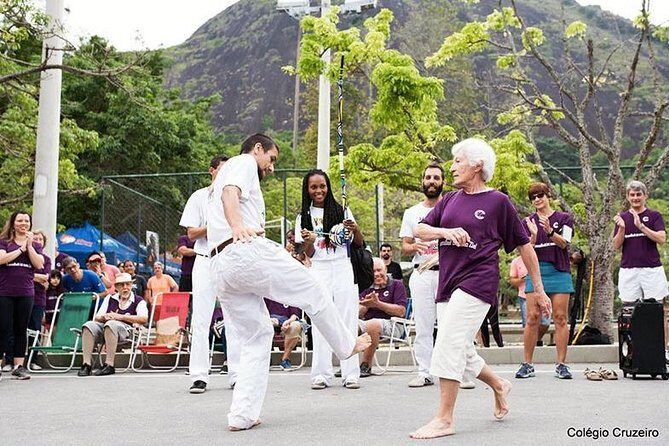
The core experience runs about 1 hour 30 minutes, and it’s structured around three things: warm-up, basic capoeira movements, and how the game works once you know the fundamentals.
Here’s what you can realistically expect from a beginner-focused session:
- A full warm-up first, so your body is ready for kicks, pivots, and fast footwork.
- Instruction on the basic movements with a teacher guiding the technique.
- Enough repetition to help you connect what you learned to what you do when you’re in a play circle.
Capoeira isn’t just strength. It’s timing, balance, and footwork that looks smooth when done well. For new students, that means you’ll get the most out of it when you stop trying to be perfect and focus on moving safely and rhythmically.
Moderate fitness, but not athlete-only
The activity notes moderate physical fitness. That doesn’t mean you need a sports background; it just means you shouldn’t plan to sit this one out. If you’re okay with a workout-style hour plus practice, you’ll likely be comfortable.
And yes, several people specifically warned that you’ll sweat. That’s not a scare tactic—it’s the truth of moving, learning, and playing in rhythm.
Music and instruments in Rio: how the class stays cultural (and fun)
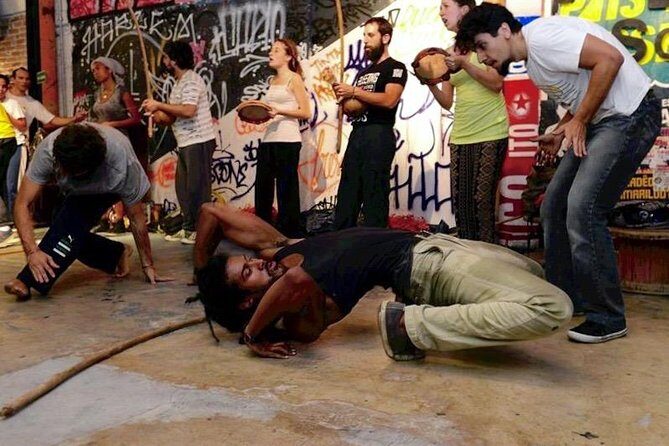
Capoeira is inseparable from music. This class treats the music as part of the learning goal, not background noise.
During the session, you’ll learn:
- How the music and singing relate to the movement and the pace of the game
- How to play traditional Brazilian musical instruments during the experience
Even if you have zero musical experience, you’re in good shape. The format is beginner-friendly, and you’re not expected to perform like a lifelong musician. You’ll learn enough to participate in the rhythm—often the part that makes the end feel extra joyful.






Why this matters for your trip
A lot of tours show culture like a museum exhibit. This one does something different: it puts you in the rhythm of capoeira. When you try an instrument yourself, you understand why capoeira feels like a conversation—movement answers music, and music answers movement.
If you’re worried about singing
You’ll likely hear and join in for at least some of the call-and-response style singing that makes the atmosphere. If you’re shy, consider it this way: the class vibe is supportive, and the goal is participation, not perfection.
Capoeira history explained in a way you can remember
This lesson includes basics of capoeira history alongside the physical training. That’s valuable because capoeira isn’t just a set of moves—it’s tied to survival, community, and expression shaped by Brazil’s past.
In a class like this, the history isn’t presented as a dry lecture. Instead, it’s connected to what you’re doing:
- why music matters
- how movements reflect the rhythm and timing
- how the culture uses the game as a social ritual
If you like cultural context, you’ll probably enjoy how the teacher links the meaning to the practice. And if you don’t usually care about lectures, the movement-based format helps the story stick.
The teacher factor: patient instruction, real encouragement, small-group energy
The biggest repeated theme in the feedback is the way the instructor supports beginners. People describe the teacher as accommodating and helpful, and that’s exactly what you want for your first capoeira class.
A couple of names show up in class feedback: Omri appears as an instructor in multiple accounts, and Ferradura is mentioned as a gracious host. Even if the exact instructor varies by day, the style seems consistent: patient teaching, clear guidance, and encouragement to participate.
What that means for you
If you’re nervous—totally normal for a first session—this is the kind of class that helps you settle in. In capoeira, beginners often worry about looking awkward or feeling behind. A good teacher reduces that pressure by focusing on safe basics and supportive pacing.
The class size limit of 30 travelers also helps. You’re less likely to feel like a number, and the teacher can give more targeted feedback.
What to wear and bring so class feels good, not painful
You’re going to use your whole body. So treat the session like a workout plus a cultural workshop.
Here’s what people recommend, and I think it’s smart:
- Wear loose-fitting clothing that lets you kick, bend, and pivot without restriction.
- Stretch beforehand, especially your ankles, hips, and calves.
- Bring water to drink afterwards.
Also plan for soreness. One reviewer mentioned being sore for days after. That’s very plausible after learning movements you don’t usually use, especially footwork and lower-body coordination.
Quick decision guide
If you’re choosing between:
- trying capoeira in clothes that feel “nice,” or
- dressing for comfort and movement
…pick comfort every time. Capoeira has no room for tugging straps or worrying about your outfit.
Price and value: $16.76 for 1.5 hours of more than just a demo
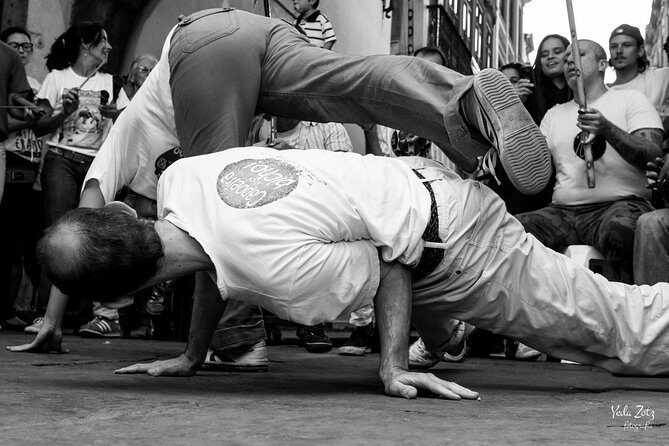
At $16.76 per person, this class is priced like an accessible entry point, not a fancy private lesson. For that money, you get:
- instruction on basic capoeira movements
- the warm-up and guided practice
- music, singing, and history context
- the chance to try traditional instruments yourself
- a teacher who manages the group during practice
That combination is where the value comes from. You’re not paying just to watch an instructor perform. You’re paying to participate and learn.
When the price is especially worth it
This is most valuable if:
- you want a beginner class that won’t overwhelm you
- you care about doing a cultural activity where you’re involved, not just observing
- you’re traveling in a group or couple and want something active that’s still cultural
Where this fits best in your Rio itinerary
Because it runs from 6:00 pm and lasts around 1 hour 30 minutes, it works nicely as:
- an early evening activity before dinner
- a break from heavy sightseeing days
- a fun “first culture night” if you’re still getting oriented in Rio
Also, the class is weather-dependent. The experience requires good weather, and if conditions are poor, you’re offered a different date or a full refund. So keep an eye on the forecast the day of.
Who will enjoy this the most?
This class is a great fit for:
- first-timers who want a real taste of capoeira
- people who like learning through movement and music
- travelers who want a warm, welcoming group vibe
It may not be ideal if you:
- can’t handle any physical activity
- expect a purely academic history experience
- hate group participation and being asked to try new things
Should you book capoeira in Botafogo?
I’d book it if you want a short, guided, beginner-friendly experience that connects movement + music + culture in one session. The small-group size, the emphasis on warm-up and basics, and the focus on having you participate—especially with instruments—make it feel like more than a simple “try it once” stop.
If you’re the type who enjoys sweat, rhythm, and learning by doing, this is a high-likelihood winner. Just show up prepared, wear something comfortable, and give yourself permission to be a beginner.
FAQ
Is this capoeira class for beginners?
Yes. The experience is specifically described as a class for beginners and includes learning the basics of Capoeira, including movements, music, and history.
How long is the class?
It lasts about 1 hour 30 minutes.
Where does the class start?
The meeting point is Praça Nelson Mandela – Botafogo, Rio de Janeiro – RJ, 21645-396, Brazil, and the activity ends back at the meeting point.
What time does it start?
It starts at 6:00 pm.
Is the class suitable if I’m not very fit?
It’s recommended for people with moderate physical fitness. The class includes a full warm-up and teaching basic movements, so plan to be active.
What should I bring?
Wear loose-fitting clothing, consider stretching beforehand, and bring water to drink afterwards. You should also expect soreness a few days after class.