Two things I really like: you get a private vehicle sized to your group (up to 6 people), and you can choose what you do with your time. I also appreciate the easy meet-and-greet setup, plus bottled water and a built-in buffer for waiting.
One thing to consider: there is no guide included, and attraction admissions can be tricky because the plan mixes stops listed as ticket-free with stops that are not. Also, the Christ the Redeemer viewpoint is famously weather-dependent, so have Plan B in your pocket.
Key highlights you’ll care about
- English-speaking, experienced chauffeurs who are present in full uniform
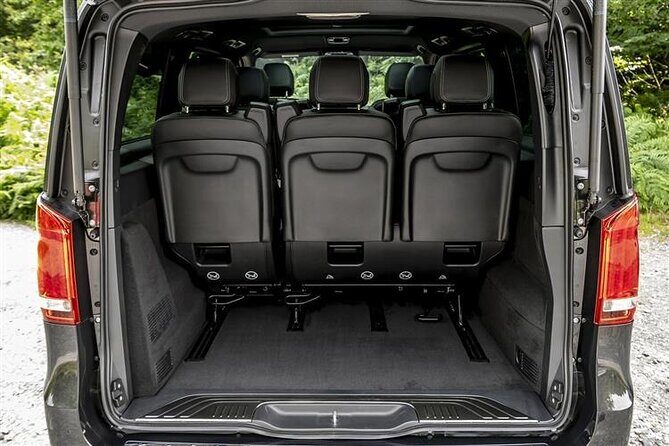
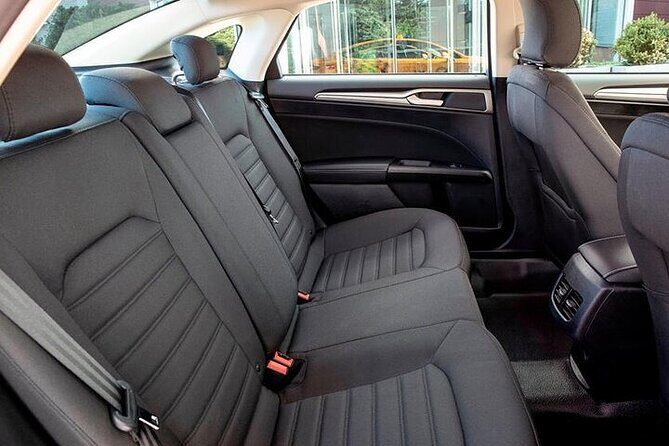
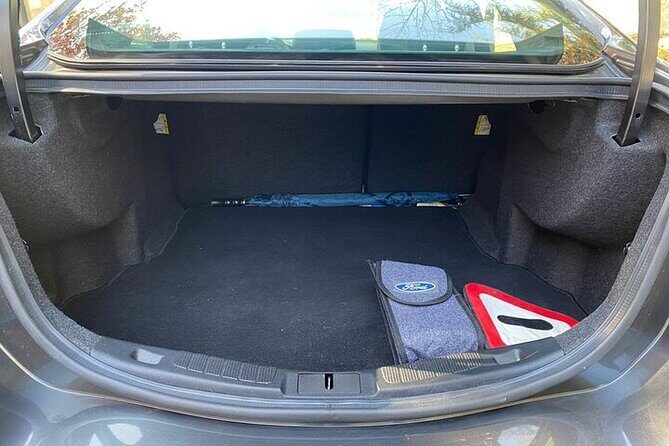
- Private transportation in a Mercedes V-class minivan, Ford Fusion, Toyota Camry, or armored SUV depending on group size
- Pickup with a 15-minute waiting window from the airport arrival hall, cruise terminal, or your hotel lobby
- 5 or 8 hours of door-to-door driving time, with the stops chosen by you
- A lineup built around Rio’s top viewpoints (Corcovado and Sugar Loaf) plus classic neighborhoods like Ipanema and Lapa
Why this private chauffeur setup works in Rio

Rio is gorgeous, but it can be stressful. Roads are busy, distances are real, and figuring out what’s worth your limited time is half the battle. This experience is designed to remove the heavy lifting: you get picked up, dropped back, and chauffeured between major sights in a comfortable vehicle.
The practical win is control. You and your group decide what to see, while the driver handles the traffic and the logistics. On a tight schedule, that matters more than people expect. Even if your day ends up being shorter than planned because of weather, you still come out with a coherent route.
The vehicle comfort angle
You don’t just get a generic car. Depending on how many people book, you may ride in a Mercedes Benz V-class minivan, or in a sedan like a Ford Fusion or Toyota Camry. For bigger groups, an armored SUV option is listed as well. Translation: you’re likely to have enough space for everyone and luggage, and it should feel like a real ride, not a squeeze.
And yes, this is a private booking: only your group participates. The max size is 6 people, which keeps it from turning into a multi-group shuffle.
Getting picked up the right way (and avoiding lost-time frustration)
Pickup is where many day tours live or die. Here, you meet your chauffeur at clear points: the airport arrival hall, the cruise terminal, or your hotel lobby/main entrance. There’s also a 15-minute waiting time included, which is a big deal if your flight is delayed or your cruise disembarkation runs late.
This is especially helpful for cruise passengers. You’re asked to provide the ship name plus timing details like docking time, disembarkation time, and re-boarding time. That tells the operator you’re dealing with a moving clock, and it’s usually what you want on a port day.
One note: you’ll need pickup reconfirmation after booking. So don’t treat it as a set-and-forget thing. A quick reconfirmation keeps your meeting point and timing clean.
What you can do with 5 vs 8 hours
The tour is offered in two lengths: about 5 hours or about 8 hours. That difference changes how relaxed the day feels.
- With a shorter day, you’ll likely focus on one major viewpoint plus one neighborhood stop.
- With the longer option, you can better mix viewpoints (Corcovado and Sugar Loaf) with time at Ipanema/Lapa and a nature break at the Botanical Garden.
The schedule you can build around includes Corcovado for Christ the Redeemer, Sugar Loaf Mountain, and Rio’s signature neighborhoods. The driver can also suggest adjustments if visibility or timing shifts.
From the reviews, flexibility is a real theme. Gideon was praised for customizing the trip and reshuffling places when the day turned cloudy. Alexandre Wolf was praised for staying patient through an airport delay and helping with mobility needs by moving carefully.
The core stops: viewpoints, neighborhoods, and one nature reset

Let’s talk about the main blocks of time you can plug into your day.
Stop 1: Rio de Janeiro by minivan or sedan (your flexible start)
Most days begin with an introduction ride through the city, with time to settle in and start seeing Rio the way you came for it.
This portion is designed as a flexible driving/sightseeing window, with examples like:
- Ipanema Beach
- Lapa
- Corcovado Mountain area (as part of positioning for what comes next)
The goal isn’t to trap you in a rigid order. It’s to get you oriented fast—where things are, how far each area feels, and what you might want more or less of once you’re on the ground.
A practical tip for the first block
When you’re building a day like this, your first stop is the easiest place to adjust. If clouds roll in, for example, you can decide whether to prioritize a viewpoint now or save it for later. Gideon’s cloudy-day experience is a good example of why a flexible first block helps.
Stop 2: Christ the Redeemer statue on Corcovado

Christ the Redeemer is the headline. The statue of Jesus Christ overlooks Rio from Corcovado Mountain with arms outstretched, and it’s one of the Seven Wonders of the World.
The typical time slot is about 2 hours. Tickets for this stop are listed as not included, so you should expect to pay your own entrance fee here.
What to expect in real life
This is a viewpoint with changing conditions. Fog, low clouds, and rain can turn an epic vista into a gray wall. That’s not the company’s fault, and you can’t control it—but you can plan for it. When visibility drops, having a private driver who can shift your route is a major advantage.
In the review stories, that’s exactly what happened: one guest had foggy, rainy weather and the driver made the best of what was visible. That kind of practical adjustment is what you want.
A comfort note if you have mobility limits
One review highlighted careful movement while the guest was recovering from an injury. That doesn’t mean this tour eliminates all walking challenges, but it does suggest your chauffeur can be mindful about safety and pace.
Stop 3: Pão de Açúcar (Sugar Loaf Mountain) for wide-open views
Next up: Sugar Loaf Mountain, rising about 1,299 feet above Rio and overlooking Guanabara Bay. The view is especially loved at sunset, but it’s still a big draw even in daylight.
This stop is listed with about 2 hours, and the admission for this part is shown as free in the schedule information. Still, the overall tour notes also say entrances are not included, so I strongly recommend you confirm what’s actually included for the specific tickets you plan to buy (especially if you care about timing, like sunset slots).
Why this stop is worth the time
Corcovado and Sugar Loaf give you two different angles on the same city. Corcovado is dramatic and iconic; Sugar Loaf tends to feel more panoramic. If you’re doing Rio for the first time, this is a high-return pairing.
If you’re doing Rio only once, these two viewpoints are the heart of the day.
Stop 4: Ipanema Beach, plus Lapa and the Jardim Botânico reset
This part is a nice contrast to the big viewpoints. The plan suggests a mix that can include:
- Ipanema Beach (a 2-mile stretch with mountain views and cobalt waters)
- Lapa, known for bohemian culture and key sights like the Carioca Aqueduct and the Selarón Steps
- Jardim Botânico (Botanical Garden), where you can slow down among giant palms, small orchids, and wildlife like monkeys and birds
The time slot here is listed at about 1 hour, and admission is listed as not included. So treat it as a hit-and-go stop, not a deep wander unless you’re on the 8-hour option and your schedule allows extra time.
Lapa and the Selarón Steps: why it’s more than a photo stop
Lapa is described as the cradle of Rio’s bohemianism and a hub for cultural activity. It also connects two major architectural features: the Carioca Aqueduct and the Selarón Steps.
If you want a slice of Rio beyond viewpoints, this is one of the best places to do it without getting overwhelmed. Even a short visit helps you understand Rio’s mix of street energy and architectural drama.
Botanical Garden: your breathing room
If you need a reset from hills and crowds, the Botanical Garden is a smart add. It’s explicitly framed as a break from the bustle, with palms and orchids and the chance of seeing monkeys and birds.
Even if you only get about an hour, it can feel like a different planet compared to the coast and the lookouts.
What’s included (and what that means for your wallet)
Included in the ride:
- Bottled water
- Pickup and drop-off (hotel, cruise port, or airport)
- 5 or 8 hours of disposal (depending on your chosen option)
- Meet & greet by the professional chauffeur
- Maximum waiting time of 15 minutes
Not included:
- Food and drinks
- A guide
- Entrances (with some stop entries marked as ticket-free in the schedule info)
Price check: is $80.33 per person fair?
At $80.33 per person for a private chauffeured day, you’re paying for convenience and flexibility more than for a bundled museum guide experience. For many people, that’s the point.
Because you can go door-to-door and pick your own mix of viewpoints and neighborhoods, you’re buying back time—and time in Rio is expensive. You also avoid the stress of transfers and navigation when you want to spend your energy on the view.
If you’re a small group of up to 6, that private-vehicle structure can feel like strong value versus cobbling together taxis plus timed entry tickets plus guesswork.
The big “value driver”: flexibility with a real person behind the wheel
The most praised feature in the reviews is the human flexibility. Gideon customized the route on a cloudy day and shifted places based on what made sense when visibility changed. Alexandre Wolf waited patiently despite flight and baggage delays, then handled the day with patience, professionalism, and friendliness.
That’s not just nice service. It directly affects your outcome. In Rio, where weather and timing can shift quickly, a driver who can adjust without panic is what turns a plan into a good day.
How to get the best day out of your chauffeur
You’ll get more from this experience if you go in with a simple strategy.
- Pick your must-do viewpoint(s) first (Corcovado/Christ or Sugar Loaf are the obvious choices).
- Then add one neighborhood stop that matches your mood: Lapa for culture and architecture, Ipanema for classic beach time, or Jardim Botânico for a nature break.
- If the forecast looks iffy, be ready to change priorities. Cloud and fog can steal the view from Corcovado, but you can still enjoy the city and adjust timing.
Also, keep footwear realistic. You’re likely to walk around viewpoints and neighborhood streets, and one review highlighted careful movement for mobility issues. If you have any walking limits, mention them early so your chauffeur can plan safer pacing.
Price and logistics: the one place to slow down before you book
There’s a mismatch risk with admissions. The schedule shows some stops with ticket-free admission and others with ticket not included, but the general tour notes say entrances are not included.
So before you lock anything in, you should confirm:
- which exact entrances you’re covering for Christ the Redeemer
- whether Sugar Loaf entry is truly included for your date and time window
- how any optional neighborhood stops are handled for ticketing
This isn’t a dealbreaker, but it’s the kind of detail that prevents surprise costs.
Who this private Rio day suits best
This fits best if you:
- want to see the major Rio icons without coordinating multiple transit steps
- prefer choosing your own pace and stops
- value a calm, professional driver rather than a formal guided lecture
- have limited time and want a high-impact route
It can be less ideal if you want a full guide who explains every site in depth. This is about chauffeured movement and flexible stop choices, not a guided narrative.
Should you book this private Rio chauffeur day?
If your priority is easy, customized sightseeing with a real local driver—yes, this is worth strong consideration. The private-vehicle setup, the English-speaking chauffeurs, and the proven flexibility in real weather challenges make it a good option for first-timers and for anyone with a tight schedule.
I’d book it if you’re comfortable managing your own entrance tickets for specific attractions and you’re okay with a day that’s built around driving and chosen stops rather than a structured guided tour.
If you want me to help you decide your best 5 vs 8-hour plan, tell me your travel dates and whether you’re prioritizing Christ the Redeemer, Sugar Loaf, beaches, or Lapa.
FAQ
How long is the Rio private chauffeur experience?
You can book either an approximately 5-hour or approximately 8-hour private experience, depending on the option selected.
Where do I get picked up?
Pickup is available from the hotel (lobby or main entrance), the cruise terminal, or the airport (arrival hall).
How long do they wait for me at pickup?
A maximum waiting time of 15 minutes is included.
Is this tour private?
Yes. It’s private, and only your group participates.
How many people can book under one reservation?
A maximum of 6 people per booking is listed.
What vehicle will I ride in?
Depending on the number of passengers, you may travel in a Mercedes Benz V-class minivan, a Ford Fusion or Toyota Camry sedan, or an armored SUV.
Are English-speaking drivers available?
Yes, chauffeurs are described as multi-lingual with English driver support included in the experience name.
Are entrances and attractions included?
Food and drinks are not included, and entrances are listed as not included overall. Some parts of the schedule also show admission as not included or listed as free, so you should check what applies to your chosen stops.
Do I get a guide with this tour?
No. A guide is not included.
What’s included in the price besides the ride?
Bottled water and hotel/cruise/airport pickup and drop-off are included, along with the meet-and-greet by the chauffeur.
Can I cancel and get a full refund?
Free cancellation is offered up to 24 hours in advance for a full refund. If you cancel less than 24 hours before the start time, the amount paid is not refunded.
]]>I like that you’re not sharing a ride or hunting around after baggage claim. It’s a clean, simple service built for your first and last mile—get from the airport to your door and stop thinking about transport.
At about 25 minutes on average, the journey is quick in theory, but Rio traffic can stretch the ride. Still, the private car, air-conditioning, and low-friction pickup setup usually make this a very practical first-day choice.
Key things I’d pay attention to

- Meet-and-greet at GIG + 45 minutes free waiting to buy you breathing room after landing
- Private transfer means your group only—no shared shuttle stops
- Air-conditioned vehicle for that post-flight reset
- Mobile ticket to speed up check-in at the pickup
- Child and booster seats are extra (available on request, at added fees)
- Pickup timing can vary—so plan a small buffer if your flight lands tight
Why a GIG to Rio private transfer beats figuring it out on arrival

Rio is easy to enjoy once you’re settled, but landing days can be annoying. You’ve got jet lag, bags, signage chaos, and the pressure of finding the right bus or taxi line. This service is built to remove that first headache by taking you straight from Galeão–Antonio Carlos Jobim International Airport (GIG) to your accommodation in Rio de Janeiro.
The big win here is private transport. That sounds fancy, but it’s really about convenience: you’re not negotiating shared schedules, you’re not waiting while the driver collects other people, and you don’t have to manage last-mile directions while you’re tired.
Second, you get a meet and greet concept with a simple premise: someone is there to help you connect the right driver to the right group. In a city where airport logistics can feel like an obstacle course, that matters more than you’d think.
Price and what $36.70 per person really covers

At $36.70 per person for a one-way transfer, the value depends on one question: how much you hate uncertainty on arrival.
This price includes all fees and taxes, plus an air-conditioned vehicle, and it’s for a private one-way ride. You’re also getting free waiting time for 45 minutes, which is meaningful because baggage claim, immigration lines, and terminal navigation can chew up time fast.
The practical way to think about it:
- If you’re traveling with multiple bags, arriving late, or you simply want a smooth landing, private transfer pricing can feel fair.
- If you’re traveling solo and you’re comfortable figuring things out quickly, you might find cheaper options—but you’ll be trading reliability and comfort for savings.
Also note: this is booked on average about 17 days in advance. That doesn’t mean you must book that early, but it’s a hint that people plan ahead for airport day stress reduction.
Pickup at Galeão: the 45-minute waiting window and meet-and-greet reality

The service includes free waiting time of 45 minutes. That’s your cushion after you exit the baggage area and start walking toward pickup zones. If you’ve ever missed a contact in a foreign airport because you were still grabbing a charger, this part matters.
They also include meet and greet, and you’ll use a mobile ticket. In an ideal world, the pickup is quick: you find the contact, confirm the booking, and get into the vehicle without extra back-and-forth.
Still, here’s the only real downside to plan for: pickup can sometimes be hard to locate immediately. In one unfavorable case, there was no clearly visible name tag on arrival and contact-by-phone wasn’t working, forcing the person to use airport information to sort it out. In another mixed case, pickup seemed delayed slightly, and the group had to wait while the driver handled others before cars were allocated.
So what should you do to protect your time?
- Have your booking details ready on your phone (since it’s a mobile ticket experience).
- Keep your phone charged and reachable during those first minutes after you land.
- Don’t assume the pickup area is instantly obvious—walk with purpose, scan for your group name/driver contact, and give the waiting window its full value.
If you arrive and can’t find your contact within the first stretch of time, the safest move is to ask airport staff for help locating the correct pickup spot. That’s exactly the kind of on-the-ground workaround that has resolved issues when the meet-and-greet isn’t immediately visible.
The ride into Rio: what that 25-minute transfer likely feels like
The ride is listed at 25 minutes (approx.). That “approx.” is important because Rio traffic can change the experience. In light traffic, it can feel fast—more like a quick reset. In heavier conditions, you’ll just need to accept that city driving is city driving.
Because it’s private, you won’t have multiple stop-and-go delays from collecting other riders. You should get a direct run from GIG to your accommodation area.
You’ll also be in an air-conditioned vehicle, which is a real comfort factor after long-haul travel. Heat plus exhaustion is a tough combo. AC helps you keep the day from sliding downhill the moment you arrive.
In one positive experience, the driver was described as friendly and the drop-off went smoothly. That’s the kind of practical comfort you’re buying with a private transfer: you’re less stressed, and your arrival feels more like a beginning than a battle.
Drop-off at your accommodation: avoiding the last-mile stress

This is a one-way private transfer, so the goal is simple: get you from the airport to your door without additional transport decisions.
The meet-and-greet concept doesn’t stop at pickup—you’re also set up to reach the correct destination without having to interpret the city right away. That’s especially valuable if:
- Your hotel is in a neighborhood that’s easy to miss at first glance
- You’re arriving with family, elderly travelers, or heavy luggage
- You’re trying to conserve energy for dinner and your first evening plans
Also, the service is set up as private “only your group,” so you’re not dealing with a crowd spilling out at different stops. One driver contact and one destination generally keeps everything calmer.
And based on positive feedback, drop-off is typically easy once you’re on the way. If you’re the type who hates arriving and immediately figuring out directions, this is where the value shows up.
Vehicle comfort, child seats, and service animals
This transfer uses an air-conditioned vehicle, and it’s designed for comfort on a short ride. Vehicle type can vary based on what you select during booking, and you’ll be offered different options.
If you’re traveling with kids, here’s the important detail: child seats and booster seats are not included by default. They’re available on request with extra fees:
- Sedan: child seat €5 / booster seat €5
- Minibus/Minivan: child seat €15 / booster seat €15
If you need one, request it ahead of time so you’re not solving that problem mid-trip.
Service animals are allowed, which is good to know if you’re traveling with a companion animal.
Who should book this transfer—and who should consider another plan
This is a strong fit if you value convenience and low mental load.
You’ll like this most if:
- You’re arriving tired and want a straightforward plan
- Your group has multiple bags
- You’d rather pay a bit more than risk a stressful pickup
- You want a clean connection between the airport and your accommodation
It may be less ideal if:
- You’re extremely price-sensitive and don’t mind figuring out airport transport
- Your flight times are so tight that even a short mismatch would throw you off
- You dislike any chance of a delayed or hard-to-locate pickup contact (even though the waiting time is built in)
The service is also described as near public transportation, which can matter if you decide to pivot. You’ve got an escape route if the pickup isn’t working as expected.
Booking tips for a faster pickup at GIG

To make this work smoothly, focus on the details you can control.
First, double-check your accommodation information. The transfer is designed to take you directly to your lodging, so the better your address or pickup location clarity, the faster the arrival connection.
Second, keep your mobile ticket accessible. It’s part of the pickup flow, and having it ready reduces awkward delays when you’re standing at the terminal.
Third, don’t treat 25 minutes as a guarantee. Think of it as a typical transit time. If your schedule is tight—like you must meet someone for breakfast—give yourself some buffer because city traffic can stretch things.
Finally, if you’re traveling during busy periods or with a complex itinerary, book early. An average booking lead time of 17 days is a signal that people plan ahead for a reason.
Should you book this GIG private transfer?
If your priority is a calmer arrival, I’d say yes—this is exactly the kind of service that turns a stressful landing day into a simple, comfortable ride. The standout value points are the private nature, air-conditioning, and meet-and-greet with 45 minutes free waiting time.
But book with eyes open. The service should be easy to use when the pickup contact is clearly identifiable, yet there are documented cases where the driver/contact wasn’t immediately easy to spot and a small delay happened. If you’re the type who stays flexible and can handle a quick airport check-in adjustment, this will likely feel worth it. If you’re riding a tight clock with zero tolerance for friction, you might want a backup plan in mind.
FAQ
FAQ
How long is the one-way transfer from Galeão (GIG) to Rio?
It’s listed at about 25 minutes (approx.), depending on traffic.
Is this a private transfer or shared transport?
It’s private. Only your group participates.
Do you get a meet-and-greet at the airport?
Yes. Meet and greet is included.
Is there a waiting time if my flight is delayed or I take longer to exit the airport?
Yes. Free waiting time is included for 45 minutes.
Do I need a printed ticket?
No. A mobile ticket is offered.
Are child seats or booster seats included?
No. Child seats and booster seats are available on request, but they cost extra (Sedan €5, Minibus/Minivan €15).
Can I cancel for free?
Yes. You can cancel up to 24 hours in advance for a full refund.
]]>I also like that it’s genuinely flexible. You can choose departures throughout the day, and the guide can be multilingual depending on what’s available. The ride is about 1 hour, but timing depends on traffic, so plan for a little variation—especially in busy arrival windows.
Even with a private vehicle, you’ll still want to think like a logistics pro in Rio: meet-up location, luggage limits, and whether you’re going solo or with a larger group. If that’s on your radar, this is a practical way to start—or end—your Rio trip with less stress.
Key Things That Make This Transfer Work

- Name-sign pickup at the gate so you can find your guide quickly
- All taxes, fuel surcharges, and service fees included in the quoted group price
- Choice of departures throughout the day so you’re not boxed into one awkward time
- Private vehicle options for your group size, from cars to buses if needed
- Airport help on departure, including assistance with check-in
- Special requests supported such as baby seats or wheelchair-accessible transport (on request)
Private One-Way Transfer: Exactly What You’re Buying
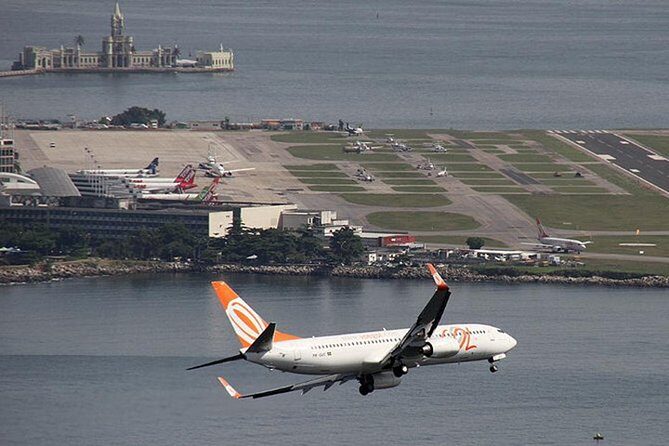
You’re not buying a tour of Rio attractions here. You’re buying a smooth handoff between the airport (or a cruise terminal) and your next stop—your hotel, or the airport on your way out.
The setup is straightforward. For arrivals, a guide meets you at the airport gate with a sign that has your name, then helps you get moving to your hotel. For departures, the guide meets you and takes you to the airport and helps with check-in, which is a big deal when you’re short on time and still figuring out how everything works in a new country.
It’s priced per group, not per passenger, with the standard size capped at up to 4 people. If you’re traveling in a bigger party, the provider can arrange a van or even a full-size bus—so you don’t have to split up or play musical chairs with vehicles.
Meeting Your Guide in Rio: The Part That Saves Time

In a city like Rio, the fastest way to start relaxing is to remove the “where do I go?” step. This transfer does that with a clear meet-and-greet.
On arrival, you’ll see your guide waiting at the gate with your name on a sign. In at least one real-world case, the driver was waiting just outside airport security, making it easy to identify him. That kind of simple visibility matters because airports can be stressful even when everything is going smoothly.
On departure, the guide’s job shifts from “getting you to the right place” to “helping you get processed.” The transfer includes assistance with check-in, so you’re not sprinting from one desk to another while figuring out which line is correct.
What this feels like when you land
You land, you find your guide fast, and you’re in the car. That’s the core value. You’re skipping the public-transport puzzle and the taxi-haggling uncertainty at the moment you most need clarity.
The 1-Hour Ride: Comfortable, But Plan for Traffic Reality
The transfer duration is listed as about 1 hour, but the exact time changes with the time of day and traffic conditions. That’s normal in Rio, and it’s smart that they call it out instead of pretending every ride is identical.
Here’s how to use this in your planning:
- If you’re arriving and your hotel check-in time is flexible, you’re in good shape.
- If you’re on a tight connection, schedule buffer time anyway—even if the ride usually goes quickly.
- If you have a cruise schedule, give yourself margin so you’re not racing the clock.
This is a private vehicle transfer, so you won’t be making multiple stops on the way to your hotel. That helps keep the trip predictable, but traffic can still slow things down.
Price and Value: Why $99 Per Group Can Make Sense
At $99 per group (up to 4), this transfer often competes well with the usual DIY options once you factor in the stress and time cost.
Here’s the value equation I look for:
- Private door-to-door reduces the “finding and figuring it out” time.
- The price includes all taxes, fuel surcharges, and service fees, so you’re not surprised later.
- You get professional guidance—not just a driver who drops you and disappears.
If you’re traveling with 2 or 3 people, the per-person cost is likely very reasonable for a one-way ride that includes guidance. If you’re traveling solo, it may feel like a bigger spend compared with public transit, but you’re buying speed and reduced hassle.
Also, the operating window runs basically all day (early morning through late night), which is helpful when flights land at inconvenient times.
Luggage Rules: The Quiet Detail That Can Change Everything

This is the one area where you should pay close attention, because it directly affects whether the transfer vehicle fits your real luggage.
The service allows each traveler a maximum of:
- 1 suitcase
- 1 carry-on bag
They also note that oversized or excessive luggage (examples include surfboards, golf clubs, or bikes) may have restrictions, so it’s best to ask in advance if you’re bringing anything unusual.
Why this matters: luggage in Rio isn’t just about space—it’s also about getting in and out safely without delaying pickup. If you’re on a 10–20 day trip, you may end up bringing more than one suitcase per person, especially for Brazil weather changes and beach days.
A practical way to avoid problems
If you think you might exceed the standard luggage amount, tell the operator ahead of time. The provider says they can accommodate special cases like extra luggage, but you have to flag it so the right vehicle can be arranged.
In one cautionary situation, a reservation change and luggage expectations didn’t line up with what could fit in the assigned car. That’s a reminder that the right vehicle size and accurate luggage info are essential for smooth pickup.
From Cruise Terminal to Hotel: One Less Moving Part
If you’re arriving by cruise, you’ll still get the same private one-way transfer idea: you’re met, identified quickly, and driven to your hotel.
The advantage here is time and certainty. Cruise days can be chaotic, and the last thing you need is extra time spent figuring out transport. With this service, you’re using a dedicated vehicle for your group rather than bargaining your way through a busy terminal.
If your cruise timing is tight, the approximate 1-hour duration still applies, but traffic and disembark schedules can affect your overall arrival time. Build buffer time, and you’ll stay relaxed.
Airport Departure Help: Check-In Without the Stress Spiral

On departure, this transfer isn’t just a ride to the airport. It includes assistance with check-in, which can save real stress when:
- you’re unfamiliar with the terminal flow,
- you’re traveling with checked baggage,
- you’re close to a flight window.
The guide takes you to the airport and helps you get through the initial steps. The goal is simple: fewer surprises, fewer wrong turns, and less time wasted.
This is the kind of support that’s hard to replicate with public transit, especially when you’re dragging luggage and your flight time is looming.
Comfort and Special Requests (When You Actually Need Them)
This service supports special needs when you request them, including:
- baby seats
- wheelchair-accessible transport
They also allow service animals.
If you’re traveling with a baby, a wheelchair, or anything that needs extra planning, this is worth confirming early. The transfer can be arranged for cars or larger vehicles depending on how your group looks.
Scheduling: Multiple Departures, Big Benefit for Real Flight Times
The transfer includes choice of several departure times throughout the day. This matters because flight schedules rarely line up nicely with one fixed pickup slot.
Instead of building your plans around one transfer time, you can usually match pickup with:
- your landing window,
- your hotel check-in reality,
- your cruise disembark timing,
- or your airport departure buffer.
Also, you receive instant confirmation at booking time, which helps reduce last-minute uncertainty.
Should You Book This Rio Transfer?
Book it if you want a straightforward, private one-way ride with clear meet-up, friendly professional guidance, and a price that includes the usual fee extras. It’s a strong fit for couples, small families, or friend groups who want to start (or end) Rio with less stress than taxis, shuttles, or public transport.
Skip or reconsider if you expect you’ll exceed the luggage limits (more than 1 suitcase plus 1 carry-on per person) or you’re bringing oversized items like bikes, golf clubs, or other long gear. In those cases, you might still be able to work it out, but you’ll need to flag it in advance so the vehicle can actually handle your load.
If you’re the kind of person who likes the travel part to run on rails, this one-way transfer is a solid choice.
FAQ
What’s the price for this private one-way transfer in Rio?
It’s $99.00 per group, valid for up to 4 people.
How long does the transfer take?
The transfer time is approximately 1 hour, but it can vary based on traffic and the time of day.
Where does the pickup start?
Pickup starts in Rio de Janeiro, State of Rio de Janeiro, Brazil, for the airport or cruise terminal transfer you booked.
How will I find my driver or guide at the airport?
Your guide waits for you at the gate with a sign showing your name.
Does the transfer include help on departure?
Yes. On departure, the guide takes you to the airport and assists you with check-in.
Is this a private transfer for my group only?
Yes. It’s private, and only your group participates.
What baggage limits are included?
Each traveler is allowed a maximum of 1 suitcase and 1 carry-on bag. Oversized or excessive luggage may have restrictions, so you should ask in advance.
Can the transfer be arranged for more than 4 people?
Yes. If you have more than 4 people, the provider can arrange transportation such as a van or a full-size bus, and you can request a quote.
Can I request a baby seat or wheelchair support?
Yes, if you tell the operator about your special needs (baby seat, wheelchair) in advance.
Is there a cancellation window for a full refund?
Yes. You can cancel up to 24 hours in advance for a full refund, and cancellation is based on the local experience start time.
]]>Main drawback: it’s an active outing with walking in tight lanes and no lunch, so wear comfortable shoes and plan to eat afterward.
Key Highlights You’ll Actually Feel

- Christ the Redeemer ticket included with about 1 hour 30 minutes at the top
- Rocinha or Vidigal visit (the favela stop changes depending on the day)
- Hotel pickup and round-trip transfer in an air-conditioned vehicle
- Small-group setup with max 19 travelers per minivan
- Photo-friendly time to get shots at Christ, plus big city views
A Half-Day Plan That Connects Christ and Everyday Rio
Rio’s famous for two things at once: the skyline you can’t stop photographing and the everyday lives most people never see up close. This tour is built around that contrast. You start with Christ the Redeemer—the one everyone recognizes—and then you switch gears to a guided walk in a favela, where the focus is how people live and how community shapes culture.
If you’re the type who wants your “major sights” time to mean more than just a checklist, you’ll like the flow. You’re not just transported to a viewpoint and dropped off. Instead, you get an expert guide to connect what you’re seeing—status, geography, and daily reality—so the pieces of Rio make more sense when you’re back on the street.
There’s also a practical angle. In about four hours, you cover two very different parts of the city without having to coordinate tickets, transit, or timing on your own. For many visitors, that alone is the real value.
Getting There Smoothly: Hotel Pickup and Air-Conditioned Transfer

This tour includes round-trip transportation in an air-conditioned vehicle. Pickup is offered from most hotels in Leblon, Ipanema, Copacabana, Flamengo, and Centro, and you return to the meeting point at the end.
The start point is the Hotel Rio Othon Palace in Copacabana (Av. Atlântica, 3264, 5º andar). If your hotel is in one of the pickup zones, you’ll coordinate the exact pickup time after booking. That’s important because Rio traffic can make “meeting at 8” feel like “meeting sometime between 8 and 9.”
One detail to note if you’re staying farther out: for Barra da Tijuca and Recreio, pickup is available for an additional $10 USD per person, paid directly to the tour guide on the day.
Group size: not too big, not too small
The tour runs with a maximum of 19 travelers per minivan, which keeps the experience manageable. There’s also a maximum overall group size, but you’ll feel the minivan number most. Translation: you get movement and conversation without being shoved into a giant crowd.
Christ the Redeemer: Ticketed Time With Bay Views and Great Photo Angles

Your first stop is Corcovado and Christ the Redeemer. You get about 1 hour 30 minutes at the site, and the entrance is included—so you don’t have to budget time for ticket lines or figure out payment on the spot.
The view here is why the whole world shows up. Christ’s position gives you that famous angle over Guanabara Bay and the city stretch behind it. Even if you’ve seen pictures online, the scale hits differently when you’re actually standing there.
What to do with your time up top
You’ll have enough time to:
- take photos from multiple angles around the statue area
- step into the best spots for skyline pictures
- slow down and actually look, not just shoot
There’s also a specific photo tip worth using: you may be able to sit on the stairs in front of Christ for a better shot with the statue on your back. It’s one of those small things that turns a standard photo into one that looks like you planned it.
A realistic note
Weather matters. The tour requires good weather, and if conditions are poor, you’ll be offered a different date or a full refund. That’s not just fine print; Corcovado can be a fog-and-rain headache. If you’re traveling in rainy season, this is the kind of tour you book with flexibility in mind.
The Favela Walk: What You See Changes From Rocinha to Vidigal

After the viewpoint stop, you head to a favela for about 1 hour 30 minutes. The goal isn’t sightseeing as entertainment. It’s a guided walk through alleys where you can see how residents live and get context for daily life and local culture.
Which favela you visit depends on the day: Rocinha or Vidigal. Either way, you’ll be on foot, moving through neighborhood lanes with your guide. You’ll get a sense of how big these communities are and how much life happens in a compact space—thousands of people, tight streets, and a strong sense of identity.
Why this stop feels different (in a good way)
If all you do is look at Rio from above, it’s easy to miss how the city works at street level. This favela portion helps connect the geography you saw at Corcovado to the realities people navigate every day. A good guide matters here, because they translate what you’re seeing into something you can understand without turning it into a spectacle.
One guiding name you might hear referenced is Jacqueline—she’s been noted for being helpful and giving clear explanations, which is exactly what you want when you’re learning in a place that can feel unfamiliar.
Admission: free, but respect is required
The favela visit doesn’t include paid admission. That’s good for your budget. What you should still budget for is your mindset: move carefully, listen, and follow your guide’s lead.
Guide Power and Small-Group Flow

This tour runs with an expert tour guide and a small-group format. That combination is why this half-day works. Big attractions like Christ are easy to “do” on your own. The added value is what you learn and how you connect the stops afterward.
With max 19 travelers per minivan, you’re less likely to feel lost in a shuffle. The guide can point things out, manage timing, and adjust pacing so you don’t end up sprinting between photo stops.
The half-day structure also means you get a clear rhythm:
- you start with time at Christ
- you shift into walking and learning in the favela
- then you’re back at the meeting point
That’s useful if you have limited days in Rio and want to avoid planning headaches.
What to Wear and Bring for a Comfortable 4 Hours
This isn’t a “sit and relax” tour. Even though it’s only about four hours, you’ll spend time at Christ and then walk through alleys during the favela portion.
To keep the experience comfortable:
- wear comfortable clothing
- bring walking shoes with good grip
- plan for a bit of uneven or narrow paths in the neighborhood areas
Also, this tour includes entrance to Christ but lunch food and drinks are not included. So if your schedule is tight, grab something before you go, or plan to eat when you return. Think of it like a two-hour highlight followed by two hours of walking-and-learning: you’ll feel the need for water and fuel.
If you request it (or if asked during check-in), you may need to present a copy of your ID. Bring a digital copy or a printed one so you’re not scrambling at the last second.
Price and Value: Is $85 Worth It?

At $85 per person, the value depends on what you’d otherwise pay and how much coordination you want to do yourself.
Here’s what you’re getting for that price:
- Hotel pickup and round-trip air-conditioned transport
- Entrance included for Christ the Redeemer
- A guided favela visit (Rocinha or Vidigal)
The included Christ ticket matters because that’s one of the key “must-pay” pieces if you go independently. The transport matters too, because getting across Rio efficiently can be its own mini project—especially if you’re not staying in the most central spots.
What’s not included is just as important:
- no lunch or drinks
So the way to judge $85 is simple: if you want to avoid organizing tickets + transit + timing for two very different areas in one afternoon, this price starts to look fair. If you’re the type who likes DIY and already has a plan for how you’ll reach Corcovado, then you could find cheaper options—but you’d likely lose the guide connection that ties the two stops together.
Who Should Book This Tour (and Who Might Want Something Else)

You’ll probably love this tour if you:
- want a half-day plan that includes both the famous view and city context
- like guided explanations more than wandering alone
- have limited time and don’t want to coordinate everything
You might think twice if you:
- don’t enjoy walking or moving through tight lanes
- need a fully seated, low-activity tour
- are expecting lunch included
If you’re visiting in variable weather, keep expectations flexible for Corcovado. Good weather is part of making the most of the Christ stop.
Should You Book the Corcovado & Favela Tour?
If you want Rio that goes beyond the viewpoint photo, I’d book it. The mix of Christ the Redeemer with a guided favela walk gives you more texture than the standard “see the sights” day. Just go in ready to walk, bring your best shoes, and plan for food afterward. For the $85 price point, the included Christ entry plus the guided, round-trip transportation is a strong deal—especially when you’re trying to pack meaning into a short stay.
FAQ
How long is the Corcovado & Favela tour?
It runs for about 4 hours (approx.).
Is hotel pickup included?
Yes. Pickup is available from most hotels in Leblon, Ipanema, Copacabana, Flamengo, and Downtown (Centro).
Where does the tour start?
It starts at Hotel Rio Othon Palace, Av. Atlântica, 3264 – 5º andar – Copacabana, Rio de Janeiro.
What if I’m staying in Barra da Tijuca or Recreio?
Pickup is available with an additional $10 USD per person, paid directly to the tour guide on the day of the tour.
Do I need to pay for Christ the Redeemer entrance?
No. Entrance to Christ the Redeemer is included.
Which favela will we visit?
It depends on the day: Rocinha or Vidigal.
Is lunch included?
No. Lunch and food/drinks are not included.
What should I wear?
Wear comfortable clothing and walking shoes, since you’ll be walking through alleys.
Is the tour offered in English?
Yes, it is offered in English.
Can I cancel and get a refund?
Yes. Free cancellation is available up to 24 hours in advance for a full refund.
Should You Book This Tour?
Book it if you want a practical half-day that pairs the big Corcovado view with real neighborhood context, all with transport handled for you. Skip it only if you know you won’t enjoy walking or you want meals included.
]]>I love the hotel pickup that gets you to the Port Zone without fiddling with transit. I also like that you’re free to explore at your own pace, which matters in a museum this visual and thought-provoking.
One drawback to plan around: the museum can get busy, and getting through the main exhibition may take longer than you want.
Key highlights to know before you go
- Small group, shared transport: capped at a maximum of 15 travelers for a more manageable ride.
- 10 AM pickup from specific areas: only from Rio’s South Zone or the Port of Frios area as listed by the operator.
- Mobile ticket: you’ll have a ticket format that’s easy to show at entry.
- About 2 hours inside: there’s admission included, and you explore independently rather than sitting through a guided script.
- Modern design + sustainability themes: the museum focuses on design, sustainability, and how the future connects to how we live today.
What You’re Really Paying For: Ticket + Transport That Saves Time

At $250 per person, this is not a budget museum outing. But you are paying for two practical things: entrance to Museu do Amanhã and round-trip shared transfer with hotel pickup and drop-off. That combination matters in Rio, where getting to the Port Zone can be a hassle if you’re juggling taxis, routes, and timing.
The “tour” part isn’t a long guided program. Instead, it’s a simple, point-to-point setup: you’re picked up, taken to the museum, you go in, then you’re brought back. The value is less about storytelling from a guide and more about getting there smoothly and spending your time where you actually want it—in the building and the exhibitions.
Also, the museum experience is built for self-direction. The info you’re given is basically permission to roam. If you like reading signs, watching video areas, and taking breaks whenever you want, this format suits you. If you prefer being guided step-by-step, you might feel like something is missing—though you can still take your time and follow what interests you most.
With a 4.3 average score based on a small number of ratings, the general message is consistent: the museum itself earns praise, while the operational flow can be hit-or-miss on certain days. In other words, the “product” is strong. The “queue reality” is the part to respect.
Your One Stop: Getting to Museu do Amanhã and Making It Count

The itinerary is simple: Stop 1: Museu do Amanhã. There aren’t multiple museums or long driver hours. That’s good. You’re not using your day up to arrive somewhere and then spend the rest of the time waiting.
Here’s how the visit typically plays out:
- Pickup starts at 10:00 AM (from the areas the provider lists).
- You’re transported directly to the museum.
- Admission is included, and you get a visit window that’s described as around 2 hours for the museum time.
What I like about this kind of schedule is how it reduces decision fatigue. Instead of trying to figure out your own transport timing, you start moving at a set hour and you get dropped where you need to be.
What you should watch, though, is how museums work once you’re inside. Even if you have a good transfer, the pacing depends on what’s happening in the galleries. One set of comments highlighted that the main exhibition can generate a long line. That means your “2 hours” can feel shorter if you spend most of it waiting rather than exploring.
Inside the Museum: Future Ideas, Science Thinking, and Design That Feels Purpose-Built

The Museum of Tomorrow is known for being modern and visually bold, and that’s not just a vibe—it shapes how you experience the content. Even before you reach the exhibitions, you’re in a building designed to make you look at the future as a physical space, not just an abstract concept.
The museum’s themes are clear from the way it’s described: design and sustainability with a focus on what comes next. You’re not just looking at science facts; you’re being nudged to connect your daily habits to bigger systems. That tone fits well with the museum’s location by the water and its message about revitalization in post-industrial Rio.
A couple of practical notes help you enjoy it more:
- Go in expecting to read. The material is not just for quick photo moments.
- Plan for standing time. Even when you’re moving at your own pace, some sections can require waiting, especially if a popular area is running at capacity.
- If you’re someone who likes to compare sections (theme to theme), you’ll probably take longer than the average “grab-and-go” visitor.
The strongest praise centers on how interesting and important the information feels. One comment summed up the overall feeling as a visit that reminds you to care for the planet. Another described the museum as showing where we were headed as a world—and how we harmed it. Even if you don’t agree with every angle, the museum does its job: it gets you thinking beyond the building.
Bay Views and the Port Zone Setting: Why the Location Matters

This is one of those experiences where the setting isn’t a side note—it’s part of the impact. The museum is associated with views of the bay, and you can feel that when you’re there. The building’s modern style pairs well with the coastal atmosphere, which makes the “future” theme feel less like a lecture and more like a real place you’re standing in.
You’re also in Rio’s Port Zone area, which is one reason transportation is included. You’re not trying to squeeze this stop between two other random activities. You’re going specifically to this location, and the pickup/droop system reflects that.
One small warning: the museum’s exterior and setting can make it easy to plan a fun day, but the interior can still be where the time gets consumed. If your visit window is tight, you may need to decide early whether you want to prioritize the main exhibition or a broader walk-through.
The Queue and Flow Reality: What to Expect When It Gets Busy

Here’s the honest travel lesson: getting to the museum smoothly is one thing. What happens after you enter is another.
On a busy day, you may encounter long waits for the main exhibition. One comment described a queue that could take close to three hours for the main area, to the point that people left or shifted plans. That’s not something you can control. What you can do is adjust your strategy.
My suggestion:
- If you care most about the main exhibition, arrive ready for possible waiting and keep your expectations realistic.
- If you’re more interested in the overall experience and message, you can still get a lot out of the rest of the museum even when one section is crowded.
Also pay attention to how exits and pathways are managed when the museum is full. One report said some exit routes were blocked and staff directed people toward the elevator only. That’s the kind of operational detail that can change how easy it feels to move around, especially if you’re trying to time the whole visit like a checklist.
In short: go in excited, but don’t build your schedule around a guaranteed flow that never slows down.
Shared Transfer With Max 15: Comfort, Convenience, and Small-Group Limits

This experience uses round-trip shared transfer with hotel pickup and drop-off, and the group is limited to a maximum of 15. That small cap matters more than you might think. With fewer people, you typically get less stop-and-start during the ride and a smoother handoff when it’s time to move.
The transfer is also where you get the biggest “tour value” for the money. It’s not the museum ticket fee. It’s the fact that you’re not figuring out your own transport to the Port Zone, and you’re not trying to coordinate return timing after you’ve done your own exploring.
Language support is also part of the comfort. There’s mention of an operational service available 24/7 ready in Portuguese, English, and Spanish. While you might not be speaking with anyone for long, it’s reassuring if you have questions about entry, timing, or how things are handled on-site.
One more detail that can help your planning: the experience emphasizes independent exploration. That means the transport and admission get you in. The rest is up to you.
Who This Fits Best (And Who Might Prefer Doing It Alone)

This tour is a good match if you:
- Want easy pickup and return without hunting down transport in Rio.
- Like museums where you can wander and read at your own pace.
- Are drawn to themes like sustainability, design, and how the future relates to everyday choices.
- Prefer a small-group transfer instead of something large and chaotic.
It’s less ideal if you:
- Need a tightly guided, timed program. This is mostly access and convenience, not a structured tour narrative.
- Have zero patience for lines. The museum’s main exhibition can get slow on peak days, and that’s an internal factor even with perfect logistics.
One extra reality check from comments: one person noted that seniors over 60 didn’t pay, and another suggested that you might not need a tour to reach the museum because you can get there from central Rio. Those are useful hints if you’re trying to save money or you’re already comfortable navigating Rio on your own.
Still, if your main goal is minimizing friction and maximizing museum time, the pickup + ticket combo is exactly what you’re buying.
Should You Book It? A Practical Decision Guide
Book it if you want:
- Hotel pickup + round-trip transport to the Port Zone
- A mobile ticket and a simple plan
- Time to experience the museum independently, without coordinating your own logistics
Skip or reconsider if:
- You’re extremely time-sensitive and can’t afford a possible wait for a major exhibition area
- You prefer to control every detail yourself and you’re comfortable arranging your own transport
If you do book, go in with the right mindset: you’re paying for convenience first, then buying access to a museum that uses design and science to ask uncomfortable, useful questions about the future. That mix is why this experience earns its strong praise—just don’t ignore the queue factor once you’re inside.
FAQ

How long does the Museum of Tomorrow visit take?
The overall experience is listed as about 2 to 5 hours, with about 2 hours of museum time included.
What’s included in the price?
You get hotel pickup and drop-off, a round-trip shared transfer, and an admission ticket to Museu do Amanhã.
What time is pickup and where does it start?
Pickup starts at 10:00 AM and is only offered from Rio’s South Zone or the Port of Frios area as listed.
What are the museum’s opening hours?
The museum is open Tuesday through Sunday, from 10:00 AM to 6:00 PM.
Do I have a guided tour inside the museum?
No full guided program is described. You can explore the museum independently at your own pace after transport and admission.
Are children allowed?
Children must be accompanied by an adult.
Is there free cancellation?
Yes. You can cancel up to 24 hours in advance for a full refund.
]]>One thing that helps is the human touch: a guide named Cassio was described as both friendly and knowledgeable, which matters when you’re trying to connect the dots between places. The only catch is the timing—this tour counts on good weather, and the ferris wheel stop is short, so you’ll want to be ready to move promptly.
Key things to know before you go

- Yup Star Ferris Wheel included: admission is part of the price, so you’re not budgeting on the spot.
- Olympic Boulevard is pedestrian-first: it’s built for walking, with street vendors and the Kobra street art mural.
- Pier Maua is your harbor reality check: you get a sense of Rio beyond beaches.
- Air-conditioned minivan: you get comfort between stops, not just on the wheel.
- Small-ish groups: max 19 travelers per minivan helps the day feel organized.
Pier Maua: Rio’s main harbor and the city’s working pulse

Pier Maua is your first taste of Rio as a working waterfront, not just a postcard. The time here is about an hour, which is enough to take a steady look around and get your bearings before the more “designed-for-visitors” Olympic area.
What I like about this stop is that it sets context fast. When you later ride the ferris wheel and look out over neighborhoods, you understand that Rio is a city with big infrastructure and trade routes—not only a scenic backdrop.
What to expect
- A one-hour stop at Pier Maua, with free time to browse the waterfront area.
- No ticket cost for this segment.
- Plenty of visual material: water, boats, and the scale of the port.
Possible drawback
If you’re hoping for a museum-style visit or a tightly scripted tour at Pier Maua, this isn’t that. It’s more about orientation and observation than an inside-the-building experience.
Olympic Boulevard: pedestrian streets, vendors, and Kobra street art
Next comes Boulevard Olímpico, created for the 2016 Olympic Games. This is the “walkable” part of the day: pedestrian-only alleys and streets, a few restaurants, and street vendors along the way. It’s also where you’ll see the Olympic Street Art Mural Etnias, created by the famous Brazilian street artist Kobra.
I like this stop because it feels like an actual place to stroll, not just a scenic lookout. You can wander at a comfortable pace and still get something concrete—street art by a recognizable name—rather than just window-shopping.
How the one-hour timing works
You’ll have about an hour here, which is long enough to:
- find the street art mural area and take time with it,
- walk the pedestrian lanes without feeling rushed,
- stop briefly if you want a snack or drink from a vendor.
What makes it valuable for you
This is a good “contrast” stop. Pier Maua shows Rio’s functional waterfront side. Olympic Boulevard shows Rio’s public-art and event-city side. Put together, it makes the ferris wheel ride more meaningful because you’ll recognize what you’re seeing.
Good to know
This segment is mostly walking. Wear shoes that won’t punish you after an hour on your feet.
Yup Star Ferris Wheel: the fastest route to panoramic Rio

Then the day’s big payoff: Roda Gigante do Rio de Janeiro – Yup Star, the biggest ferris wheel in Latin America. Your ride is about 25 minutes, and that’s the key: it’s not a half-day attraction. It’s a focused, time-efficient way to get an overview of the city.
You’ll see Rio from above—think of it as a moving map. From up there, coastlines, neighborhoods, and major areas start to click together in a way that ground-level walking alone can’t do. Even if your main goal is simply skyline photos, the value is also practical: once you’ve seen the city laid out, you’ll navigate your remaining time with more confidence.
What’s included
- Ferris wheel admission is included in the tour price.
- There’s an emphasis on the ride itself rather than surrounding add-ons.
A consideration
Because the stop is only 25 minutes, you’ll want to treat it like a quick window. If you’re the type who needs to linger for ages, you may feel slightly rushed—so set expectations and enjoy the view in real time.
The 4-hour rhythm: how the schedule actually feels

On paper, this looks straightforward: about 1 hour at Pier Maua, 1 hour on Olympic Boulevard, then 25 minutes on the ferris wheel, with travel time wrapped in. In practice, that timing works best if you keep two things in mind:
1) You’ll spend more total time on “seeing and walking” than on “waiting in line.”
2) The most photo-heavy moment is the ferris wheel, so it’s smart to save your best camera/phone battery charging for that chunk.
Also, the tour includes air-conditioned vehicle transport. That matters in Rio, where the comfort of getting between stops can make the difference between a fun day and a tiring one.
Group size and pacing
The tour runs with a maximum of 19 travelers per minivan. That’s small enough for you to feel like you’re with a real group rather than swallowed by a crowd, and it usually means stops are more manageable.
There’s also an overall maximum of 100 travelers. That doesn’t mean you’ll be with 100 people at once, but it does suggest you’re part of a day with multiple vehicles or time slots. Keep that in mind if you’re expecting a super private experience.
Price and value: what you’re paying for (and what you’re not)

At $70 per person for roughly 4 hours, this tour is priced like a “transport + one paid attraction + guided context” package.
Here’s the value picture:
- Included: air-conditioned vehicle + ferris wheel entrance.
- Free: Pier Maua admission and Olympic Boulevard admission.
- Not included: lunch.
So your money mostly covers the ride access plus getting you efficiently from place to place in one organized block. If you were to do the ferris wheel on your own and then separately sort out transport and a time plan for the other areas, the tour is likely to feel like a simpler deal—especially if pickup is convenient for you.
When it’s especially good value
- You want a compact Rio day without researching too much.
- You’re focused on getting citywide views quickly.
- You like structured time, but you still want outdoor wandering.
When you might feel it’s not a perfect fit
- If you’d rather spend longer at fewer places.
- If you want a full meal plan included (since lunch isn’t included).
Pickup, meeting point, and practical logistics that matter

The tour’s meeting point is Hotel Rio Othon Palace on Av. Atlântica in Copacabana (it’s listed as Av. Atlântica, 3264 – 5º andar – Copacabana). The activity ends back at the meeting point.
Pickup is offered for selected hotels in Leblon, Ipanema, Copacabana, Flamengo, and Centro. Pickup in Barra/Recreio is available but has an additional price.
One practical tip: you’ll need to contact the operator 24 hours prior to departure to confirm your hotel location and pickup time. You’ll then receive confirmation by email and/or cell phone—so plan to check your messages the day before.
This kind of pickup isn’t just convenience. It changes how the day feels: you show up with less stress and more time to enjoy Pier Maua and Boulevard Olímpico instead of fighting transport on your own schedule.
What kind of traveler this suits best

This tour fits best if you want a well-paced overview of Rio that includes both “big viewpoint” time and “walk it in the neighborhood” time.
It’s a strong match for:
- First-time visitors who want quick orientation.
- People who like public art and the idea of Olympic-era spaces beyond the stadium brand name.
- Anyone who prefers getting major sights done in one morning/afternoon block instead of piecing together separate tickets and rides.
It’s less ideal if you:
- want a long, slow experience at the ferris wheel (you only get 25 minutes),
- hate walking for an hour at a time (Olympic Boulevard is pedestrian and active),
- are only interested in beaches or nature and not city infrastructure and street art.
Should you book this ferris wheel + Olympic Boulevard tour?

I’d book it if you want an efficient Rio sampler that includes the largest Ferris wheel experience in the region, plus a meaningful stop at Olympic Boulevard with Kobra’s Etnias mural, and a reality check at Pier Maua’s harbor.
Skip it (or rethink) if you’re the type who needs long time at one attraction, or if weather changes make you nervous—since this experience requires good weather and the schedule depends on it.
If you go in with the right expectations—think orientation, quick citywide views, and a walkable art stop—you’ll get your money’s worth and a day that feels organized without being rigid.
FAQ
Is lunch included in this tour?
No. Lunch is not included, so you’ll need to plan your own food stops during the day.
How long is the tour?
The tour duration is about 4 hours.
What stops are included?
You’ll visit Pier Maua, Boulevard Olímpico, and ride the Yup Star Ferris Wheel (Roda Gigante do Rio de Janeiro – Yup Star).
Is the ferris wheel ticket included?
Yes. Admission to the ferris wheel is included, and the ride time is about 25 minutes.
Where does the tour start and end?
The tour starts at Hotel Rio Othon Palace in Copacabana and ends back at the same meeting point.
Is pickup available?
Pickup is available for selected hotels in Leblon, Ipanema, Copacabana, Flamengo, and Centro. Pickup in Barra/Recreio is offered for an additional price.
What language is the tour offered in?
The tour is offered in English.
What is the group size limit?
The minivan has a maximum of 19 travelers, and the overall tour has a maximum of 100 travelers.
What if the weather is bad?
This experience requires good weather. If it’s canceled due to poor weather, you’ll be offered a different date or a full refund.
]]>What makes this one practical is how clear the meet-up process is. You do not just get a vague pickup spot. Your driver waits with a sign with your name at the hotel reception or at the accommodation address, and at the airport arrivals exit, you look for your name on the sign. The service also runs 24/7, so late flights or early starts do not have to wreck your plan.
For groups, it also has the right kind of flexibility. The vehicle can fit up to 15 people with luggage, and you can request a stop only if you want to break up the trip. If you expect long waits for free upgrades or extra guiding once you arrive, manage that expectation: this is built to get you there calmly and efficiently.
Key things I’d focus on before booking
- Name-sign pickup at hotels and arrivals so you can find your driver fast.
- Door-to-door to your Arraial do Cabo accommodation instead of hunting for transit.
- 24/7 service for any flight time, bus arrival, or port arrival.
- About 172 km out of Rio handled in roughly 2h40–3h.
- Comfortable vehicles for up to 15 people with luggage.
- Optional en-route stop if you prefer a quick break.
Door-to-door pickup in Rio: where your driver actually finds you

This is the kind of transfer that saves vacation time because it starts with a real plan for meeting you. In Rio de Janeiro, your driver will be waiting either at the hotel reception or at the accommodation address you provide. That matters because Arraial do Cabo is where you want your momentum to start. You do not want to spend your first hour in Brazil wandering for a bus stop or guessing which van is yours.
If you arrive by air, it gets even more specific. The service covers the main Rio airports: Galeão (International) and Santos Dumont (National). It also covers arrivals through the Sea Port and Novo Rio Bus Terminal. In each case, you exit from the landing/arrivals area and look for your driver with a sign that has your name on it. That one detail reduces the most stressful travel moment: standing around while other people keep moving.
If you are traveling as a family or in a small group, this kind of setup is also a comfort factor. Kids, suitcases, and general jet lag do not mix well with complicated transit transfers. Here, the handoff is direct: you meet the driver, and you go.
One small consideration: the transfer is offered in English. If you want anything very detailed beyond basic communication, do it by sharing the essentials clearly at booking (your pickup location in Rio, and your drop-off address in Arraial do Cabo).
The ride from Rio to Arraial do Cabo: time, distance, and your stop option
Arraial do Cabo is about 172 km from Rio de Janeiro, and the transfer typically takes around 2 hours 40 minutes to 3 hours. In travel-time terms, that is a solid window for a door-to-door plan. It is long enough that you will feel it after a busy day, but short enough that you can still start your Arraial do Cabo experience the same day.
The route choice is also flexible. The default is straightforward: you can go directly to your destination without stopping. But if you want a break, you can request a stop during the trip. That is useful if you need a bathroom break, want a quick stretch, or just want a moment to reset. Even if you do not plan on stopping, knowing you have the option lowers the stress of committing to a nonstop ride.
You should also keep in mind that travel time can shift with traffic and timing, especially around busy travel seasons. The transfer gives an approximate duration, and private road trips in and out of Rio can change based on time of day. The best move is to book pickup with a little cushion, especially if you are landing during rush hours.
The big win here is that you are not negotiating public transport timetables mid-journey. You are not hauling luggage through multiple transfers. You are just getting from Rio to your base in Arraial do Cabo with one driver.
Private shuttle vs public transport: why this is good value
Let’s talk value. The price is $90.75 per person, and it covers a private transfer. That sounds simple, but the value comes from what you avoid: wasted time, transfers with luggage, and the uncertainty of whether you found the right route at the right moment.
If you are traveling as a couple, solo, or with a small group, you may not feel like you are saving money versus public transport. But what you are buying is something harder to price: calm. With a private transfer, you avoid the classic problem where public options turn into a chain of waits and confusion. You also do not need to figure out where your bus leaves from, which line to take, or how long the journey becomes once you factor in walking and connections.
If you have a group, this also becomes easier to justify. The vehicle can accommodate up to 15 people with luggage, which means this transfer is designed for real group travel, not just one traveler with one bag. The service includes group discounts, which helps when multiple people in your party book together.
Also, the “private” part is important. This is not a shared shuttle where you might wait while others are picked up. Only your group participates, so you are more likely to stick to the plan you thought you booked.
If your priority is maximizing beach and sightseeing time in Arraial do Cabo, this kind of transfer is often one of the best swaps you can make. Spend a bit more to remove friction, and you arrive already ready.
Car comfort and drivers: what you can reasonably expect
The comfort story here is not just marketing language. The feedback highlights two themes: professional drivers and comfortable vehicles in good condition.
In the reviews, people specifically called out that the cars were in perfect condition and that the drivers were friendly and helpful. One family trip noted the driver had a very good disposition, which is a practical way to say they felt easy to work with. Another review emphasized a serious company with experienced drivers committed to timing. And one transfer during Carnival (both ways) was described as efficient, with a comfortable vehicle and a sympathetic, effective driver.
You should not expect this to feel like a tour guide experience with stops at scenic viewpoints. This is transport. But a comfortable ride and a driver who handles scheduling well make a real difference—especially when you are traveling during crowded periods like Carnaval.
Vehicle capacity is another reason this feels safer for groups. Up to 15 people plus luggage is built for people who come prepared, not people who travel light. That can also make the arrival experience smoother. No stuffing, no awkward transfers of bags, no waiting for someone’s luggage to get passed along to another vehicle.
English support and mobile ticket: less friction on arrival
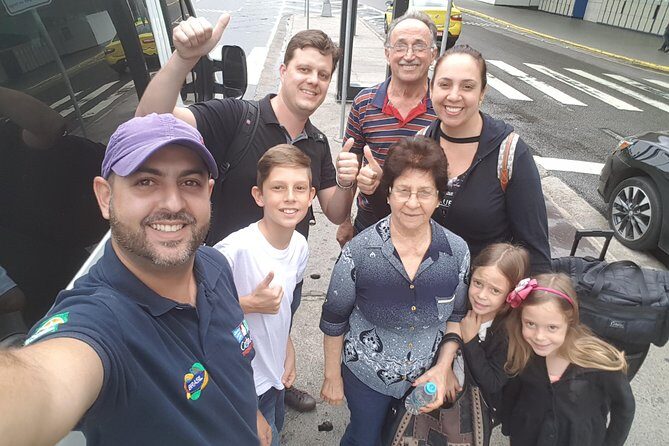
Details matter when you are tired at the start of a trip. This transfer includes a mobile ticket, and you get confirmation at booking. In plain terms, that reduces the risk of last-minute confusion.
The service is also offered in English, which helps if you are not fluent in Portuguese. Even if your trip stays simple—meet driver, load car, ride to Arraial do Cabo—having clear communication can reduce misunderstandings about pickup time and pickup location.
One practical tip: when you book, double-check the exact pickup address in Rio (hotel reception vs accommodation address) and the correct drop-off location in Arraial do Cabo. A private transfer is only as smooth as the address details you provide.
Also note that the service says it is near public transportation. That may sound vague, but it usually means you are not totally stranded if something unexpected happens. Still, the whole point here is that you should not need backup transit plans.
Best times to book and who should use this transfer
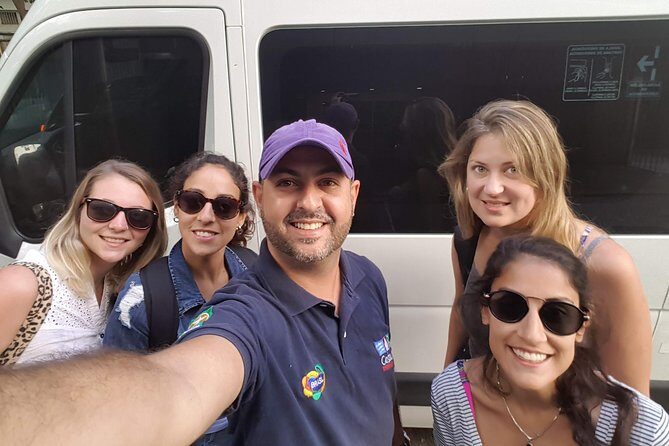
The service operates 24 hours a day, 7 days a week, which is a big deal when you land at odd times. You can also use it for port arrivals and bus terminal arrivals, not only flights. So if your plan starts with a cruise, a long bus ride, or a late domestic flight, this can match the reality of how travel actually happens.
Booking-wise, the average booking time is about 21 days in advance. That does not mean you can only book then, but it suggests the operator sees demand and people plan ahead. If you are traveling in a busy season (Carnival is one obvious example from the feedback), earlier booking helps lock your preferred pickup time.
Who this suits best:
- Families who want a predictable pickup without arguing over schedules.
- Groups up to 15 who want one vehicle and one plan.
- Anyone arriving via airport, port, or Novo Rio bus terminal who does not want to solve transit puzzles first thing.
- Travelers who want a comfortable ride to start their Arraial do Cabo day off right.
Who might find it less ideal:
- People who want a guided, stop-heavy day of sightseeing en route. This is primarily a transfer.
- Travelers who are very comfortable with public transit and are chasing the lowest possible cost.
If your goal is simple—get from Rio to your Arraial do Cabo base without stress—this fits well.
Price and booking smart: how the $90.75 per person adds up
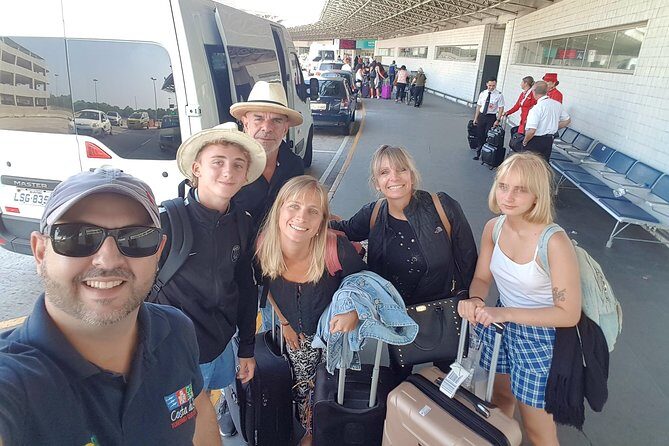
At $90.75 per person, you are paying for convenience, privacy, and a driver who meets you with a name sign. The “per person” pricing can feel steep if you are comparing against a bus fare. But the value math changes depending on your group.
Here’s the value logic I’d use:
- If you would otherwise spend time figuring out transit with luggage, you are paying to remove that friction.
- If you are traveling as a group, the vehicle capacity and group discounts can make the cost feel more reasonable.
- If you are arriving at a time when public options are inconvenient, private pickup becomes more than convenience. It becomes a reliability upgrade.
Also, the timing matters. If your arrival day is busy, missing a connection or losing time to wrong stops can cost you more than the transfer itself. A private transfer helps protect your first day in Arraial do Cabo.
For best results, book with clear pickup and drop-off addresses. And if you think you might want a quick stop to stretch, decide that in advance so the plan matches your needs.
Should you book this Rio to Arraial do Cabo private transfer?

I think you should book if you want an easy arrival day. The biggest strengths are name-sign pickup, door-to-door service to your accommodation, and a comfortable, well-run ride with drivers who focus on timing. The fact that the service runs 24/7 also makes it a strong match for real-world flight schedules.
You might skip it if you’re traveling ultra-budget and okay spending time on public transport, or if you want a full sightseeing itinerary with many stops. This transfer is built for moving you safely and comfortably, not for filling every minute with attractions.
If your plan is to land in Rio and then head straight to Arraial do Cabo to start enjoying beaches and the coastal vibe, this is a very practical way to begin.
FAQ
How long does the Rio de Janeiro to Arraial do Cabo transfer take?
The private transfer is approximately 2 hours 40 minutes to 3 hours.
Where will the driver meet me in Rio de Janeiro?
The driver waits at the hotel reception or at your accommodation address. If you arrive by air, the driver meets you at the airport arrivals exit with a sign showing your name.
Does the transfer include pickup from airports and other transport hubs?
Yes. It covers pickup from Galeão (International), Santos Dumont (National), Sea Port, and Novo Rio Bus Terminal.
Can we stop along the way?
Yes. You can go directly without stopping, or request a stop if you prefer.
Is this a private transfer?
Yes. Only your group participates.
What vehicle size and luggage capacity should I expect?
The vehicles can accommodate up to 15 people and their luggage.
Is there a mobile ticket and confirmation when booking?
Yes. Confirmation is received at the time of booking, and you get a mobile ticket.
Is free cancellation available?
Yes. You can cancel up to 24 hours in advance for a full refund. If you cancel less than 24 hours before the start time, the amount paid is not refunded.
]]>What I like most is the real-time flight monitoring and the no-stress meet-and-board setup. The other big win: the ride is described as punctual, comfortable, and very quiet, which matters after a long trip. One thing to consider: there is no restroom on board, so if you need a quick stop, plan for that before you get in.
If you’re arriving at Galeão Airport (GIG) and want a simple start, this is the kind of service that reduces decision-making and keeps your arrival smooth.
Key things to know before you go
- Flight tracking: Your driver time lines up with actual landing changes, not just a scheduled arrival.
- Easy meet-up: A professional waits in the landing area, identified and ready to help with luggage.
- Private sedan for up to 4: You and your group ride together with a clean, air-conditioned car.
- Comfort perks: Expect Wi‑Fi on board and a booster seat when needed.
- Hotel drop-off right at reception: You’re left at the hotel front desk or the informed address.
- Keep an eye on baggage rules: Extra items are charged R$ 75 per item if you exceed the allowance.
How the Galeão Airport transfer really works
This is a straight-through airport-to-hotel service in Rio de Janeiro, designed for the moment you land and just want to move. The route is built around one goal: get you to your hotel safely and on time, even if your flight runs late. It’s private transportation, so you’re not waiting around with strangers while your schedule slowly unspools.
The transfer time is listed as about 25 to 50 minutes, which is a useful range for Rio’s traffic patterns. If you’re on a tight itinerary, it’s still a practical window because the provider tracks flights and adjusts pickup timing accordingly.
Price is shown as $23.52 per group (up to 4). That matters because the cost is not “per person” in a way that punishes a small group. If you’re traveling as a couple, with friends, or with family, the value is easier to feel. If you’re traveling solo, it’s still simple and predictable—but you may compare it to a taxi only if you’re comfortable managing the airport logistics yourself.
Meeting the driver: calm beats chaos
After you book, you receive the service information with clear meeting details, estimated journey time, and support contact channels. The key point is not just that you’ll get instructions; it’s that the pickup is meant to be aligned with your flight status.
The provider monitors your flight in real time to track delays or changes. That helps a lot at Galeão, where a late landing can turn a “meet at X time” plan into a stressful loop of questions and phone calls. Here, you avoid that by having the timing tied to what’s happening with your arrival.
When you arrive, the driver is waiting in the landing area, clearly identified. You’ll be helped with luggage and guided to board. For many people, this is the first big “value moment” of private transfers: someone handles the hard part (finding you efficiently), while you focus on the easy part (getting out of the airport).
The sedan ride: comfort you notice right away
Your pickup is a clean, air-conditioned sedan. That might sound basic, but after Brazil’s heat and a flight that leaves you dehydrated, AC is not a luxury—it’s “get comfortable fast.” The ride is designed to be quiet and smooth, which shows up in how the service is described: punctual, professional, and very calm.
Inside, you also get Wi‑Fi on board. That’s handy for quick map checks, sending messages to your group, or confirming your hotel details if anything changed while you were in the air.
There’s a booster seat included, which is a thoughtful detail if you’re traveling with kids. It’s not always standard in airport transfers, so it’s worth noting.
One limitation to plan around: no restroom on board. If you think you might need to use the bathroom during the transfer, handle it before you board. This is especially important if your flight lands after a long travel day and everyone is running on fumes.
Safety and route choices: practical, not fancy
This transfer is carried out with safety and respect for traffic laws. It also aims to use the best routes to avoid delays and congestion. In plain terms, you’re not getting a reckless sprint through town. You’re getting a driver who plans for typical traffic behavior and tries to minimize time loss.
During the ride, the driver remains available for questions and basic city information. They can also handle simple route adjustments where possible. That’s useful when you’re tired and your hotel address might have one small detail you want to confirm, like the correct street entrance or the way reception likes to be approached.
The tone of the service is also part of the value. The ride is described as educated and polite, with a professional approach that keeps you from feeling like you’re improvising your arrival. When you’re landing in a new city, that social ease matters more than most people expect.
Hotel drop-off: no extra steps
The transfer ends at your hotel reception, B&B, or the informed address. That door-to-door style is the whole point. You’re not left to navigate public transport with jet lag. You’re not figuring out where to stand for taxis or rideshare drivers while you carry bags.
Dropping you at reception is especially convenient if your hotel has luggage rules, front desk procedures, or check-in steps that work best when you arrive and get your name called quickly.
If your hotel is spread out, or you’re staying in a place with a specific entrance, having the driver deliver you directly to reception can save time. It also reduces the “Where do I go from here?” stress that hits right after landing.
Pricing and value: when $23.52 makes sense
At $23.52 per group up to 4, the math is pretty friendly if you can share the ride. Think of it as paying for certainty: a driver waiting for you, a direct trip to your destination, and fewer airport decisions.
Here’s the practical way to judge value for yourself:
- If you’ll be tired, carrying luggage, or traveling with someone who doesn’t want to handle airport logistics, the private transfer usually wins.
- If you’re two people and you compare against taxis after factoring time lost, waiting, and the chance of confusion at the pickup zone, this service often looks good fast.
- If you’re solo and totally comfortable handling pickup and payment, you might compare costs—but you’re trading convenience for control.
Also, the service includes air-conditioned transportation, Wi‑Fi, and a booster seat. Those aren’t deal-breakers for every traveler, but they add up for families and people who land already running behind.
What’s included vs. what to plan for
Included in the service:
- Air-conditioned vehicle
- Private transportation
- Booster seat
- Wi‑Fi on board
- Public transportation is listed, and the additional info notes it’s near public transportation
Not included (important):
- Excess baggage charges: If you have excess baggage, there’s an extra amount of R$ 75.00 per item.
- Restroom on board: There isn’t one.
If you travel with multiple bags, double-check what counts as excess and plan around it. For a family, one “extra item” can add up quickly. It’s also smart to pack essentials in a bag you can access fast once you land, since you’re arriving and moving immediately to the hotel.
Service animals are allowed, and the experience is set up as a private tour/activity: only your group participates. That means you’re not sharing the car with random strangers, which helps keep the ride relaxed.
Who this transfer fits best
This is a great match if you:
- Want a smooth arrival with someone handling pickup and timing
- Are traveling with kids and want a booster seat
- Prefer calm and comfort after a long flight
- Value direct drop-off at reception rather than figuring out the next step
It’s also a solid option if you hate waiting around. The flight tracking and identified meeting process reduce time uncertainty, which is usually the biggest source of frustration on arrival days.
If you’re the type who enjoys navigating airports, negotiating transport, and saving every dollar, you might still compare options. But if your goal is “land and go,” this service is built for that.
Should you book this Galeão Airport sedan transfer?
Yes, I’d book it if your priority is simplicity, timing, and comfort. The biggest selling points are flight monitoring, a clear meet-up in the landing area, and hotel drop-off right at reception. Add a clean air-conditioned sedan and Wi‑Fi, and you get an arrival that feels organized instead of chaotic.
Skip it (or at least compare) if you’re very cost-sensitive as a solo traveler, or if you need onboard restroom access during the transfer. Also, if your luggage situation might be borderline, make sure you understand the excess baggage rule so you’re not surprised by R$ 75 per extra item.
If your plan is simply to get from Galeão to your hotel with zero hassle, this one is an easy yes.
FAQ
Where does the driver meet me after I land?
After booking, you’ll receive clear instructions with the meeting point and estimated journey time. The driver awaits you in the landing area and is identified for easy pickup.
Do they adjust pickup time if my flight is delayed?
Yes. The service monitors your flight in real time to track delays or changes so the driver is there at the correct arrival time.
How long is the transfer from Galeão to the hotel?
The duration is listed as approximately 25 to 50 minutes.
What’s included in the vehicle?
You get a private, air-conditioned sedan. It also includes a booster seat and Wi‑Fi on board.
What if I have extra luggage?
If you have excess baggage, there is an extra charge of R$ 75.00 per item.
Is there a restroom on board?
No. A restroom on board is not included.
]]>I like two things right away. First, the pickup system is simple: the accredited driver/guide meets you with a name sign at RioGaleão or the cruise ship port. Second, you also get real help once you’re in the car, since the driver provides useful tips on where to go and what to do around Rio.
One thing to consider: if your flight is heavily delayed, you’ll need to contact the provider as soon as you can so the pickup timing doesn’t fall apart. In cities like Rio, delays plus traffic can turn a smooth plan into a stressful scavenger hunt.
Key things to know before you go

- Name-sign pickup at RioGaleão or the cruise port so you can move fast
- English-speaking accredited driver/guide who can share practical Rio advice
- Private transfer for just your group (up to 2 people per booking)
- Drop-offs in Rio’s south zone like Ipanema, Copacabana, and Leblon
- Mobile ticket for a paper-free start
- Car ride time varies (about 1 to 2 hours) depending on traffic and the moment you land
Why a Private Rio Transfer Makes Everything Easier

Rio is gorgeous, but arriving can be chaotic. The airport area is busy, street traffic can be unpredictable, and you don’t want to spend your first hour figuring out which exit, which gate, and which rideshare pickup lane matches your mood.
That’s why I like this setup: it’s door-to-hotel-area, not a vague “good luck” handoff. You’re met at the meeting point and taken to Rio’s south zone—the area most visitors aim for because it’s close to beaches, restaurants, and a lot of classic sights.
The other underrated advantage is the driver role. This isn’t just someone who takes you from point A to point B. The description says the driver is an accredited driver/guide, and they’ll give you valuable information about Rio—where to go and what to do. That matters because Rio is big, and time is short. A good first conversation can help you pick neighborhoods and attractions that actually fit your schedule.
If you’re trying to start relaxed—especially after a long flight—this type of private transfer helps you get your bearings fast.
Meeting at RioGaleão and the Cruise Port (Without the Wander)
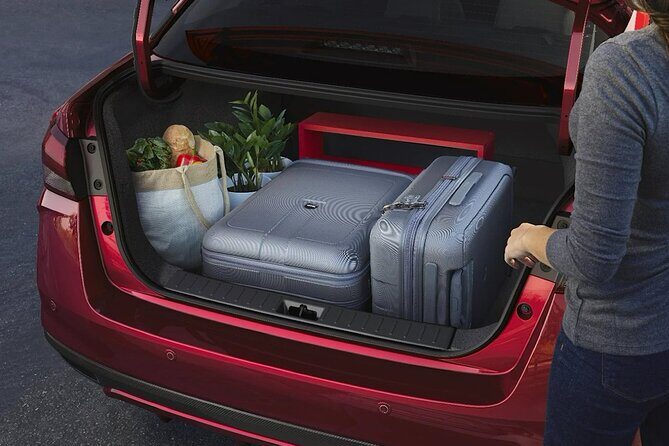
The pickup start point is clearly spelled out for the airport: Riogaleão International Airport (Av. Vinte de Janeiro, s/nº – Ilha do Governador, Rio de Janeiro – RJ, 21941-900, Brazil). For cruise arrivals, the transfer also covers pickup from the cruise ship port.
Here’s what that means for you in real-life terms:
- You’re not waiting for an unclear call time window with no reference point.
- You’re not trying to match your face to a stranger in a crowd.
- You can plan your arrival routine more calmly, because you know where the driver will be.
The driver meets you with your name on a sign. That detail is small, but it’s the difference between walking around with luggage in heat and sunlight versus walking straight to the car and going.
One detail that I found especially useful: you’re asked to contact the provider as soon as you book so they can organize your transfer in or out. Do that. Even a quick message can prevent timing issues later—especially if your hotel is in a specific south zone pocket and your arrival plan has any quirks.
Getting Dropped in the South Zone: Ipanema, Copacabana, Leblon
The transfer is designed for people who want to stay in Rio’s south zone. The description calls out examples like Ipanema, Copacabana, and Leblon. That’s a great match for most first-timers because these areas make it easier to do beach days, walkable neighborhoods, and classic Rio scenery without long cross-city trips.
You’re looking at an approximate 1 to 2 hour duration. In Rio, that range is honest. Traffic can stretch things, and timing can vary depending on the time of day and where exactly you’re going. With that in mind, this transfer works best when you treat it as a straight shot: confirm the pickup time, then plan for a travel window that can run longer than you’d see on an open highway.
A practical tip: when you book, think about how far your hotel is from the main access roads. The drop-off is “any hotel in the south zone area,” but curb access can still be a factor in busy cities. If you know your exact address (and any entry instructions like gate codes), send them early.
What the Driver-Guide Can Help You With (Beyond Directions)
This is one of the best parts of this kind of transfer: you get information in the moment you need it, not a lecture after your first busy day.
The driver/guide will provide valuable insight about Rio: where to go, what to do, and generally how to make the most of your time. That can be anything from which beaches fit your energy level to which areas are easiest to reach on your schedule.
This matters because Rio has a “choose your base wisely” feel. Different neighborhoods give you different types of days:
- A beach-and-neighborhood vibe if you’re planted in Ipanema or Copacabana
- A slightly calmer, more upscale feel around Leblon
- Easy access to the classic attractions that first-timers want to see
Even if you already have a plan, ask one smart question during pickup. For example: what’s the best order to do sights so you’re not zig-zagging all day? You’ll be surprised how quickly the first hour in a car turns into a useful plan.
One more real-world detail: in one positive experience, the pickup was easy to recognize at the airport, and the passenger received a message about where the driver would be and what they’d be wearing. That’s exactly the kind of clarity that reduces stress. You should still expect the name sign, but that extra message is a strong sign the process is being run thoughtfully.
Price and Value: Is $99 Per Group a Smart Deal?

The price is $99.00 per group (up to 2), and the booking pattern shows it’s typically purchased about 47 days in advance. That gives you a clue: people want to lock in airport logistics early in peak travel periods.
Here’s how I’d judge value. You’re paying for:
- A private car and a driver who meets you at the airport/port
- English support
- A driver/guide who adds practical context about Rio
- A direct transfer into a specific area (south zone) instead of you handling the first leg
If you’re traveling as two people, the math often looks reasonable compared to splitting between taxis, rideshares, and the time/effort of figuring out pickup points. Also, this removes friction. In a city where first-day logistics can be annoying, paying for that reduction in hassle can be worth it.
Where value shifts is on your expectations. If you want a low-cost option and you’re fine figuring things out on arrival, you might spend less using other transport. But if you want the trip to start clean—especially if you’re tired, traveling with luggage, or arriving at a busy airport—this transfer can feel like a bargain.
One more angle: because the experience is private for your group (not shared), you’re not stuck coordinating with other parties who arrive on different flight times.
Timing, Delays, and the One Thing to Do Immediately
Transfers look simple on paper. Real life has traffic, crowds, and flight delays. The key is how fast you respond when plans shift.
One experience described a frustrating start after a flight delay, where the pickup didn’t happen as expected and the booking had to be resolved afterward. The takeaway for you isn’t to panic—it’s to act fast if your schedule changes.
So here’s my practical checklist:
- Keep your phone service working if possible and answer messages promptly.
- If your flight is delayed, contact the provider right away so they can adjust or confirm the plan.
- Don’t wait until you’re standing at the pickup area with no updates. The longer you wait, the easier it is to lose time (and patience).
You can’t control air traffic. But you can control response speed.
Also note: the cancellation policy allows free cancellation up to 24 hours in advance for a full refund. If your schedule is still flexible, that buffer can help you book without feeling trapped. If your plans are nailed down, booking early is smart—especially in high season.
Who This Transfer Is Perfect For (and Who Might Skip It)
This private transfer is a strong fit if you:
- Are landing in Rio and want zero navigation stress
- Stay in the south zone (Ipanema, Copacabana, Leblon)
- Prefer an English-speaking driver/guide and like getting quick practical advice
- Want a simple one-time solution for both arrival and departure
It’s also a good match for travelers who want a private car because you’re not sharing space or timing with strangers.
I’d think twice if you:
- Have plenty of time to figure things out on arrival (and don’t mind it)
- Are planning to stay far from the south zone areas referenced in the pickup notes
- Prefer fully independent travel from minute one
For most first-timers headed to the classic Rio areas, though, this is the kind of service that turns “arrival day” into just another day, not a project.
Should You Book Rio de Janeiro Private Airport Transfer?
I’d book it if you want a smooth start: a name-sign pickup, an accredited English driver/guide, and a direct drop into Rio’s south zone. At $99 for up to 2, it often feels fair when you factor in convenience, time saved, and the value of having someone explain where to go next.
I’d hesitate only if your schedule is constantly shifting or you’re relying on late-breaking changes. In that case, set yourself up for success: contact the provider quickly, keep your phone reachable, and don’t assume a delayed flight automatically means the pickup plan will stay perfect.
If you’re the kind of traveler who wants to land, breathe, and get to your hotel—this is built for you.
FAQ
Where does the pickup happen?
Airport pickup starts at Riogaleão International Airport, at Av. Vinte de Janeiro, s/nº – Ilha do Governador, Rio de Janeiro – RJ. The transfer also covers pickup from the cruise ship port.
Can I be picked up and dropped off near my hotel in Rio’s south zone?
Yes. The driver will take you safely to your hotel in Rio’s south zone area, with examples including Ipanema, Copacabana, and Leblon.
Is this a shared transfer?
No. This is a private tour/activity, and only your group will participate.
Is the driver/guide available in English?
Yes. The experience is offered in English.
Do I need to print a ticket?
No. A mobile ticket is offered.
What if I need to cancel?
You can cancel for a full refund if you cancel up to 24 hours in advance of the experience start time. If it’s canceled because a minimum traveler requirement isn’t met, you’ll be offered a different date/experience or a full refund.
]]>I like the pickup by air-conditioned van, because you’re not stuck late-night taxi math. I also like the included welcome drink plus two additional drinks, so you can start the night already set up.
One thing to watch: nightclub entrance fees aren’t included, so you may still pay some covers once you get to each venue.
Key things to know before you go

- Pickup from major Rio neighborhoods: Leblon, Ipanema, Copacabana, Flamengo, and Downtown (Centro). Barra da Tijuca and Recreio cost extra.
- Arcos da Lapa stop with an admission ticket included to get the night rolling in the right zone.
- Welcome drink and two more included drinks during the crawl.
- Small group feel inside a bigger tour cap: up to 19 per minivan, up to 99 total across the whole operation.
- English-speaking escort and a mobile ticket, plus confirmation at booking time.
- Optional VIP upgrade with private table service and 5 included drinks.
Lapa at 8:00 pm is a smart way to start Rio
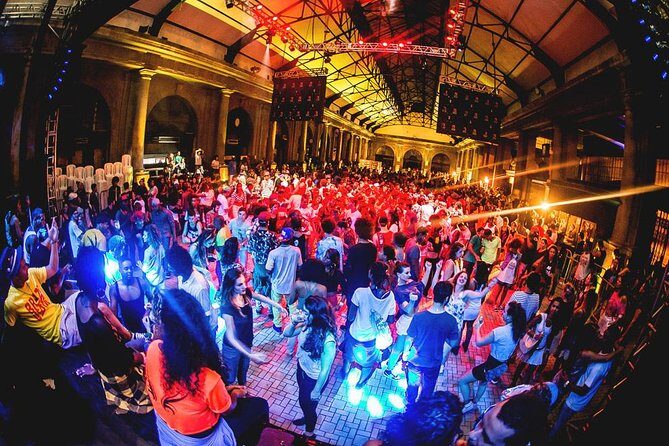
Lapa is where Rio goes loud. You’ll be in the right neighborhood early enough to catch the night’s momentum, not the awkward middle where most people are still deciding what to do.
This crawl is built around that reality: you get a plan, you get a guide, and you get routed to venues in the same nightlife zone. For first-time visitors, that alone saves time and stress.
Pickup and transfer: worth it in Rio’s peak nightlife hours
Pickup starts at 8:00 pm, and the tour begins at Hotel Rio Othon Palace in Copacabana. If your hotel is in Leblon, Ipanema, Copacabana, Flamengo, or Centro, pickup is available, with the exact time arranged after you confirm.
I really like this kind of setup because Rio nights can turn chaotic fast. Having an air-conditioned vehicle shows up to get you into position means you spend your energy on the fun, not on street logistics.
For people staying in Barra da Tijuca or Recreio, there’s pickup but for an additional rate. If you’re there, budget that extra transport cost so the math stays comfortable.
Your route starts at Arcos da Lapa

The crawl kicks off at Arcos da Lapa, the famous arch area tied to Rio’s nightlife. You’ll get an admission ticket included for this first stop, which is a nice early “we’re in” moment.
This is also a practical move: once you’re in Lapa, you’re in the zone where multiple bars and clubs are close enough to hop between. The guide’s job is to keep the night moving without you wasting time wandering.
What you should expect here is the atmosphere: crowds, music spilling out, people arriving in waves, and the feeling that everyone’s already in vacation mode. If you like being around energy, this start works.
The club crawl rhythm: what the guide actually helps with
The core value isn’t just that you go to multiple venues. It’s that you go in a group with an escort who can keep you on schedule and aimed at places that make sense for the night.
The experience includes skip-the-line access and included drinks, which helps you avoid the most annoying part of nightlife in big cities: waiting around. You can also treat it like a social “launcher.” You’ll mingle with other people on the tour and locals you meet along the way.
This is also where group size matters. With a max of 19 per minivan, the night usually feels coordinated rather than chaotic. Across the full operation, it can be larger (up to 99), but your immediate group should still feel manageable.
Drinks included: how to think about value (and spend)
You get a welcome drink, then two more included drinks as you move through the night. That’s a real chunk of value for a $65 price tag, because drinks are often what turn a fun night into an expensive one.
Still, nightclub entry fees aren’t included. So you should treat the included drinks as the baseline, not the full budget. Expect there may be extra costs depending on the specific clubs and what’s going on that night.
If you want to keep control of your spending, decide beforehand:
- How much you’re willing to pay for additional drinks
- Whether you’ll add any club entrance fees if they come up
That mindset keeps the night fun, not stressful.
Optional VIP upgrade: when it’s a smart move

There’s an optional VIP experience with private table service and 5 included drinks. This is the “upgrade the vibe” option—especially if you want a more comfortable setup once the night gets crowded.
I’d consider VIP if:
- You’re traveling with friends and want a place to settle together
- You hate queuing and standing
- You want more drinking included in a planned way
I’d skip VIP if you’re more flexible and happy to bounce around. The standard format already includes drinks and skip-the-line access, so it can be plenty for many people.
What to expect from the nightlife: loud, late, and social
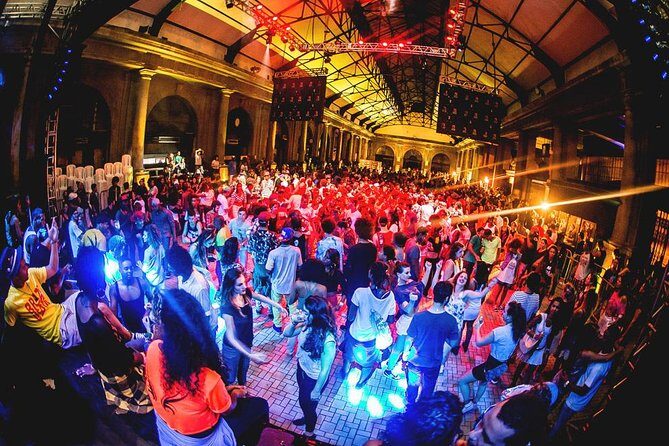
Lapa’s nightlife doesn’t politely wrap up at 10 pm. One standout detail from past experiences is that the party can run very late, with nights that reportedly continue until around 5:00 am.
If you book this, plan your whole next day like a person who knows they’ll be out late. Wear shoes you can tolerate after a few hours of walking. Bring patience for crowds. And if you’re sensitive to loud music, keep your expectations realistic.
The social aspect is a big part of the appeal. People have had a positive time meeting others from different places along the crawl, and the guide/escort helps keep introductions moving.
Safety and the one risk you should plan for
In general, this kind of guided pub crawl is designed to keep you in safe hands: you’re with an escort, you’re traveling together, and you’re not wandering into the wrong situation alone.
That said, quality can come down to the guide and how smoothly the start of the night goes. There has been a serious complaint about a late, rude guide and a payment conflict connected to extra people at boarding. The operator’s response emphasized the importance of following the programmed participant count.
So here’s the practical advice I’d give you: confirm your headcount clearly at pickup and don’t assume you can add people without consequences. If something feels off, address it quickly and calmly with the escort or the company contact rather than letting frustration snowball.
Most nights should feel straightforward. But having that “watch the details at the start” approach keeps you protected.
Language, tickets, and small practical perks
The tour is offered in English, and you receive a mobile ticket. Confirmation is received at booking time, which makes it easier to plan your night without guessing.
There’s also an ID rule: you must be at least 18 years old, and if requested you’ll need to show ID. That’s standard nightlife stuff, but it’s worth putting in your day-planning brain.
Also remember: the tour doesn’t operate on Christmas Day, New Year’s Eve, and Carnival season. If you’re visiting around those dates, check dates early so you’re not left hunting for a last-minute alternative.
Who this pub crawl is best for
This works well if you:
- Want a guided, social first night in Rio
- Like club hopping in one main nightlife area instead of long travel
- Prefer pickup over navigating late-night streets
- Enjoy meeting people while you’re out for a few hours
It may be less ideal if you:
- Hate crowds and loud venues
- Want total control over every stop (you’ll follow the guide’s plan)
- Have a very tight budget once entrance fees show up
Think of it as a structured night out with enough flexibility to have fun, not a private party.
Price check: is $65 actually good value?
At $65 per person for about 4 hours, the value comes from the combo:
- Pickup by air-conditioned vehicle in key neighborhoods
- Tour escort/host
- A welcome drink plus two additional included drinks
- Skip-the-line access
- Admission ticket included for the first stop (Arcos da Lapa)
If you were trying to build this on your own, you’d likely spend similar money just on transport and drinks, and you’d still face the uncertainty of lines and entry fees.
Your main variable cost is nightclub entrance fees. If you’re okay budgeting extra covers, this tends to feel like a fair deal. If you hate surprise costs, that missing entrance fee detail is the part to plan around.
Should you book this Rio pub crawl?
Book it if you want a low-effort, social way to experience Lapa nightlife on your schedule. The pickup and included drinks reduce the friction that usually makes nightlife planning annoying, and the guided structure keeps the night moving.
Skip it or consider VIP only if you know you’ll want a more controlled setup, or if you’re the type who gets irritated by crowded clubs and late-night noise. Also, if you’re traveling with a group and you might add extra people, lock in the participant count early to avoid start-of-night problems.
If you’re looking for a “start Rio right now” plan, this is a solid option.
FAQ
What time does the Rio pub crawl start?
It starts at 8:00 pm and runs for about 4 hours (approx.).
Where does pickup happen?
Pickup is available from most hotels in Leblon, Ipanema, Copacabana, Flamengo, and Downtown (Centro). Pickup for Barra da Tijuca/Recreio has an additional rate. You’ll need to contact the operator to adjust the pickup time based on your hotel.
What is included in the price?
The tour includes an air-conditioned vehicle and a tour escort/host. You also get a welcome drink and two more included drinks during the club stops, plus skip-the-line access. The first stop at Arcos da Lapa has an admission ticket included.
Are nightclub entrance fees included?
No. Entrance to nightclubs is not included, so you may have to pay covers depending on the venues.
Is the tour for adults only?
Yes. You must be at least 18 years old. If requested, you must present ID.
Is the tour conducted in English, and do I get a ticket on my phone?
Yes. The tour is offered in English, and you’ll receive a mobile ticket.
What if weather is bad or the minimum number of travelers isn’t met?
The experience requires good weather. If it’s canceled due to poor weather, you’ll be offered a different date or a full refund. If it’s canceled because the minimum isn’t met, you’ll also get a different date/experience or a full refund.
]]>A straight shot from Rio to Cabo Frio saves you energy for beach time. What makes this transfer worth a look is the private door-to-door pickup (hotel, port, bus terminal, or the airport) and the fact that the driver arrives with a sign bearing your name, so you’re not playing airport-roulette with luggage.
I especially like the practical timing: plan on about 2 hours 40 minutes to 3 hours, and you can choose a direct run or add an en-route stop if you need one. The second thing I like is how it’s designed for real groups and real bags, since the shuttle can handle up to 15 people and their luggage without you feeling squeezed.
One drawback to keep in mind: airport meetups can be messy when immigration lines, baggage claim, and exit locations stretch out. In a real example, the driver-side service was praised, but the airport reception timing and location didn’t click perfectly—so you’ll want to be ready with flight info and stay reachable after landing.
Key things that make this transfer work
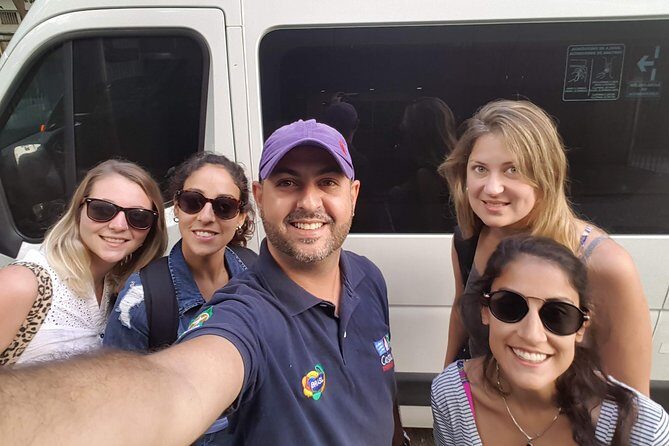
- Name-sign pickup at hotels and airport/port exits helps you find your driver fast
- 2:40–3:00 travel time makes it easy to plan your Cabo Frio arrival day
- Direct route or optional stop on the way, based on what you need
- 24/7 service from Rio hotels and major transport hubs
- Up to 15 passengers plus luggage—good for families or small groups
- A professional driver experience, with strong emphasis on route efficiency
Private Rio to Cabo Frio: the real value of a door-to-door transfer
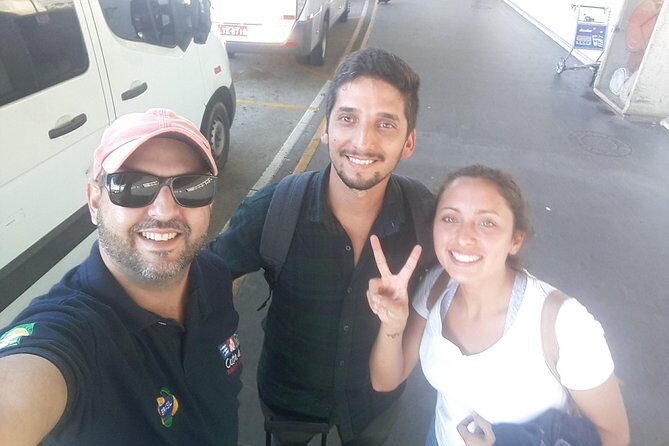
Cabo Frio is the kind of place you reach and immediately feel the shift: ocean air, easier schedules, and fewer “how do I get there?” headaches. The big advantage here is that this isn’t a bus you hunt down or a taxi you negotiate. It’s a private transfer from your starting point in Rio straight to your accommodation in Cabo Frio.
You’re paying for three things: time, certainty, and comfort. On a route that runs roughly 190 km, those three add up quickly—especially if you land with tired legs, kids, or more bags than you planned.
Also, once you’re in Cabo Frio, you’re well placed for day trips. Cabo Frio sits about 15 km from Arraial do Cabo and around 20 km from Búzios, so getting there smoothly can turn your first day into something useful, not just recovery.
Pickup in Rio: hotels, ports, and the name-sign system
This service is set up to meet you where you’re actually arriving, not where it’s convenient for the company.
If you’re staying at a hotel in Rio, the driver is set to meet you at the hotel reception or at your accommodation address. If you’re arriving through:
- Galeão (International)
- Santos Dumont (National)
- Novo Rio Bus Terminal
- the Sea Port
…you’ll be met at the arrival area, with the driver holding a sign marked with your name.
That name-sign detail matters more than it sounds. Rio transport hubs can be chaotic. When your pickup is tied to a visible name, it reduces the chance you waste 15–40 minutes wandering with a suitcase that suddenly feels heavier than yesterday.
A practical caution from a real timing mismatch
In one reported case, the driver-side service was excellent, but the airport meetup didn’t line up cleanly right at the exit. The situation boiled down to timing: after a flight arrives, it can easily take about 50 minutes just to leave the aircraft, collect bags, handle immigration, and get out of the terminal.
The takeaway for you is simple:
- assume you’ll be slower than the moment your plane touches down
- keep your phone accessible after arrival
- give the company accurate flight details at booking
- if you’re running behind, don’t assume the driver will wait forever at the exact same spot unless you’ve confirmed the timing
In that example, the driver Jorge was ready and communicated that the passenger was already en route to the vehicle. A receptionist on the side (Gleice) was waiting at the airport exit, but the match happened later than expected—classic “we both were right, just at different times” travel trouble.
The drive: direct Rio to Cabo Frio, plus a stop if you want it

Once you meet the driver, the trip is designed to be straightforward. You’re looking at 2 hours 40 minutes to 3 hours, and the plan works two ways:
1) Go straight to your accommodation in Cabo Frio
2) Add a stop if the traveler wishes
That optional stop is handy in real life. You might want a bathroom break, a stretch, or a quick bite before you hit hotel check-in. Since the exact stop location isn’t guaranteed in the information provided, think of it as flexibility—rather than a promised “tourist stop.”
If you’re arriving from the airport, I’d treat that stop as your safety valve. You can avoid the common first-day problem: you land, you’re rushed, you skip a break, and you end up cranky before the vacation even starts.
What this transfer changes about your first day
This is the kind of transfer that protects your energy. Instead of spending your arrival day decoding public transit, waiting in lines, or hauling luggage around, you get a predictable arrival into Cabo Frio. That means:
- you’re more likely to check in while your hotel still has a smooth process
- you can decide later what pace you want
- you start your trip already in “vacation mode,” not “logistics mode”
Vehicle comfort and group size: up to 15 with luggage

This is not a tiny transfer where you end up playing musical luggage. The shuttle can fit up to 15 people and their luggage, which is a strong signal that the operator plans for real travel loads, not just carry-on dreams.
Because it’s private, you won’t be stuck waiting for strangers to get ready. Your group goes when your driver is ready and when you’re set.
If you’re traveling with:
- a family (with strollers or multiple suitcases)
- a group of friends splitting costs
- anyone who doesn’t want to wrangle buses after a long day
…this size and private setup tends to feel better than “shared transport” versions of the same route.
Price and value: is $90.75 per person worth it?

At $90.75 per person, this is not a budget bus option. But value here isn’t just about the lowest price. It’s about what you buy with private transfer time.
You’re covering:
- door-to-door pickup from hotels and major Rio arrival points
- a dedicated driver experience
- a ride that’s expected to take 2:40–3:00
- room for up to 15 passengers and luggage
- 24/7 availability, meaning you can match your schedule rather than reshape your travel day
When it’s usually a good deal
This transfer tends to make sense when at least one of these is true:
- you’re landing late or early and don’t want to negotiate transport in real time
- you have enough people that a per-person private ride beats the hassle cost of multiple taxis
- you’re tired of waiting around while you figure out the next step
When you might hesitate
If you’re traveling solo, extremely flexible with time, and comfortable with public transit, you can sometimes find cheaper ways to go. The question isn’t whether you can get there. It’s whether you want to spend your first few hours in Rio dealing with options, lines, and luggage moves.
For many people heading to a relaxed seaside start, paying for certainty is the whole point.
Who this transfer suits best (and who should think twice)
This works best for travelers who value a smooth handoff from one city to the next. Think in terms of your day: if Rio is already a travel-heavy start (airport, port, or station), you’ll likely enjoy the simplicity.
It’s also a good fit if you want to keep your “first day rules” simple:
- arrive at your accommodation, not a random drop-off
- get to Cabo Frio within a predictable window
- have a driver who handles the route
A small-but-real consideration
If your arrival involves tight timing or you expect delays (long immigration lines, baggage claim issues, crowded terminals), you’ll want to plan buffer time. The distance is manageable, but airport reality can stretch schedules. That doesn’t mean the service fails—it means your expectations should include the messy parts of flying and moving through terminals.
Should you book this private transfer?

If you want a private, door-to-door ride with a name-sign pickup and 24/7 scheduling, I’d say it’s worth booking. It’s the kind of transfer that lets you start Cabo Frio without turning your arrival into a second job.
I’d book it especially if:
- you’re arriving by Galeão or Santos Dumont and want one less problem to solve
- you’re traveling with luggage or a small group
- you’d rather pay for comfort than hunt for transport after a flight
I’d be a bit more careful if you hate waiting or your flight has a history of delays. Then your best move is to double-check your flight and pickup details, keep your phone available, and give yourself time to get through baggage and exit.
FAQ
FAQ
How long does the transfer from Rio de Janeiro to Cabo Frio take?
The trip is approximately 2 hours 40 minutes to 3 hours, depending on conditions and whether you add a stop.
Where will the driver pick me up in Rio de Janeiro?
Pickup can be at your hotel reception or at your accommodation address. If you arrive via the Sea Port, Novo Rio Bus Terminal, Galeão (International), or Santos Dumont (National), the driver meets you at the arrival area.
How will I find my driver at the airport or port?
The driver departs from the landing/exit area with a sign marked with your name.
Is the transfer private or shared?
It’s private. Only your group participates.
Can I stop along the way to Cabo Frio?
Yes. The journey can go straight without stopping, or you can request a stop if you wish.
Does the service run at all hours?
Yes. It operates 24 hours a day, 7 days a week.
How many people and luggage fit in the shuttle?
The vehicles can accommodate up to 15 people and their luggage.
What is the cancellation policy?
You can cancel up to 24 hours in advance for a full refund.
Are service animals allowed?
Yes, service animals are allowed.
]]>What I like most is the door-to-door setup. You’re not trying to translate bus routes or time connections in a new city—just meet the driver at your address and go.
My second big plus is that the ride is handled in new vehicles with passenger insurance, driven by experienced staff. The overall vibe matches the positive feedback too: punctual pickup, polite service, and a vehicle that feels ready for a real day trip.
One thing to consider: there is at least one serious report where a group said they were left without coordination and the team didn’t respond. I’d treat that as a reminder to confirm details shortly before pickup and keep your booking information handy.
Key things to know before you book

- Door-to-door pickup across Rio de Janeiro from hotels, airports, and addresses
- Private for up to 4 people, so you travel just with your group
- New vehicles with passenger insurance for extra peace of mind
- Experienced, attentive drivers focused on safety and speed
- Service runs nearly all day (12:00 AM to 11:30 PM)
- Mobile ticket included, so you’re not scrambling for paperwork
Rio to Búzios and Cabo Frio: what this transfer really gives you
This isn’t a sightseeing tour with stops and surprises. It’s a private transfer that focuses on one job: getting you between Rio de Janeiro and the Lagos Region in a way that feels controlled, comfortable, and low-stress.
For many people, that’s the whole point. Búzios, Cabo Frio, and Arraial do Cabo are much more fun when you start with a clean arrival rather than an exhausting transfer plan. If your schedule is tight or you’re traveling with more than one person, a shared taxi plan can get messy fast. This private setup cuts that noise.
The biggest value is that you control the pickup point. The service covers pickup from anywhere in Rio, including Santos Dumont and Tom Jobim (Galeão) airports, Novo Rio bus station, hotels, and even other cities in the state such as Serrana Region and the interior. That flexibility is rare, and it’s what makes this work for different travel styles.
Pricing and group value (up to 4 people)

The price is $197.14 per group, up to 4 people, and the ride takes about 2 to 3 hours. The math is straightforward: if you fill the group size, the cost becomes far easier to swallow.
What you’re paying for isn’t just a car. You’re paying for door-to-door convenience, passenger insurance, and an experienced driver doing the timing and navigation while you focus on your trip. When you book privately, you also avoid the “wait for someone else” rhythm that can eat up your day.
If you’re traveling as a couple or solo, the per-person cost will be higher because the price is set per group. In that case, think of it as paying for a smoother start—especially if you’re arriving at an airport or you don’t want to figure out local logistics.
Pickup in Rio: where you can start and how to make it smooth
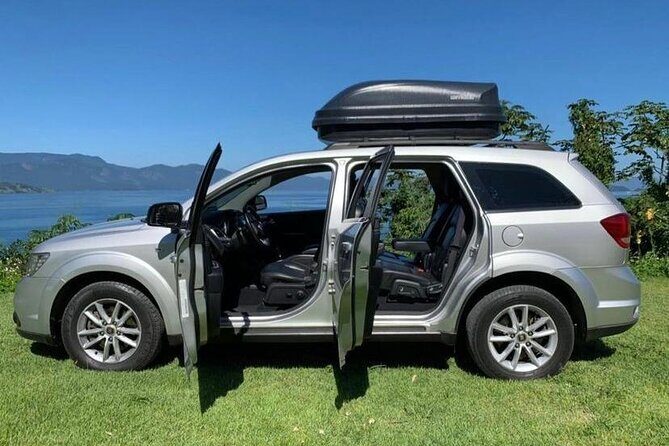
Pickup is offered from anywhere in the state of Rio de Janeiro. That includes major hubs like Santos Dumont and Galeão (Tom Jobim), plus Novo Rio bus station and hotels. You can also arrange pickup from other Rio areas, not just the city center.
This matters because airports and bus stations often come with their own stress. Landing, passing through pickup areas, then trying to coordinate with transport on the fly can turn a vacation into a logistics exercise. With this service, you choose your day and time, and the driver comes to you.
Practical tip: write down your exact pickup address details before booking. If you’re at a hotel, confirm the front desk pickup point. If you’re at an airport, be clear about which airport you mean (Santos Dumont vs. Galeão), so there’s no confusion.
The ride itself: comfortable, insured, and paced for real travel

Once you’re in the vehicle, the transfer is built around comfort and a clean, direct experience. The vehicles are new, and passenger insurance is included, which adds a layer of protection beyond what you’d get with many informal arrangements.
The driver is described as experienced and attentive, with a focus on safety, comfort, and speed. That’s exactly what you want for a transfer day: you don’t need distractions or long detours, you need a steady ride that gets you to the beach towns without drama.
The service is also described as optimized and online, with the team accompanying you throughout the journey. I take that to mean they’re managing the handoff and communication steps in a structured way, not leaving everything to chance.
Arrival in the Lagos Region: Búzios, Cabo Frio, or Arraial do Cabo

Your destination choices are the core Lagos Region spots: Búzios, Cabo Frio, or Arraial do Cabo. The transfer is meant to get you into the Lagos area quickly so you can start enjoying your time there right away.
A private drop-off is one of those quiet luxuries. You don’t have to hunt for buses or calculate local connections after a travel day. You also avoid the classic end-of-day problem: arriving tired, then spending an hour figuring out how to reach your hotel or base.
What you do next is up to your plan. If you’re heading to beaches, lunch spots, or exploring historic areas, an on-time, comfortable arrival gives you the energy to actually enjoy the day.
How the mobile ticket fits in (and why it matters)

You get a mobile ticket, and that usually means you can keep everything on your phone rather than carrying printed documents. For travel days, I like anything that reduces physical steps and prevents lost paper.
Mobile ticketing also pairs well with pickup services because it supports quick confirmation. If you keep your phone charged and easily accessible, you’ll feel the difference immediately—less friction at the start.
Hours that actually help: nearly all-day service
The listed service window is essentially full-day: Monday through Sunday from 12:00 AM to 11:30 PM. That gives you flexibility for early starts, late arrivals, and travel days that don’t follow a neat schedule.
For example, if your flight times are inconvenient or you land later than expected, this kind of long window is valuable. You’re less likely to be forced into an awkward overnight plan just because the transfer only runs “business hours.”
What I learned from the feedback signals (good and bad)
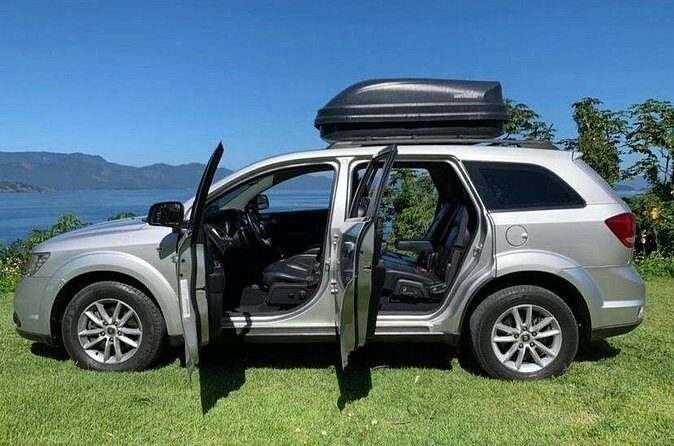
The positive reviews highlight three themes: punctuality, quality of the vehicle, and customer service that resolves problems. One note specifically mentions Denise as the person who helped with reservation, and it’s a good sign when booking support is clear and responsive.
Another positive signal is straightforward: education, vehicle quality, and a smooth experience from contracting to the ride. That suggests the operation is trying to keep the full process consistent, not only the driving part.
Then there’s the caution. One negative review says they were left stranded and the team didn’t respond to messages, including on the return. I don’t ignore that. If you book, treat confirmation seriously and be ready to act fast if your pickup details change.
In practice, that means you should:
- Confirm pickup details shortly before the scheduled time
- Keep your confirmation info accessible on your phone
- Make sure your pickup address is accurate and specific
That’s not paranoia. It’s just good travel hygiene—especially for a service that depends on timing.
Who this transfer is best for
This transfer fits best when you want comfort and control rather than public transport puzzle-solving.
It’s great for:
- Small groups (up to 4) splitting the group price
- Families or friends who want everyone traveling together
- Anyone arriving at Santos Dumont or Galeão and wanting a direct path to the Lagos towns
- Beach-trip planners who don’t want to waste their first hours figuring out transportation
If you’re the type who enjoys building day plans around buses and schedules, you might find a transfer like this less necessary. But if your goal is to start your vacation the moment you land, this is the kind of service that supports that mindset.
Should you book this private transfer?
Book it if you value door-to-door convenience, a comfortable new vehicle, and an insured ride with an experienced driver. The pricing can be strong when you fill the up-to-4 group size, and the long service hours help when flights and plans run late.
Be cautious if you’re the type who needs guaranteed responsiveness during last-minute changes. Because at least one review describes a breakdown in coordination, I’d recommend you confirm details close to pickup time and keep your own backup contact path ready through whatever communication method your booking provides.
If you want a low-stress bridge between Rio and the Lagos Region, this transfer is built for that job.
FAQ
How many people can ride in this private transfer?
It’s private for your group, with capacity for up to 4 people.
How long is the transfer from Rio to the Lagos Region?
The duration is approximately 2 to 3 hours.
Where can pickup happen in Rio de Janeiro?
Pickup can be arranged from anywhere in the State of Rio de Janeiro, including addresses, hotels, and other locations within the state.
Do they pick up from airports?
Yes. Pickup includes Santos Dumont and Tom Jobim (Galeão) airports.
What cities are included in the transfer options?
The transfer is to the Lagos Region, including Búzios, Cabo Frio, and Arraial do Cabo.
Is there insurance included?
Passenger insurance is included with the transfer.
What is the cancellation policy?
You can cancel for a full refund up to 24 hours in advance of the experience start time.
]]>What I like most is the private, exclusive setup. You get your own driver for your group (not a shared shuttle), and the vibe in the feedback is consistent: the service is punctual and respectful.
One thing to keep in mind: if you miss the meet-up point, or you don’t handle flight delays the right way, you can end up losing the transfer. Also, during holidays and festive periods, expect longer travel time than normal.
- Name-sign meet-and-greet at the airport, hotel, or residence reception
- Private sedan transfer for your group only (no mixing with strangers)
- Direct drop-off at Club Med Rio Das Pedras on Rodovia BR-101
- Airport timing rule: passengers wait 1 hour after the flight arrives
- Drive time estimate: about 2h30 without traffic, but holidays can slow things down
- Service animals allowed, and the ride suits most travelers
Getting From Rio to Club Med Mangaratiba Without a Transfer Headache

This is a “show up and go” kind of service. Your goal is simple: get out of Rio and into the Club Med Mangaratiba area with minimal fuss. Instead of figuring out taxis, buses, app pickup zones, and local directions at the end of a long day, you get a driver-and-car plan that starts at the right place.
The destination side is very clear. The transfer is tied to Club Med Rio Das Pedras, at Rodovia BR-101, Km 445.5, in Conceição de Jacareí, Mangaratiba (RJ) 23860-000. Once you’re dropped there, you’re done with travel logistics and can focus on the resort part of the trip.
On pickup, you get a wide set of starting points. You can be collected at Galeão International Airport (GIG), Santos Dumont (SDU), or from hotels and residences anywhere in Rio de Janeiro. That matters because Rio has multiple airports and lots of neighborhoods. A service that can meet you at your actual lodging (not some random downtown meeting spot) is a real quality-of-life upgrade.
How the Name-Sign Pickup Works (and Why That’s a Big Deal)

The meet-and-greet system is one of the strongest parts of this transfer. Your receptionist meets you at the reception of your airport, hotel, or residence. If you’re arriving at the airport, an employee holds a sign with your name—so you’re not wandering around searching for the right person.
Once you connect, you don’t wait around for a big group departure. The plan is to move on to your driver at the scheduled time and continue your journey immediately. For anyone traveling after a flight, that reduces stress fast. You skip the awkward phase where you’re trying to match your baggage, your room key, and your phone screen to the right transport option.
Here’s the practical detail that you should treat like gospel: the pickup happens at the reception location listed in your reservation. If you fail to show up at that reception, you lose the right to the transfer. No debate, no rerouting, no workaround.
If you’re staying in a hotel or apartment building, this is where things can go wrong. Some places have multiple entrances or doormen who aren’t always linked to outside deliveries. I’d suggest you confirm the exact reception/lobby area with your hotel desk ahead of time, especially if your building is large.
The 2-Hour-30 Ride: What to Expect on Timing and Traffic
The transfer is scheduled for about 2 hours and 30 minutes in normal conditions, without traffic. That’s a solid estimate for planning, but it’s not a guarantee—especially in festive periods and holidays, when travel time may increase.
Why this matters: you’re likely going straight into resort check-in rhythm. If you build your day as if the ride will be magically punctual no matter what, you’ll feel the pinch. If instead you treat the drive as a dependable baseline, but you leave a little cushion for slower periods, the whole day feels smoother.
Also note a specific airport rule: passengers arriving at the airport have to wait 1 hour after the flight arrives. In other words, even if your flight lands and you’re in motion right away, you still need to stay available for that pickup window.
This isn’t just fine print. It’s the operational heartbeat of the service. If your flight lands early and you’re already checked out of the airport terminal experience, it’s still on you to be ready inside the window the provider expects. If your flight lands late or is canceled, you need to act quickly—more on that below.
Why Private and Exclusive Feels Worth It (Especially in Rio)
There’s a noticeable difference between shared transfers and a private/exclusive driver. Here, it’s private and only your group participates. In the feedback, people specifically called out that it was not a shared service and that they used a private sedan. That aligns with the goal: you get a direct, calm ride instead of competing with other passengers’ pickup delays.
I like this setup for two common travel scenarios:
- Family or group travel: When you’re coordinating with kids, snacks, and timing, sharing a shuttle can feel like a moving target.
- First days in a new place: Rio can be a lot after landing. A direct drive lets you start your trip with momentum rather than chores.
Comfort is the obvious benefit, but flexibility is the sneaky one. You’re not stuck waiting on someone else’s room number, someone else’s suitcase, or someone else’s delayed arrival. Your driver meets your group, you roll, you arrive.
One more helpful detail: service animals are allowed. If you travel with an assistance animal, this matters because it confirms they’ll accommodate that need.
Price and Value: What $100 Per Person Really Buys
The price listed is $100.00 per person for an experience duration of about 2 hours 30 minutes. On paper, that can look steep if you’re comparing it to a bus or a shared ride.
But here’s how I think about the value. You’re paying for:
- direct pickup from GIG, SDU, or anywhere in Rio (so you don’t have to reposition first)
- a private sedan for your group
- a structured meet-and-greet with a name sign
- less wasted time at the beginning of your trip
Whether it’s a good deal for you depends on your party size and your alternatives. If you’d otherwise need separate taxis, multiple app rides, or more complicated routing from your hotel, this transfer can end up feeling reasonable. And since group discounts are mentioned, the per-person cost may improve when you travel with others.
So my practical advice is: don’t price it only against the cheapest public option. Price it against the reality of how you’ll actually travel from Rio airports to your resort. If you’re tired, hauling luggage, or traveling with people who don’t want to hunt down transit, private transfers stop being a luxury and start being “smart logistics.”
The One Rule That Can Wreck Your Day: Missed Pickup and Delays
This transfer has a simple reliability promise, but it comes with one big responsibility: you must be at the correct airport or hotel reception at the time your reservation expects.
Two key details stand out:
First, if you miss your designated pickup reception, you lose your transfer right regardless of the reason. That’s strict. If your hotel has late-night desk changes, if you’re not sure where reception is, or if you’re tempted to step out for one last errand, pause. This is not the moment to improvise.
Second, the provider is explicit about flight interruptions. Airport passengers must wait 1 hour after the flight arrives. If your flight is delayed or canceled, you must notify the provider in advance so they can reschedule your pickup. If you don’t, the situation is treated as a no show.
I’d treat this as a “do this now” task before travel day: save the provider’s contact info somewhere easy to reach. Email is [email protected] and WhatsApp is +5522992651295. If anything changes, you want to message fast.
There’s also a note that the experience requires good weather. The listing frames it as a reason they might cancel and offer another date or a full refund. In practice, if weather is bad, traffic and road safety can shift plans in many parts of Brazil, and your best move is staying flexible while still getting updates.
Who This Transfer Best Fits (and Who Might Not Need It)
This is best for people who want a predictable start. Specifically:
- You’re arriving at GIG or SDU and you don’t want to figure out the next step after baggage claim.
- You’re staying at a hotel or residence and want the driver to handle the route end-to-end.
- You value privacy, especially for families, couples, or small groups.
- You have limited patience for timing complexity on vacation day one.
It may be less necessary if you’re an experienced Rio navigator who already knows the local transit system and you’re comfortable managing transfers yourself. But if you’re tired from travel, carrying a lot of gear, or you simply want to reduce points of failure, this is the kind of service that buys you peace.
Should You Book This Rio-to-Mangaratiba Private Transfer?
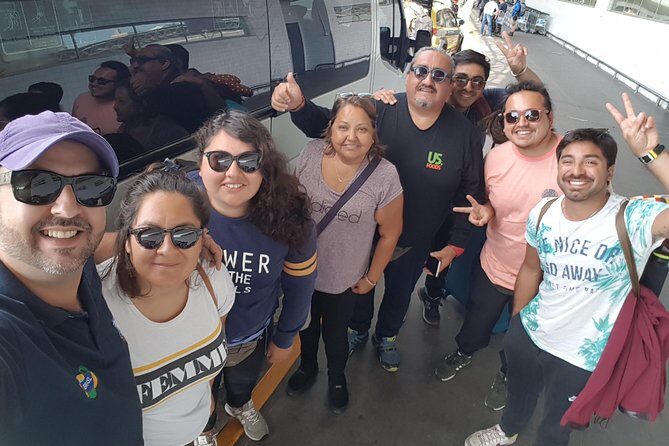
I’d book it if your top priorities are a clear meet-up, a private sedan ride, and direct arrival at Club Med Rio Das Pedras. At $100 per person, it makes more sense when you’d otherwise spend time coordinating multiple transport options or you’re traveling with people who prefer a plan you can trust.
Just don’t treat it like a vague suggestion. The system depends on you being present at the correct reception point, and it depends on you notifying them if flights change. If you’re the kind of traveler who double-checks pickup details and keeps an eye on timing, this transfer is a strong fit.
If you want, tell me your arrival airport (GIG or SDU) and how many people are in your group. I can help you think through whether the per-person cost looks like good value compared with what you’d likely do on your own.
FAQ
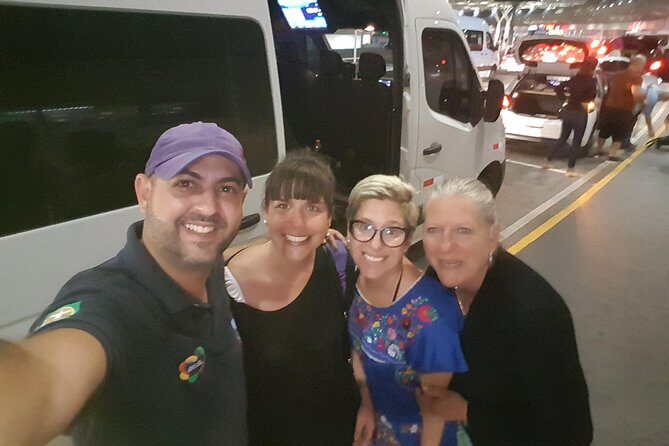
Where does this private transfer drop you off?
The transfer is set up to drop you at Club Med Rio Das Pedras, located on Rodovia BR-101, Km 445.5 s/n, Conceição de Jacareí, Mangaratiba – RJ, 23860-000, Brazil.
Where can pickup happen in Rio de Janeiro?
Pickup is available at Galeão International Airport (GIG), Santos Dumont National Airport (SDU), or from hotels and residences anywhere in Rio de Janeiro.
How long is the transfer?
The travel time is approximately 2 hours and 30 minutes on normal days without traffic. During holidays and festive periods, it may take longer.
Is this shared with other people?
No. This is a private/exclusive transfer, and only your group participates.
How will I find the driver or meeting staff?
Your receptionist will meet you at the airport, hotel, or residence reception. If you’re at the airport, they will hold a sign with your name. After the meeting, you’ll be taken to the driver.
What happens if my flight is delayed or canceled?
You must notify the provider in advance so they can reschedule your pickup. Airport passengers also have to wait 1 hour after the flight arrives.
What if I miss the pickup location?
If you fail to show up at the airport, hotel, or residence reception indicated in your reservation, you lose your right to the transfer, regardless of the reason.
Can I cancel for free?
Yes. You can cancel up to 24 hours in advance for a full refund.
Are service animals allowed?
Yes. Service animals are allowed.
]]>Here’s the gist: you’re picked up at Rio’s key points (GIG or SDU, cruise terminal Pier Mauá, or your hotel), then dropped where you need to go. The service runs daily from midnight to 11:30 PM, and it’s offered in English. It’s also set up for cruises and flights, with drivers holding set waiting windows after arrival.
Key Things I’d Plan Around

- Name-sign pickup that avoids airport chaos: Meet the driver at the arrivals/disembark/disembark area with your name visible.
- Real waiting times that match cruise and flight realities: Up to 1 hour after cruise/flight arrival, and up to 30 minutes at hotels.
- Optional 1-hour panoramic tour: Great for first-time Rio visitors who want an overview before or after shore time.
- Traffic-sensitive timing: The transfer duration depends on conditions, so build in time confidence, not just calendar optimism.
- Luggage limits are clear: Max 1 medium suitcase + 1 carry-on per traveler, with possible restrictions for oversized gear.
Private door-to-port transport in Rio: GIG/SDU to Pier Mauá
This is the kind of service that works when you want your time back. In Rio, the stress usually comes from figuring out where to meet someone and how long you’ll lose in transport logistics. Here, the whole setup is built around smooth transfer from Rio’s International Airport (GIG) or Santos Dumond (SDU) to the cruise terminal at Pier Mauá.
You’ll ride in an air-conditioned vehicle with a courteous driver, and it’s private—meaning your group is the only one in the car. That matters on cruise days when you don’t want to wait for strangers, coordinate extra stops, or guess whether the driver is still hunting for your ship arrival.
If you upgrade, you also get a 1-hour panoramic sightseeing tour of Rio. It’s not trying to turn one ride into a full-week sightseeing plan. Instead, it gives you a time-boxed overview—enough to start connecting neighborhoods, coastline, and the city’s layout.
How the pickup works: airport arrivals, cruise terminal Pier Mauá, or hotel lobby

This service is very clear about where to find your driver, and that’s one of its biggest wins.
Airport pickup (after customs and baggage)
After you clear Customs and Baggage claim, you meet the driver inside the airport at the Disembark area. The driver holds a sign with your name. The driver waits up to 1 hour after your flight arrival.
This is practical because GIG and SDU can swallow time quickly after you land—lines, walking distance, then baggage. If you’re even a little late (or your bags take time), that 1-hour waiting buffer helps.
Cruise terminal pickup (right outside Pier Mauá)
When you leave the ship, you meet the driver at Pier Mauá in the outside area directly in front of the terminal. Again, the driver holds a sign with your name, and the driver waits up to 1 hour after your cruise arrival.
From a cruise perspective, this is smart. Disembark timing can be messy, and you don’t want a driver cutting it too close when your group is still moving through the terminal process.
Hotel pickup (lobby timing matters)
If you’re going from hotel to the airport, the driver waits in the hotel lobby and waits up to 30 minutes after the scheduled pickup time.
That shorter window is the one part I’d treat as strict. If you’re the kind of traveler who always says I’ll be ready in five minutes, I’d tighten that up here.
The 1-hour panoramic add-on: what it really gives you

The sightseeing portion is offered as an upgrade: a 1-hour panoramic tour of Rio during the transfer. Even with limited time, you’ll get a broader sense of the city than you would from a straight shot by taxi.
What I like about this style of sightseeing is the pacing. You’re not trying to squeeze in ticket lines or long walks when your schedule is already tight. Instead, you’re in a comfortable car with a driver, and you’re seeing Rio from the road while learning enough to plan your next day better.
Your driver can also tailor the experience in a practical way—especially if your “must-see” is orientation: figuring out where major areas sit relative to where your ship or hotel is. In one account of a similar transfer + tour, the chauffeur (Greg) was praised for fitting a lot of Rio into one hour in a way that made people want to return longer. That’s exactly the value of the panoramic approach: it leaves you curious, not exhausted.
A small caution: because it’s panoramic and time-boxed, you should expect an overview rather than a deep stop-by-stop tour. If you want museums, long hikes, or multiple viewpoint stops, you’d likely need a separate full excursion.
Timing rules that protect you from missed flights and late departures

This service is designed for airport and cruise timing, not just “whenever you’re ready.”
Hotel to airport: how early you should plan
If you’re traveling from a hotel to the airport, the service specifies these pickup times:
- International flights: pickup 4 hours before take-off
- Domestic flights: pickup 3 hours before
Why this matters: in Rio traffic can slow you down, and you’re also accounting for airport procedures. This buffer reduces the chance you’ll arrive stressed and rushing through checkpoints.
Duration depends on traffic
The transfer length varies with traffic conditions. That’s normal in any big city, but it’s more important here because your departure is fixed. I’d treat the pickup time instructions as the safety rail, then keep your own schedule calm: confirm plans the day before, and avoid the temptation to “just wait and see” with pickup windows.
The waiting windows are your safety net
Your driver waits:
- Up to 1 hour after flight arrival (airport)
- Up to 1 hour after ship arrival (cruise terminal)
- Up to 30 minutes after scheduled pickup time (hotel)
A story I found helpful is that when someone had a problem with a cancelled flight, it caused enough confusion to require another transfer the next day. The takeaway for you: keep your flight status updated and message or coordinate quickly if anything changes. Even the best system can get tangled if the arrival time changes unexpectedly.
Comfort and luggage: what fits and what might require extra planning

You’re in an air-conditioned private vehicle, which is a big deal in Rio where the heat and humidity can hit fast. You’ll also have space to settle without playing musical bags in a crowded shared shuttle.
But check the luggage rules so you’re not surprised at the curb:
- Each traveler is allowed 1 medium-size suitcase and 1 carry-on bag.
- Oversized or excessive luggage (examples given include surfboards, golf clubs, or bikes) may have restrictions.
- In some oversized cases, you might have to pay for an extra vehicle to transport the excess luggage.
- It’s recommended to enquire with the operator ahead of travel if you’re traveling with unusual items.
If you’re traveling as a family with multiple checked bags, you’ll likely be fine as long as each passenger’s luggage stays within the stated limit. If you’re bringing sports gear, treat this as a planning item early—before you’re standing on the curb with the whole setup.
Price and value: is $90 per person worth it?

At $90 per person, this can be a solid value when you compare it to the true cost of stress. You’re buying:
- Private transportation (not waiting on others)
- Meet-up help with a name sign at key points
- Air conditioning
- Optional 1-hour panoramic sightseeing upgrade
The price is especially easier to justify if you’re traveling with limited time—like a cruise day where you want to disembark, get to the port, and still feel like you saw something of Rio. It’s also valuable when you’re arriving tired and don’t want to negotiate transit right away.
When might it feel less worth it? If you already know Rio well and you don’t care about orientation, a panoramic upgrade may be unnecessary. And if you’re traveling with very small luggage and you’re comfortable figuring out public transit or taxis, you could spend less. Still, the private timing + pickup structure is what you’re paying for.
One practical note: the experience is commonly booked about 97 days in advance. That doesn’t mean you must book that early, but it does suggest people tend to lock in cruise and flight logistics early—because, in Rio, first-day transportation planning can become a bottleneck if you wait too long.
Who this transfer fits best on a Rio itinerary
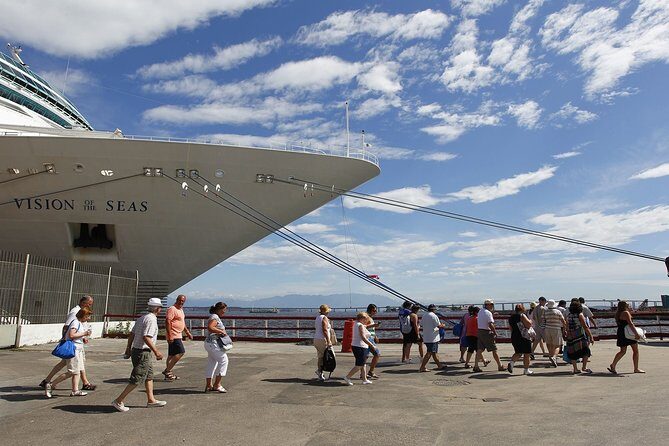
This is a good match if:
- You’re on a cruise and want Pier Mauá transfer without last-minute hunting
- You’re landing at GIG or SDU and want a calm “meet-and-go” start
- You want a quick overview of Rio without turning transfer time into a major sightseeing mission
- Your group values private service (your group only)
It also helps if you like having fewer moving parts. Your driver waits for defined windows, and the pickup locations are specific: disembark area at the airport, outside front area at the cruise terminal, hotel lobby at your lodging.
In terms of reviews, the strongest praise centers on the driver showing up as promised and getting people to the port smoothly in a clean vehicle. The slightly less perfect moment involved finding the driver/guide when there was confusion, but the outcome still worked. Another less pleasant issue came from an airline cancellation not being checked before sending the car to the airport—so again, it’s worth staying on top of flight status.
Should you book this transfer with sightseeing?

I’d book it if you want your Rio arrival or departure to feel organized and low-stress. The combination of a private air-conditioned transfer plus an optional 1-hour panoramic tour is made for people who don’t have endless time but still want to understand the city quickly.
You might skip it (or only take the transfer) if:
- You’re already planning a separate, long sightseeing day and don’t need an overview
- Your schedule is flexible enough that you’re comfortable handling transit on your own
- You have oversized gear and haven’t confirmed how it will be transported
My simple rule: if you’re moving between airport, hotel, and Pier Mauá on a tight clock, booking this is one of those smart “buy time” decisions. And if you upgrade, you’ll also come away with a better sense of where you want to return in Rio—without spending your best daylight stuck in logistics.
FAQ
Where do I meet the driver after I land at Rio’s airports?
After you pass Customs and Baggage claim, you meet the driver inside the airport at the Disembark area. The driver is holding a sign with your name.
Where do I meet the driver at the cruise terminal?
After you leave your ship, meet the driver right in front of the terminal at the outside area of Rio de Janeiro Cruise Terminal Pier Mauá. The driver holds a sign with your name.
How long will the driver wait for me at the airport, cruise terminal, or hotel?
At the airport and cruise terminal, the driver waits up to 1 hour after arrival. At the hotel, the driver waits up to 30 minutes after the scheduled pickup time.
If I’m going from a hotel to the airport, how early should pickup be?
For international flights, pickup is 4 hours before take-off. For domestic flights, pickup is 3 hours before.
What luggage is allowed?
Each traveler can bring a maximum of 1 medium-size suitcase and 1 carry-on bag. Oversized or excessive luggage may have restrictions, and you may need an extra vehicle.
Is this transfer private or shared?
This is a private tour/activity, so only your group participates.
How does cancellation work?
You can cancel for free up to 24 hours in advance of the experience start time for a full refund. If you cancel less than 24 hours before, the amount paid is not refunded.
]]>I like the very clear meet-up approach: you’ll be picked up by name, holding a sign outside the arrival gate. I also like the communication level shown in feedback, including flight tracking and helpful tips during the drive, with English offered.
One thing to consider: this is a timed road ride, so plan for traffic variability and keep some buffer if you have a strict check-in or a tight first reservation.
Key Things to Know Before You Go
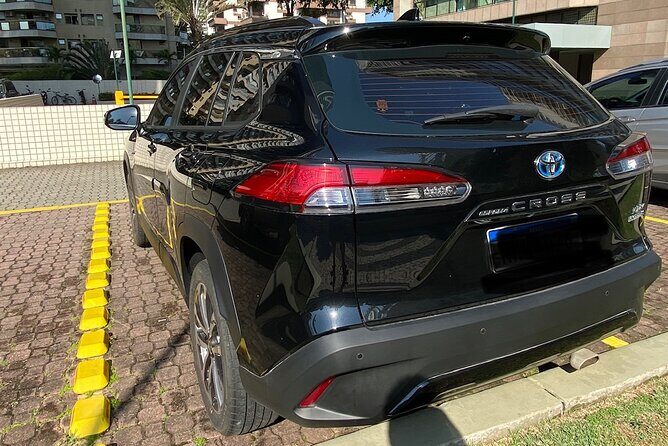
- Meet at the arrival gate by name with a sign, so you can get your bearings fast
- Private for your group (up to 4), which keeps the ride quiet and simple
- Flight tracking is part of the service, based on feedback about on-time pickup
- English support during pickup and the drive, plus practical pointers along the way
- Direct airport-to-hotel flow, saving you from figuring out transport right after landing
From Arrival Gate to Copacabana Without the Guesswork
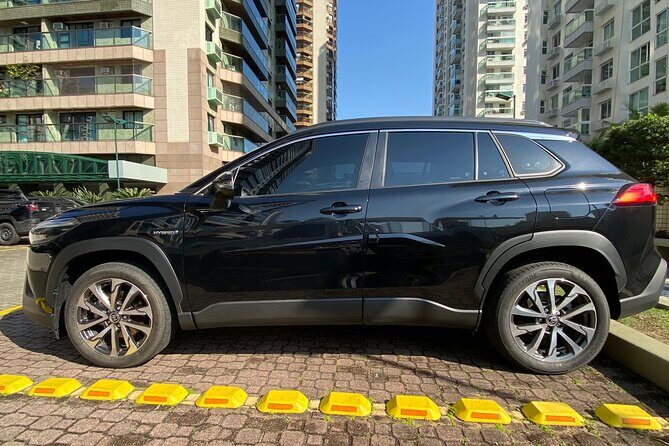
Rio starts at the airport, whether you want it to or not. If you land tired, juggling bags, and still have to decode bus routes or hunt for a taxi line, the first hour of your trip can get stressful fast. This transfer keeps things straightforward: someone meets you right outside the arrival gate and gets you moving.
The big value here is that it’s private. That means you’re not waiting on other groups, not sharing the ride with strangers, and not trying to coordinate timing in a chaotic arrival hall. You go from the airport to your hotel area with minimal friction, which is exactly what I want on day one.
Also, the service includes pickup offered and is operated as a private activity, so it stays focused on you. The provider is Alessandro Sargentelli of Rio Connecting Rides, and the ride experience described in feedback centers on a driver named Alex, who handled the meet-up and communication well.
Meeting Your Driver: Sign With Your Name Outside the Arrival Gate
This kind of transfer rises or falls on the pickup moment. Here, the plan is simple. You’ll see your driver standing outside the arrival gate holding a sign with your name on it. That single detail matters more than people think. The arrival area can look confusing when you’re jet-lagged, and being able to spot one person instantly reduces the risk of getting lost or delayed.
You also get mobile ticket service, which helps keep your day tidy. Instead of scrambling for paperwork, you can handle your transfer information on your phone.
One more plus from feedback: the driver tracked flights and handled timing well. If your plane is delayed, that kind of awareness helps. You still need to stay aware of your own arrival status, but the service is clearly built around the reality that flights don’t always land on the dot.
The Ride Itself: What 30 Minutes to 1 Hour Means in Real Life

The duration is listed as about 30 minutes to 1 hour. In practice, that’s a range you should expect to stretch during busy periods. Rio traffic can change quickly, and that’s normal. The smart move is to treat the ride as “direct transport,” not a guaranteed exact-minute schedule.
What you can make better than average during that time is how you use the ride. In the feedback, Alex provided helpful tips during the drive. I’m not talking about generic tourist lines. Practical suggestions—like how to get oriented once you’re in your neighborhood—are the kind of small input that can save you time later.
This is where English support helps. If you’re not fluent in Portuguese (and many people aren’t), having someone willing to communicate clearly makes the airport-to-hotel portion less intimidating. You can ask basic questions and get straight answers instead of piecing things together.
And because this is private, you aren’t dealing with multiple destination drops or awkward timing checks. You get in, you go, you arrive.
Why This Private Transfer Value Usually Beats DIY on Day One
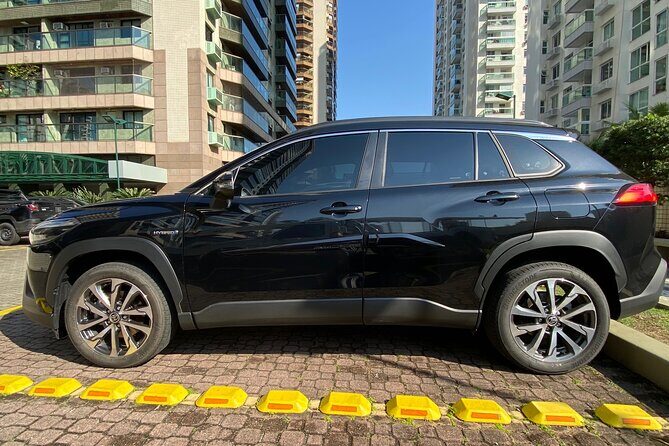
Let’s talk money and value, because $58.81 per group (up to 4) isn’t automatically a bargain in every city. It becomes a good deal when you compare what you’re avoiding: stress, delays caused by the wrong transport choice, and time spent figuring out logistics right after a flight.
Here’s why the math often works in Rio:
- You split it among up to 4 people. If you’re traveling as a small group or a family, your per-person cost can be far lower than you’d pay for separate taxis.
- You eliminate the first-day transport gamble. Getting transport wrong on day one can cost you more than the transfer fee, especially if you end up waiting or paying for a last-minute fix.
- You start with momentum. The ride is direct, and it gets you to your hotel area with less wasted time.
Also, the service is frequently booked about 40 days in advance on average. That doesn’t mean you have to book that early, but it does tell me demand exists—particularly from visitors who want a clean arrival plan.
Timing and Arrival-Day Strategy That Keeps Things Smooth
Even with a great transfer, your choices on arrival day matter. Here’s how I’d run it if you want the smoothest possible pickup.
First, aim to keep your arrival time realistic. The transfer depends on you being at the arrival gate. If you have checked bags, plan for baggage claim time and then add a small buffer before you head to the gate area.
Second, be ready to show your mobile ticket on arrival. That keeps things moving. If you’re fumbling with your phone or searching for confirmation details after you’re already at the gate, you lose the advantage that makes this service feel easy.
Third, remember the ride duration is about 30 minutes to 1 hour. That means if your first stop is a tight check-in window, I’d plan to arrive earlier rather than later, or pick a plan that can flex.
Finally, if you’re arriving with any special needs, you should know the service indicates that service animals are allowed and that most travelers can participate. That’s helpful when you’re planning a trip around real life, not just ideal travel conditions.
What Happens After You Arrive at Your Hotel Area
A transfer isn’t just transport. It’s your handoff from “airport mode” to “vacation mode.”
Because this is private, the driver can focus on dropping you off where you need to go. You’re not negotiating with multiple passengers or managing a shared itinerary. Once you’re inside the Copacabana start area and heading to your hotel, you can treat the rest of your first day as free time rather than logistical homework.
And that practical tip-giving during the drive can matter once you step out. If the driver helps you with basic orientation or first-night ideas, you’ll spend less time standing around with your map app open and more time enjoying Rio.
Who This Transfer Best Serves (And Who Might Skip It)
This transfer is a great fit if you want:
- A calm arrival with someone waiting at the airport gate
- A private ride for your group of up to 4
- English communication and practical guidance during the drive
- A direct route to your hotel area without extra planning
It may be less of a perfect match if you’re arriving extremely budget-focused and you’re already comfortable navigating transport right after landing. But even then, consider the cost of time and the potential hassle. Sometimes “cheaper” transport isn’t cheaper once you factor in your stress and the minutes you lose.
Should You Book This Private Airport Transfer?
Book it if you value a dependable meet-up and a low-effort start. The strongest reason is the pickup approach: you’re met outside the arrival gate by name with a sign, which is exactly what you want after a flight. Add in feedback about flight tracking, being on time, and getting useful tips in English, and the service checks the boxes that matter on day one.
Don’t book it if you enjoy planning transportation as part of your travel ritual and you’re comfortable handling it immediately on arrival. If that sounds like you, you might prefer to go fully independent.
If you’re on the fence, here’s my practical advice: price it per person based on your group size, then ask yourself whether you want your first hour in Rio to be about your hotel check-in or about figuring out logistics. For many small groups, this transfer is the easier choice.
FAQ
How much does the private transfer cost?
It costs $58.81 per group, up to 4 people.
How long does the transfer usually take?
The drive is listed as approximately 30 minutes to 1 hour.
Where will I meet the driver?
You’ll meet the driver right outside the airport arrival gate. They’ll hold a sign with your passenger name.
Is this transfer private or shared?
It’s a private tour/activity. Only your group will participate.
What languages are offered?
English is offered.
How do I receive confirmation after booking?
You’ll receive confirmation within 48 hours of booking, subject to availability.
Can I cancel for free?
Yes. You can cancel up to 24 hours in advance for a full refund. Changes made less than 24 hours before the start time are not accepted.
]]>